The Kabul Tribune (KT) — Afghanistan’s labor market has undergone major structural changes since the Taliban seized power five years ago, with employment increasingly concentrated among men and women facing severe exclusion from economic activity, according to a new International Labour Organization report.
Overall employment is estimated to have increased by 14% from its low in 2022, reaching nearly 8.5 million workers in 2026. But that growth has not kept pace with Afghanistan’s growing population. The employment-to-population ratio is estimated at 32.5%, more than 4 percentage points below its 2020 level, the ILO said.
The increase in employment has been entirely concentrated among men. Male employment in 2026 is estimated to be about 22% higher than in 2020.
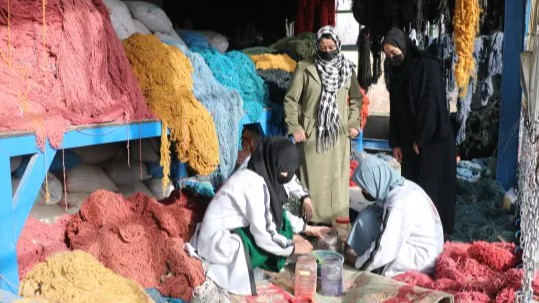
Women, meanwhile, have experienced a dramatic decline in employment. Female employment fell sharply in 2022 to less than one-third of its 2020 level after a smaller decline the previous year, and has shown only a marginal recovery since then.
The ILO estimates that Afghanistan has the second-lowest female labor force participation rate in the world, underscoring the scale of women’s exclusion from the economy.
“Afghanistan cannot build a resilient labour market while such a large share of its population remains excluded from economic activity,” said Tite Habiyakare, senior coordinator and head of the ILO office for Afghanistan.
Habiyakare said expanding women’s access to productive employment, along with creating opportunities for returnees, young people and other vulnerable workers, was essential to strengthening livelihoods and supporting more inclusive economic development.
The labor market is also facing additional pressure from the large-scale return of Afghans from Pakistan and Iran. Many returnees are arriving in communities already struggling with poverty, underemployment and limited opportunities to earn a living, according to the ILO.
Rising energy costs and inflation linked to the conflict in the Middle East pose further risks. The ILO estimates that more than 70% of Afghanistan’s workers are employed in activities with at least medium exposure to those pressures.
The ILO said productive employment should remain at the center of Afghanistan’s policy response. It called for greater support for private-sector development, labor-intensive industries and micro, small and medium-sized businesses, as well as measures to help returnees find work and protect vulnerable households from rising living costs.
The organization also called for expanded access to productive employment across all segments of the population and renewed investment in regular and representative labor-force data collection.


