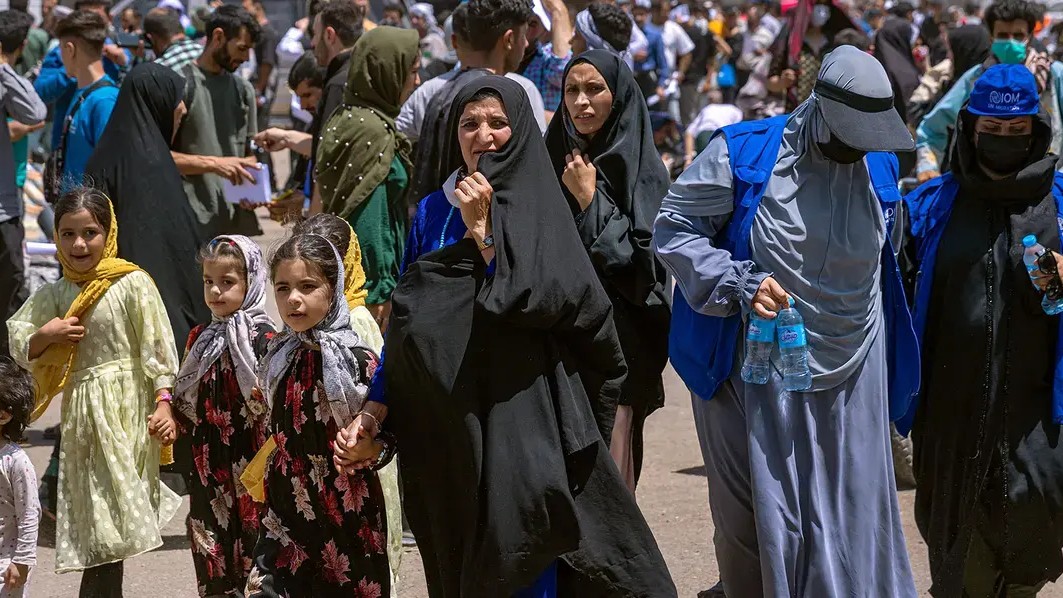
The Kabul Tribune (KT) — More than 439,000 Afghans have been deported from Iran so far this year, accounting for about 84% of all Afghan returns from the country, the U.N. refugee agency said in a report.
The United Nations High Commissioner for Refugees, or UNHCR,
said 522,200 Afghans returned from Iran between Jan. 1 and Sept. 12, including
about 439,000 who were deported.
The agency warned that the large-scale returns are putting
additional pressure on basic services, housing and livelihoods in Afghanistan
and increasing the risks of instability and further migration.
The figures follow a much larger wave of returns in 2025,
when more than 1.9 million Afghans returned to Afghanistan or were deported
from Iran. About 1.26 million of those returns were deportations, including
roughly 852,800 after June 13, according to UNHCR.
Monthly deportations peaked at about 373,000 in July 2025
before declining. In 2026, the number rose to about 59,000 in August from
53,000 in July, according to UNHCR data.
UNHCR said returns increased significantly after headcount
slips held by an estimated 2 million Afghans in Iran expired in March 2025.
Iranian authorities subsequently introduced a program requiring holders of the
slips to undergo assessments to determine whether they could remain in the
country.
Most Afghans returning this year have had no formal
documentation, the agency said. About 86% of all returnees were undocumented,
while 14% held headcount slips. Among those deported, 88% were undocumented and
12% were headcount slip holders.
The report also highlighted the vulnerability of many
returnees. Of those who returned since the beginning of 2025, 39% were women
and children, 27% were children and 45% were families.
Among households receiving assistance from UNHCR in
Afghanistan, 41% were headed by women and 13% included at least one person with
a disability.
Herat was the intended destination for 21% of returnees
surveyed in 2026, the largest share among Afghan provinces, followed by Kabul
with 10%, Farah with 8%, Kunduz with 7% and Takhar with 5%.
UNHCR said it has expanded assistance at the Islam Qala and
Zaranj border crossings. More than 29,500 returning households have received
assistance so far this year, while 205,658 people have received hot meals,
according to the agency.





