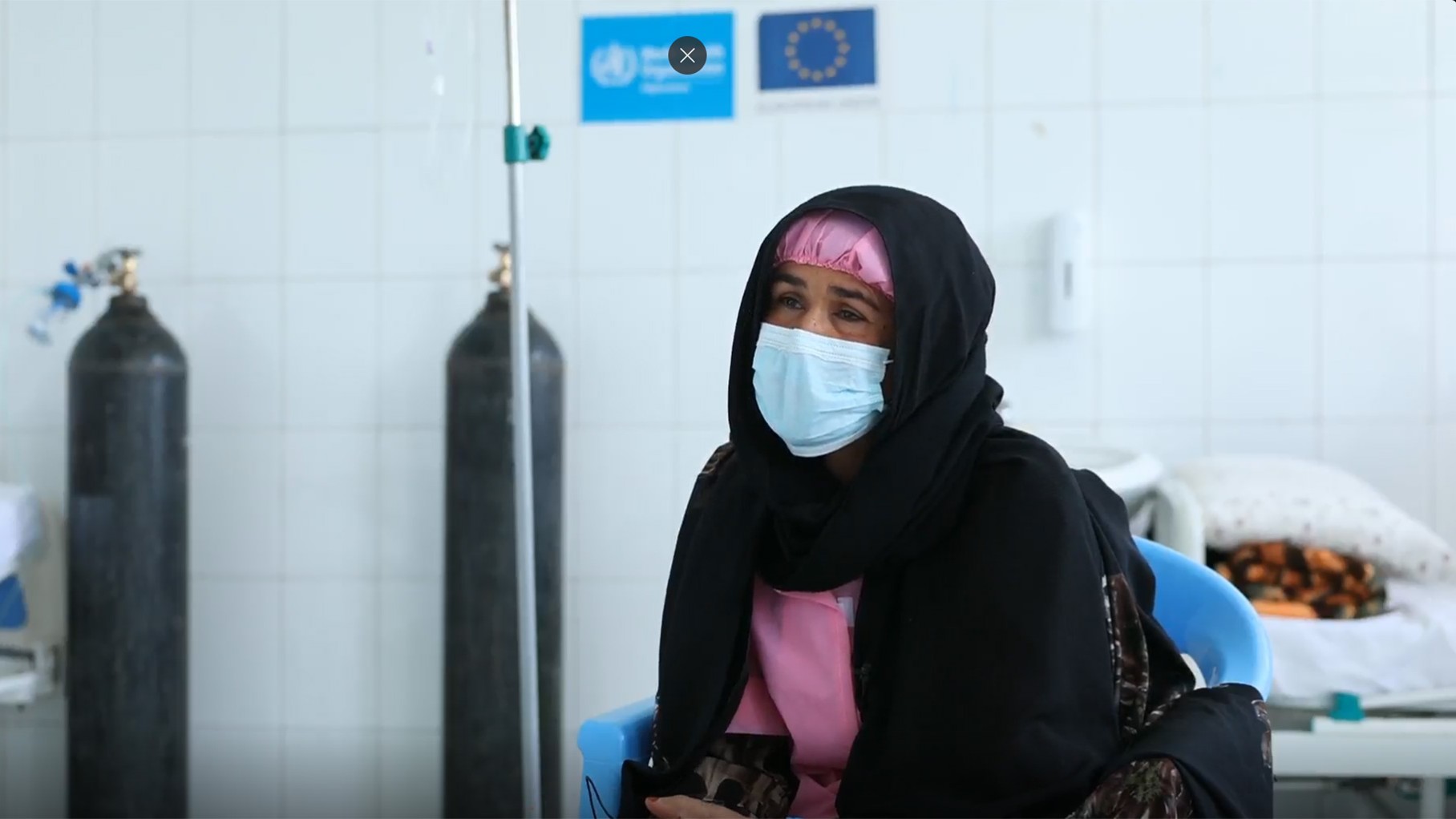
The Kabul Tribune (KT) — A World Health Organization program supported by the European Union is helping patients access diagnosis and treatment for infectious diseases in western Afghanistan, where long travel distances and medical costs often prevent people from receiving care.
Seya Moy, 32, traveled more than 100 kilometers from
Shindand district to Herat city after seeking help from several local health
providers without improvement in her condition. The cost of transportation,
medical consultations, tests and medicines placed a heavy burden on her family.
As her symptoms worsened, she was admitted to the 150-bed
Herat Infectious Disease Hospital, where doctors examined her, conducted tests
and began treatment for hepatitis C. She received medical care and follow-up
during her stay. After 20 days in the hospital, her condition had improved, and
she was regaining her strength, according to the World Health Organization.
The WHO supports the hospital with funding from the European
Union, helping maintain essential services, including medicines, diagnostic
testing and operational support. The hospital serves as a specialized referral
center for patients from Herat and neighboring provinces.
Viral hepatitis remains a major public health challenge in
Afghanistan, with access to treatment limited for many patients.
“ The 2025 national hepatitis data show that 43,161
hepatitis B positive patients were recorded through reporting health facilities
across Afghanistan,” said Dr. Abdur Rahman Shirindil, head of Afghanistan’s
National Programme for AIDS, Sexually Transmitted Infections and Hepatitis. “We
are currently able to provide treatment to around 5% of these patients.”
The WHO said the Herat hospital has provided health services
to 52,325 people so far this year, including 48,211 outpatient consultations
and 4,114 inpatient admissions. The organization has also provided targeted
training to hospital staff to improve the quality of care.
“Access to essential health care should not depend on a
person’s ability to pay,” said Dr. Edwin Ceniza Salvador, the WHO
representative in Afghanistan. With European Union support, the organization is
helping keep infectious-disease services available to people who need them, he
said.
For patients traveling long distances for treatment, the
support can mean access to hospital beds, diagnostic tests and medicines that
might otherwise be difficult to afford.
Moy is continuing to recover and is looking forward to
returning home, the WHO said.





