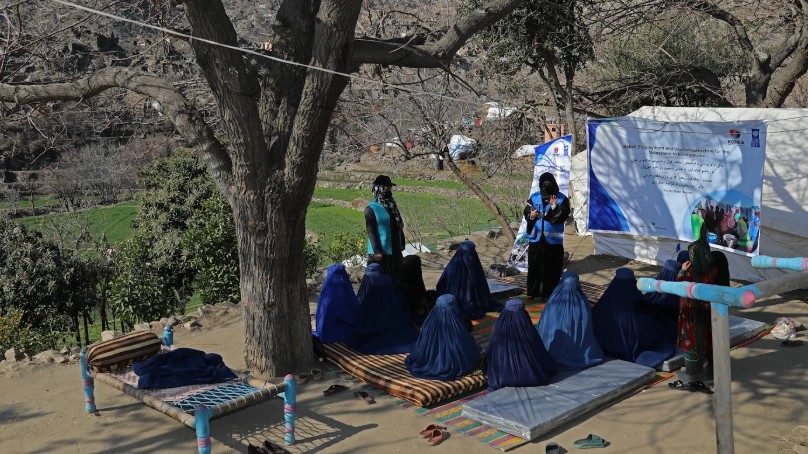
On 31 August 2025, families in Sutan village were going
about their ordinary lives when the ground suddenly began to shake.
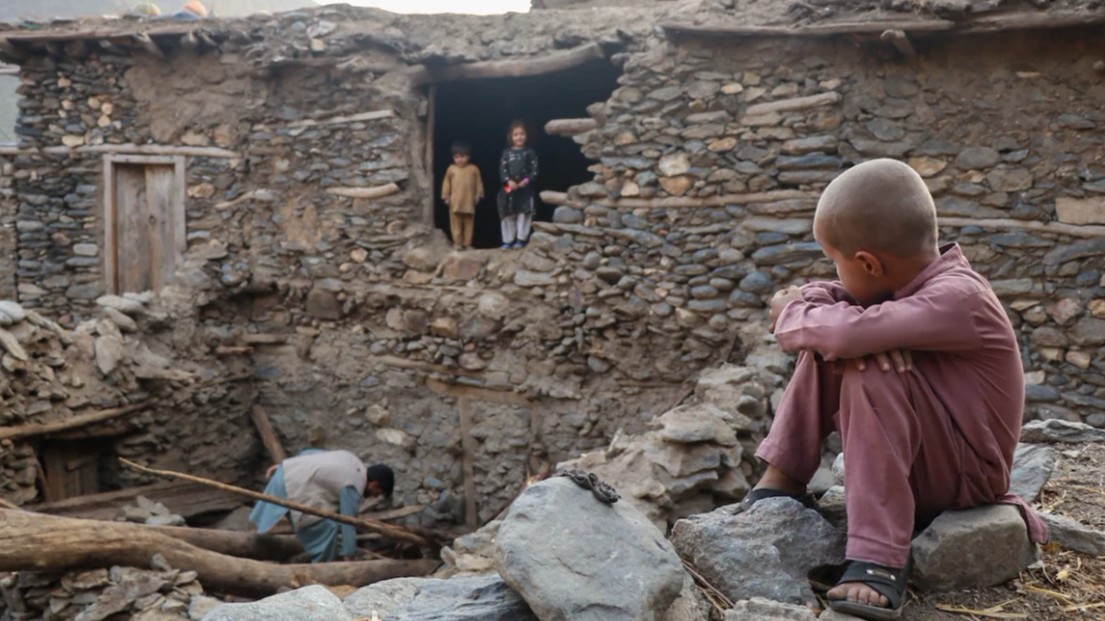
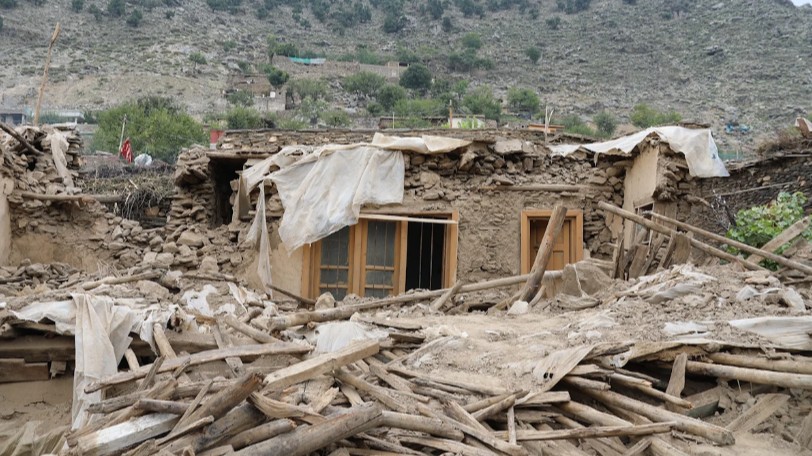
Within moments, homes built along the steep hillsides
collapsed. Clouds of dust covered the narrow paths, and people called out for
relatives and neighbours beneath the rubble. Families who had once felt safe
inside their homes were suddenly standing outside with nothing, some had lost
their houses, some their livelihoods, and others the people they loved.
The earthquake struck communities across Kunar, Nangarhar
and Laghman provinces, killing 1,992 people and injuring 3,631 others. More
than 8,200 homes were destroyed or damaged, with some of the most severe
destruction occurring in remote and hard-to-reach rural areas.
Sutan, a village in Nangarhar Province, was among the
communities hit hardest. Twelve people lost their lives, 677 residents were
affected, 50 shelters were destroyed and around 300 were severely damaged.
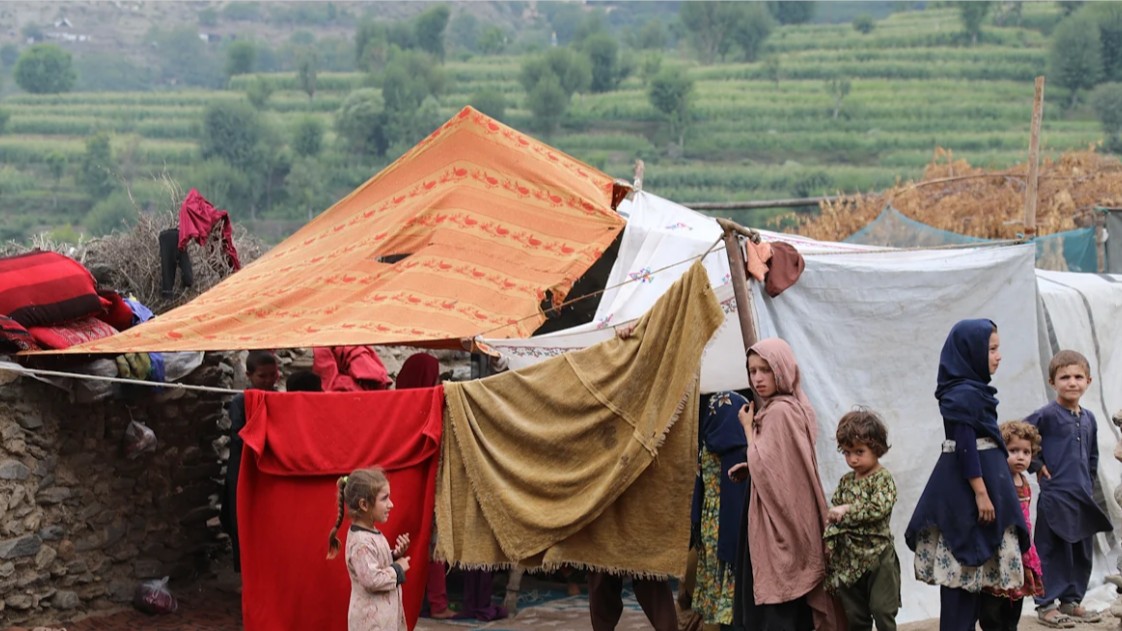
Among those affected were five families who had recently
returned from Pakistan. After experiencing displacement once, the earthquake
forced them to leave their homes again.
The disaster struck a community already struggling with
poverty, limited employment opportunities, poor access to markets and basic services,
and repeated exposure to floods, landslides and earthquakes. In a remote,
agriculture-dependent village like Sutan, one disaster could erase years of
progress in a matter of seconds.
Help in the first difficult days
In the immediate aftermath of the earthquake, UN agencies
and humanitarian partners mobilized to provide urgent assistance to affected
families.
UNDP teams also travelled to the affected areas to listen to
communities, assess the damage and identify how emergency assistance could be
connected to longer-term recovery. The priority was to help families rebuild
safely, restore essential services and reduce their vulnerability to future
disasters.
The Joint Rapid Recovery Needs Assessment, led by UNDP
together with the Asian Development Bank, the World Bank and the European
Union, estimated that the earthquake caused US$86.2 million in damages.
Recovery needs over the following three years were estimated at US$181.1
million.
With funding from the Republic of Korea under the REVIVE
initiative, together with UNDP crisis resources, recovery efforts began in
Sutan and nearby affected communities.
The work brought together shelter reconstruction, debris
clearance, temporary employment, food assistance, water restoration, renewable
energy, health facilities and protection against future floods and landslides.
Rebuilding homes more safely
With support from the Republic of Korea, UNDP helped
communities construct 205 earthquake-resilient buildings, including homes and
two health facilities. Of these, 203 were shelters for vulnerable families,
including returnees displaced again by the earthquake.
The buildings were constructed through an owner-driven
approach. UNDP provided technical guidance, engineering expertise and
construction support, while families voluntarily contributed between 10 and 50
per cent of the costs.
Each permanent structure cost around US$2,650—comparable to
the cost of a temporary shelter.
This approach allowed families to participate directly in
rebuilding their homes and ensured that the structures reflected community
needs. It also helped restore a sense of ownership and dignity.
The experience in Sutan is now informing reconstruction in
other villages, where communities are learning from its safer building methods.
Protecting homes and farmland from the next disaster
Rebuilding after an earthquake was only part of the
challenge.
Sutan Valley remains highly exposed to flash floods and
landslides. Deforestation, with Afghanistan’s forest cover at around 2 per
cent, has made floods more frequent and destructive, particularly in valley
communities.
Without protective infrastructure, another disaster could
damage newly reconstructed homes, farmland, roads and community facilities.
UNDP therefore supported the construction of protective
infrastructure near Lamatak Bridge and Bulbul China. These works helped protect
35 homes and around 750 jeribs of farmland—approximately 150 hectares—from
future flood and landslide risks.
The flood-protection and irrigation works generated 11327
working days for 719 local labourers including 188 women, providing temporary
income while protecting productive assets. The total investment was
approximately US$91,000.
Community members also received disaster-risk reduction
training covering earthquakes, floods, wildfires and other hazards. The
objective was to help residents prepare for future shocks and reduce possible
losses.
Restoring water and protecting livelihoods
Agriculture remains central to life in Sutan, but the
earthquake damaged local water infrastructure and placed additional pressure on
families already facing limited livelihood opportunities.
UNDP rehabilitated a damaged water intake, restoring
irrigation to around 500 jeribs of agricultural land, equivalent to
approximately 100 hectares.
The local water supply system was restored for US$90,000,
avoiding the need for prolonged external water delivery and strengthening the
community’s own service infrastructure.
Electricity that remained when everything else fell
The Shimol 340-kilowatt hybrid solar-hydro mini-grid,
launched in May 2021 with funding primarily from the Republic of Korea and UNDP
core resources, remained undamaged.
It continues to be the only source of electricity for the
valley, supplying affordable and reliable energy to around 12,000 people across
eight villages, including Sutan.
Managed locally, the mini-grid provides electricity at a
tariff of approximately five Afghanis per kilowatt-hour. It supports household
lighting and heating, health services, livelihoods and small businesses.
The Republic of Korea’s support has helped connect immediate
assistance with longer-term resilience, enabling UNDP and its partners to
address several needs at once: safe housing, jobs, water, energy, health
services and disaster protection.
This is the principle behind UNDP’s approach to moving
beyond crisis. Emergency assistance remains essential, but communities also
need the means to recover, earn an income, protect their assets and withstand
the next shock.
Sutan shows what that approach can look like in practice.
Editor’s Note: This article was originally published by the United Nations Development Programme (UNDP) and is republished by the Kabul Tribune with no substantive changes to the original text.
UNDP
UNDP