The Kabul Tribune (KT) — The United States launched a new wave of strikes against Iran after two U.S. military personnel were killed and another was reported missing following an Iranian attack in Jordan, Reuters reported.
The U.S. Central Command (CENTCOM) said the latest strikes
were intended to further weaken Iran's ability to threaten commercial shipping
in the Strait of Hormuz and to retaliate against forces from Iran's Islamic
Revolutionary Guard Corps (IRGC), which Washington said carried out the attack
on U.S. personnel in Jordan.
"The strikes are designed to further degrade Iran's
ability to threaten commercial shipping in the Strait of Hormuz and swiftly
punish Islamic Revolutionary Guard Corps forces who launched attacks against
American service members in Jordan last night," CENTCOM said in a
statement.
Iran's Mehr News Agency reported that U.S. forces struck an
area near Sirik in southern Iran, adding that no casualties or damage to
infrastructure had been reported.
The latest escalation follows the collapse of an interim
ceasefire agreement reached a month earlier, raising fears that the United
States and Iran could return to full-scale conflict.
CENTCOM said the two U.S. service members were killed on Friday,
while a third remains missing in action. The deaths bring the total number of
U.S. military personnel killed since the conflict began to 16, with more than 420
others wounded.
U.S. Defense Secretary Pete Hegseth said in a post on X that
the deaths had strengthened Washington's resolve.
Meanwhile, Iran's Supreme Leader Ayatollah Mojtaba Khamenei
said the United States would pay a heavy price for what he described as efforts
to escalate the conflict. In a written statement published by Iranian state
media, Khamenei said U.S. actions had shown that President Donald Trump's
commitments were "utterly worthless and devoid of credibility" and
warned Washington of "even heavier costs and further humiliation."
His current whereabouts remain unknown.
The conflict began in February 2026, when the United States
and Israel launched strikes targeting Iran's missile program and regional proxy
forces. Since then, fighting has disrupted regional energy supplies, heightened
concerns over global inflation, and intensified the struggle for control of the
Strait of Hormuz, a strategic waterway through which roughly one-fifth of the
world's oil supply passes.
Iranian Attacks Reported Across the Gulf
Iran launched attacks on multiple locations across the Gulf
region on Saturday, including Kuwait, Bahrain, and Jordan, while reports also
indicated missile alerts in Saudi Arabia.
Kuwait's armed forces said they intercepted Iranian
ballistic missiles and drones, though several firefighters and oil sector
workers were injured while responding to the attacks.
Iran's IRGC claimed it struck the U.S. military support
facility at Camp Arifjan and destroyed a radar installation at Ali Al Salem Air
Base in Kuwait. Kuwait Petroleum Corporation later said one of its oil
facilities sustained significant damage during repeated Iranian attacks.
Iranian media also reported that the IRGC targeted
facilities at Sheikh Isa Air Base in Bahrain, where U.S. military aircraft are
stationed, as well as an intelligence center.
Iranian state television further claimed that missile and
drone attacks destroyed at least two U.S. fighter jets and three additional
aircraft at Al Azraq Air Base in Jordan. Reuters said it could not
independently verify those claims.
In Saudi Arabia, early warning systems issued alerts urging
residents in Al-Kharj and Yanbu to seek shelter after reports of an Iranian
missile attack. Two sources familiar with the matter told Reuters the strike
triggered the alerts, although Iranian officials did not publicly acknowledge
attacking Saudi Arabia.
Strait of Hormuz Remains Flashpoint
Earlier on Saturday, CENTCOM said U.S. forces had struck
Iranian surveillance sites, military logistics facilities, underground weapons
storage locations, and maritime assets.
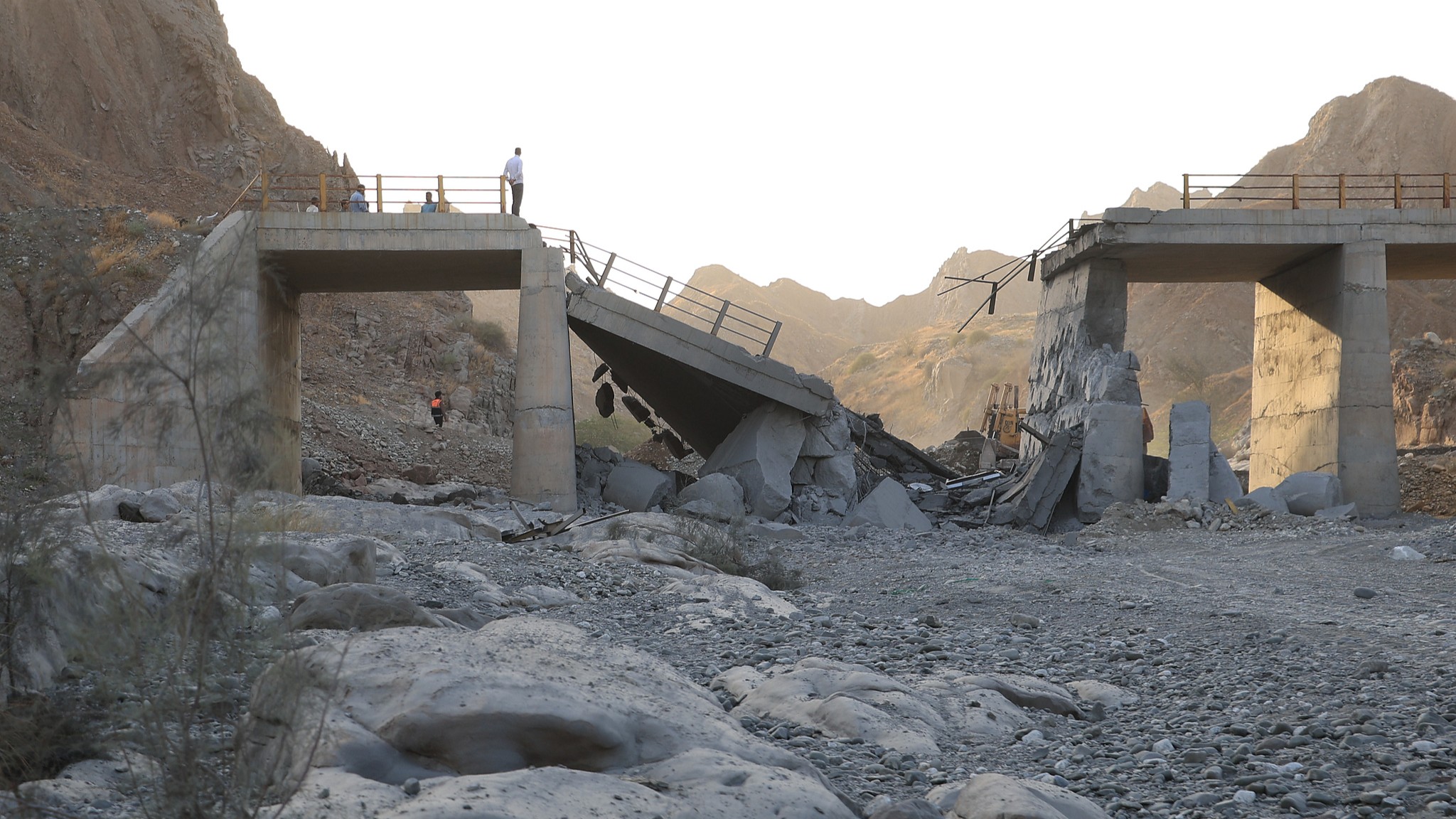
Iranian state television reported that U.S. airstrikes in Hormozgan
Province, bordering the Strait of Hormuz, killed three people, wounded eight
others, and damaged two bridges and a road tunnel.
Iran's Health Ministry said 50 people have been killed and
more than 500 wounded in U.S. strikes over the past three weeks.
Iranian Foreign Ministry spokesperson Esmaeil Baghaei
accused the United States of attempting to gain control over the Strait of
Hormuz.
The U.S. says it is enforcing a naval blockade in the area,
while Iran says it is targeting vessels that violate its navigation rules in
the strategic waterway.
Amid growing tensions, the U.S. State Department issued a
worldwide travel advisory for Americans abroad, warning of possible escalation
in the Middle East and potential disruptions caused by flight cancellations and
periodic airspace closures.
The European Union and Gulf states also called on Iran to
immediately halt attacks and interference with maritime navigation and to keep
the Strait of Hormuz open without conditions, according to a joint statement
reported by Saudi state media.