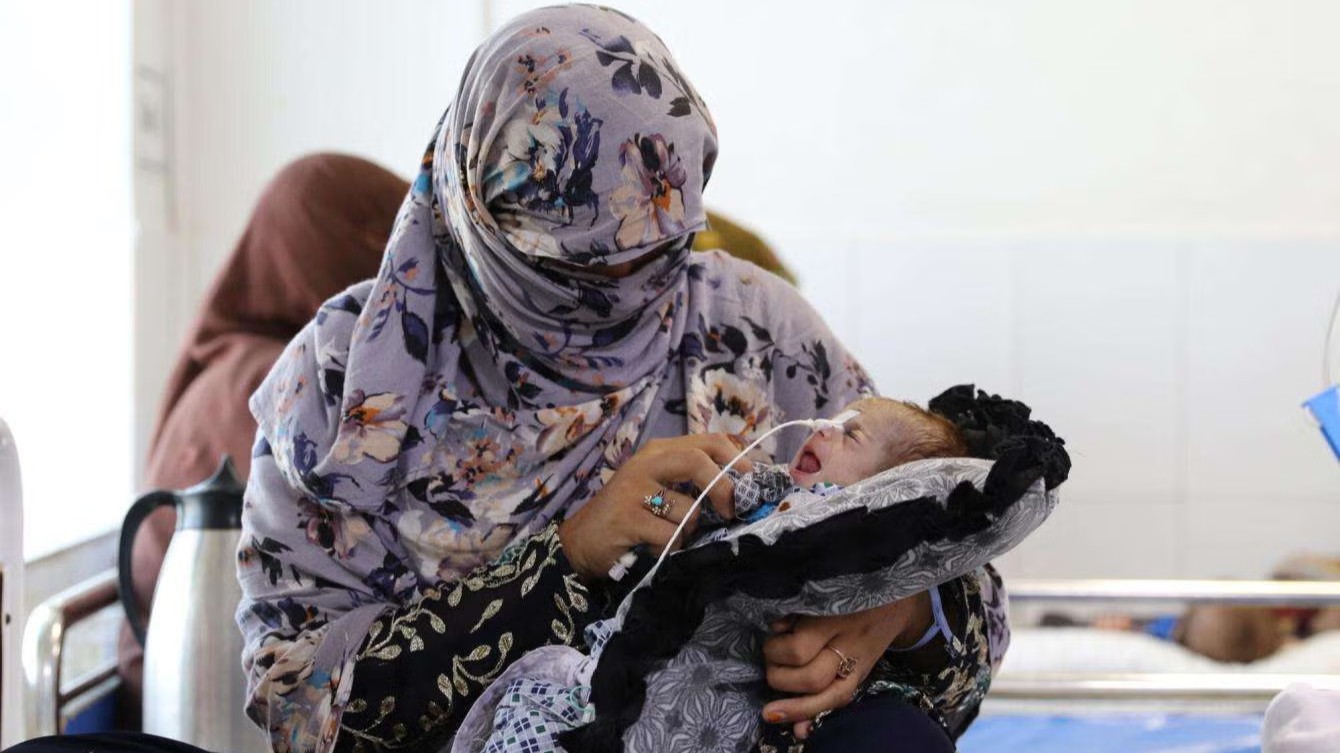
The Kabul Tribune (KT) — Doctors Without Borders, also known as Médecins Sans Frontières (MSF), has warned of a sharp increase in severe acute malnutrition among children in southern Afghanistan, attributing the crisis in part to sweeping international funding cuts that have weakened the country's health system.
MSF said admissions of severely malnourished children with
medical complications to its inpatient therapeutic feeding centers in Helmand
and Kandahar provinces increased by more than 30% on average between January
and April 2026 compared with the same period over the previous three years.
Most of the patients were younger than 1 year old.
The medical aid organization said the deterioration has been
driven by reductions in international humanitarian funding, recurrent droughts
and disruptions to food supplies.
“Children are reaching us far too late, often in critical
condition with preventable medical complications,” said Ana Lilia Banda, MSF's
medical coordinator in southern Afghanistan. She said the crisis reflects both
worsening food insecurity and the collapse of systems designed to detect and
treat malnutrition at an early stage.
MSF said the United States had been the largest donor to
Afghanistan's humanitarian response until mid-2025, when the Trump
administration ended bilateral assistance to the country. According to the
organization, the U.S. contributed more than $736 million to Afghanistan's
humanitarian response plan in 2024, accounting for 45% of the requested
funding.
Citing the World Health Organization, MSF said reductions in
international funding since early 2025 have resulted in the suspension or
closure of 445 health facilities, including 203 mobile health and nutrition
teams that played a critical role in community-based malnutrition screening and
early treatment.
The organization said the crisis has been further
exacerbated by recurring droughts that have reduced agricultural production and
deepened food insecurity. Border closures linked to regional geopolitical tensions
have also disrupted supplies of therapeutic food and increased food prices,
making it more difficult for pregnant women and mothers to access adequate
nutrition.
MSF warned that malnutrition among mothers is directly
affecting infant health, noting that many severely malnourished children are
being brought to treatment centers by mothers who are themselves suffering from
malnutrition.
At the MSF-supported feeding center at Boost Provincial
Hospital in Helmand province, more than 1,500 severely malnourished children
with medical complications were admitted between January and April 2026—more
than double the number recorded during the same period in 2022.
During the same four-month period, MSF's feeding center in
Kandahar admitted more than 570 severely malnourished children, while more than
300 additional patients had to be referred to other health facilities because
demand exceeded available capacity.
MSF said it has expanded its nutrition programs in Helmand
and Kandahar, but warned that humanitarian needs continue to outpace available
resources. The organization called on donors, health authorities and
humanitarian organizations to urgently restore funding for nutrition programs
and ensure uninterrupted supplies of therapeutic food and essential medical
equipment to prevent the crisis from worsening.
MSF currently operates seven medical projects across
Afghanistan and said it admitted 9,388 malnourished children to its inpatient
therapeutic feeding centers and enrolled 3,166 children in outpatient nutrition
programs during 2025.





