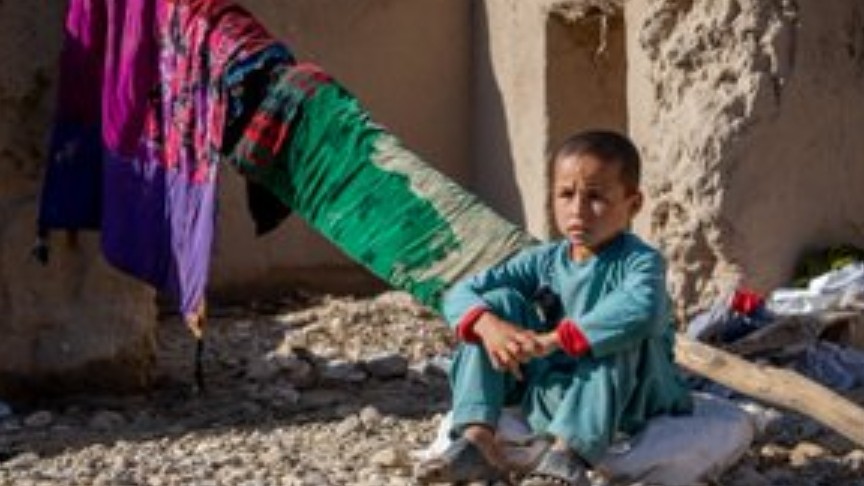
The Kabul Tribune (KT) — More than 8.8 million children in Afghanistan are exposed to at least three overlapping climate hazards, according to a new report by UNICEF, highlighting the urgent need to strengthen climate-resilient services across the country.
The report, titled Children’s Climate Risk Report 2026 and released today, found that nearly half of the world’s children are exposed to at least three overlapping climate hazards, posing serious threats to their health, education, and survival.
In Afghanistan, where around 21 million children live, more than 8.8 million — or 41% — face at least three simultaneous climate risks. These include floods, droughts, heatwaves, extreme heat, and sand and dust storms.
The report ranks Afghanistan as the most vulnerable country in South Asia for children, citing severe gaps in essential services needed to help them cope with, adapt to, and recover from climate shocks.
“Children in Afghanistan are already living on the frontlines of the climate crisis,” said Tajudeen Oyewale, UNICEF’s representative in Afghanistan. “What makes this especially dangerous is that climate hazards are overlapping with high child vulnerability.”
He emphasized the need to strengthen climate-resilient systems, including health, nutrition, water, sanitation and hygiene (WASH), education, child protection, and social protection services to safeguard children’s futures.
According to the report, more than 75% of children in Afghanistan are exposed to drought, over 50% face longer and more frequent heatwaves, and more than 1.7 million are at risk from river flooding. These hazards disrupt access to essential services, affecting children’s ability to survive, learn, and stay healthy.
The report also highlights the link between climate risks and malnutrition. Millions of children under five are expected to require treatment for wasting this year, as droughts, floods, and extreme heat weaken food systems and limit access to safe water. Nearly half of Afghan children live in severe food poverty, while gaps in immunization, sanitation, and hygiene further increase their vulnerability.
UNICEF stressed that education, child protection, and social protection systems are critical in helping children withstand climate shocks. Climate-resilient schools can ensure continuity of learning, while child protection services can reduce risks such as displacement, family separation, and child labor.
“For Afghanistan, the message is clear: protecting children from the climate crisis requires sustained investment in services that keep them healthy, nourished, safe, and learning,” Oyewale said.
UNICEF has called for urgent funding to strengthen climate-resilient services that can protect children before, during, and after climate-related shocks.





