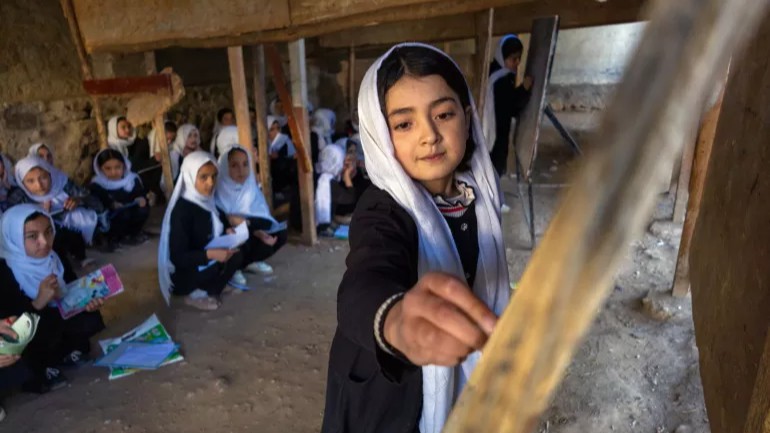
The Kabul Tribune (KT) — United Nations in Afghanistan said the continued ban on girls’ secondary education in 2025 remained the most significant structural barrier to equitable human capital development in the country.
According to the UN Afghanistan Results Report, the
organization continued to deliver essential services across the country despite
declining global assistance, with support from donors and partners.
The UN said funding for basic human needs under its
Strategic Framework for Afghanistan (2023–2027) increased for the third
consecutive year, reaching $1.7 billion in 2025.
Indrika Ratwatte said millions of Afghans benefited from UN
programs, including healthcare, education, and livelihood support.
The report said more than 34 million people received
essential services, including healthcare assistance. It added that over 4.6
million children were enrolled in public education with UN support, while
around 45,000 long-term jobs were created, with women making up 55% of
beneficiaries.
Despite these efforts, the UN said reduced humanitarian aid,
large-scale population movements, climate pressures, and ongoing operational
constraints continued to strain households, markets, and essential services
across Afghanistan.
The organization noted that Afghan communities showed
resilience by working with national and international partners to address
urgent needs while building a foundation for long-term recovery.
The UN also emphasized the importance of partnerships,
saying coordination platforms helped facilitate dialogue between international
stakeholders and Taliban authorities to support aid delivery.
Looking ahead, the UN said the needs of the Afghan people
remain a priority and called for continued collaboration among national,
regional, and international partners to promote a more inclusive and resilient
future.





