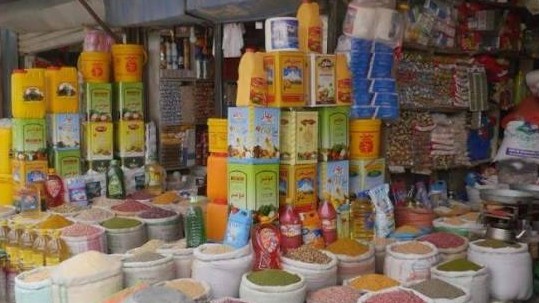
The Kabul Tribune (KT) — The World Food Programme (WFP) says that despite relative stability in the Afghan currency exchange rate, prices of most food and non-food items in Afghanistan remain higher than last year and above the three-year average.
In a report released on Friday, Jan. 16, 2026, the WFP said national average prices of key food commodities showed no significant change in the second week of January. However, rice and cooking oil prices increased due to ongoing trade disruptions with Pakistan.
According to the report, the price of Palawi rice rose by 1.9%, Shola rice by 4.2%, and cooking oil by 2.2%.
Compared with last year, prices of wheat, wheat flour, rice, cooking oil and salt are significantly higher. Except for wheat and wheat flour, prices of these items are also above the three-year average and pre-2021 levels.
In contrast, prices of sugar, pulses and bread, despite recent stability, remain below the three-year average.
The WFP said the afghani remained broadly stable against foreign currencies in the second week of January and has appreciated by about 5% compared with last year, helping to partially contain import costs.
However, the continued closure of border crossings with Pakistan since mid-October 2025 has kept trade volumes below normal levels.
The report noted that while Afghan traders have continued imports through alternative routes and from Iran, India and Central Asia, winter conditions and limited domestic supply have increased reliance on imports, placing mild upward pressure on prices.
In the vegetable sector, the WFP reported minor price changes, with tomato prices rising by 3.5%, while potato and onion prices fell by 2.1% and 3.4%, respectively.
The organization also warned that labor market conditions have deteriorated as winter has progressed. According to the report, access to work for daily laborers has dropped to 1.6 days per week, while daily wages for unskilled workers remain low at 297 afghanis.
In the fuel sector, diesel prices have stabilized following sharp increases in October, recording only a 1.1% weekly rise to 61.9 afghanis per liter.
Despite this, diesel prices remain 4% higher than last year, though 13% below the three-year average.





