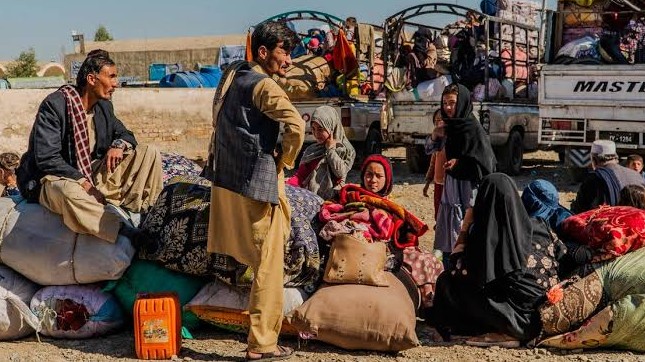
The Kabul Tribune (KT) — Amnesty International has written an open letter to Pakistani Prime Minister Shehbaz Sharif, expressing grave concern over what it described as the unlawful detention, harassment and mass deportation of Afghan refugees and asylum seekers in Pakistan.
In the letter, shared by Amnesty International’s South Asia regional office, the rights group called on Pakistani authorities to immediately halt deportations and ensure that Afghans with international protection needs are safeguarded in line with international human rights law.
Amnesty said Pakistan’s policy toward Afghan refugees has shifted sharply since the announcement of the “Illegal Foreigners Repatriation Plan” in September 2023, warning that it could amount to one of the largest forcible returns of refugees in modern history.
The organization said it has documented a lack of transparency, due process and accountability in arrests, detentions and deportations of Afghan nationals, adding that harassment and hostility toward refugees have increased.
According to the United Nations High Commissioner for Refugees (UNHCR), arrests and detentions of Afghan refugees in Pakistan have increased tenfold this year, with more than 115,000 cases recorded. Amnesty said many detainees have little or no access to legal representation or their families, and that children have also been among those arrested.
Amnesty cited figures from the International Organization for Migration (IOM) showing that nearly 1.5 million Afghan refugees have returned since the deportation drive began, with almost half of them in 2025 alone. It said deportations are often carried out swiftly, with refugees given limited opportunity to collect belongings or assets.
The rights group warned that there are no effective safeguards for individuals at risk, including journalists, human rights defenders, women activists, former government employees and those who worked with foreign governments or organizations. It noted that Reporters Without Borders has said at least 20 Afghan journalists have been deported from Pakistan.
Amnesty also raised concerns over forced evictions and the demolition of refugee housing, including the closure of refugee camps in several provinces and the destruction of more than 1,200 homes belonging to Afghan refugees in Karachi.
The organization stressed that forcibly returning Afghan refugees under current conditions in Afghanistan would violate the principle of non-refoulement, as Amnesty has documented arbitrary arrests, torture, enforced disappearances and severe restrictions on women and girls under Taliban rule.
Amnesty urged Pakistan to immediately stop arbitrary arrests and deportations, suspend the repatriation plan, ratify the 1951 Refugee Convention and its 1967 Protocol, and develop a comprehensive national asylum framework in line with international law.





