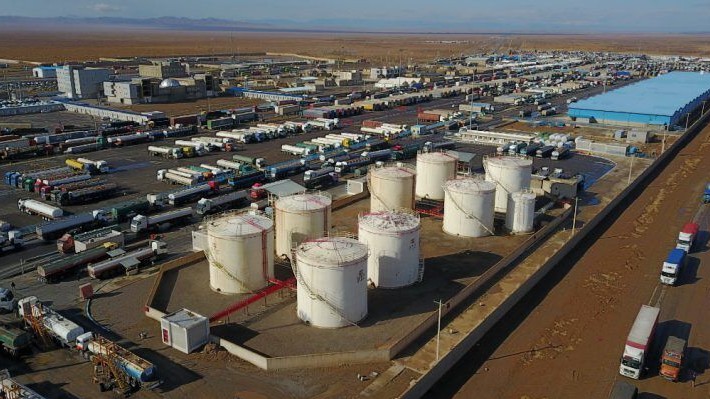
The Kabul Tribune (KT) — Iranian media, citing officials, report that domestic and foreign investors operating in the Dogharoun Free Trade–Industrial Zone in Razavi Khorasan province will be exempt from paying taxes for up to 20 years.
Hassan Nouri-Zadeh, deputy for economic development at Iran’s Dogharoun Free Trade–Industrial Zone Organization, told the state news agency IRNA on Thursday, Dec. 24, 2025, that all operating permits for domestic and foreign traders and investors are now issued by the organization, with administrative procedures reduced to a minimum.
He said the Dogharoun free zone covers about 8,700 hectares, adding that Afghan investors do not require visas to operate legally within the zone.
Nouri-Zadeh emphasized that the zone’s legal incentives would, over the long term, help strengthen economic relations between Iran and Afghanistan.
Describing Afghanistan’s market as a major opportunity to boost bilateral trade, he said Herat’s proximity to the Dogharoun border crossing, cultural ties, and the widespread presence of Iranian goods in Afghan markets have increased Afghan traders’ interest in Iranian products.
According to Nouri-Zadeh, expert estimates show that Afghanistan’s total trade with the world in 2024 stood at about $12 billion, of which $3.4 billion was conducted through trade with Iran.
He noted that Herat, Afghanistan’s most industrialized city, has a population of more than 3.6 million, and its 120-kilometer distance from the Dogharoun border has facilitated the large-scale transfer of Iranian goods to the province.
Referring to Afghanistan’s need for technical, construction, and mineral-processing infrastructure, Nouri-Zadeh described the situation as a “golden opportunity” to expand economic cooperation between the two countries.
At the same time, he cited the lack of infrastructure for customs digitization in Afghanistan as a challenge, saying that addressing the issue could help streamline transit, exports, imports, and passenger movement.