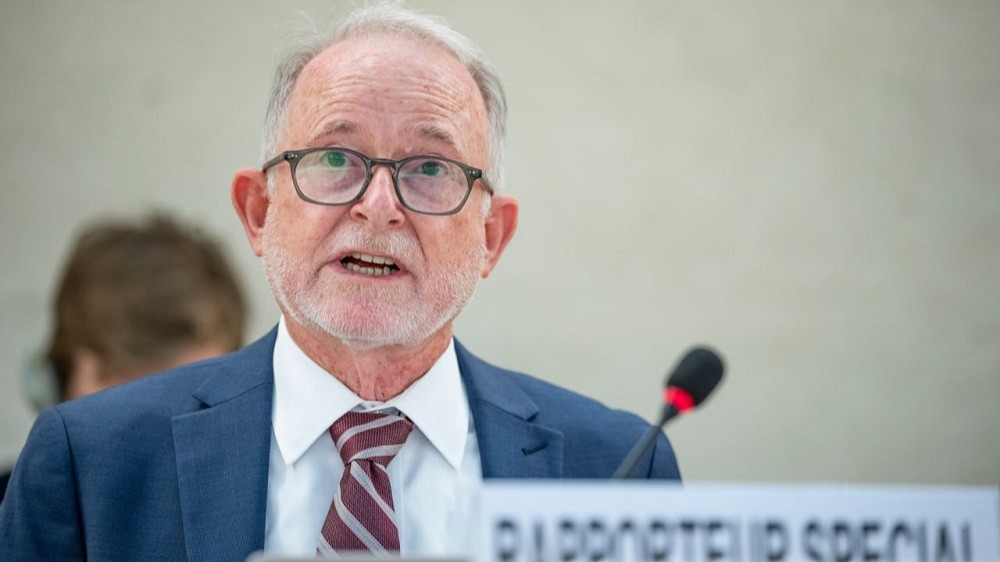
The Kabul Tribune (KT) — UN Special Rapporteur on Afghanistan Richard Bennett said Friday that Afghanistan’s human rights situation remains “deeply alarming,” concluding a five-day visit to Qatar where he met diplomats, Afghan activists, students, and humanitarian organizations.
Bennett wrote on X that he discussed a wide range of
concerns with Qatari officials, including the Foreign Ministry’s Special Envoy,
the National Human Rights Commission, and international groups working on
education, development, and humanitarian relief. He praised Qatar’s
“substantial and ongoing support” for Afghanistan, particularly in education,
health, livelihoods, and peace facilitation efforts.
In his end-of-mission statement, Bennett urged the
international community based in Doha to maintain “principled engagement” with
the Taliban, insisting on respect for human rights and accountability. He
emphasized that durable peace in Afghanistan is impossible without protecting
the rights of women, survivors of abuses, and marginalized communities.
Bennett highlighted the relevance of the global 16 Days of
Activism Against Gender-Based Violence campaign, saying nowhere is it more
urgent than Afghanistan, where women and girls remain barred from most
education and employment and face severe restrictions on movement and access to
health care. He said he was “alarmed” by reports of violence against women,
including the unexplained death of a recently married girl in Kabul, calling
for independent investigations.
Bennett also condemned the public execution carried out this
week in Khost, in which a family member of a murder victim — reportedly a child
— shot the convicted man in a stadium. He said the death penalty is “cruel,
inhuman and degrading,” especially when fair-trial guarantees are absent, and
stressed that “children must never be used to carry out an execution.”
The Special Rapporteur raised concerns about Afghanistan’s
deteriorating safety for refugees and returnees. He noted that more than 2.7
million Afghans have been forcibly returned from Pakistan and Iran this year,
including women and families deported after raids in Islamabad. Bennett said
Afghanistan is not safe for many Afghans — especially women, minorities, former
government employees, activists, and LGBTQ+ individuals.
He criticized Western countries for reducing or halting
resettlement programs, saying Afghans with valid cases remain stranded in third
countries “in extremely insecure and uncertain situations.” The international
community, he said, “must not abandon Afghans.”
Concluding his mission, Bennett said Afghanistan’s human
rights situation “undoubtedly warrants continued serious engagement” from Qatar
and the international community. He praised the determination of Afghans he met
in Doha who continue to “strive for dignity and rights despite the difficult direction
the country is taking





