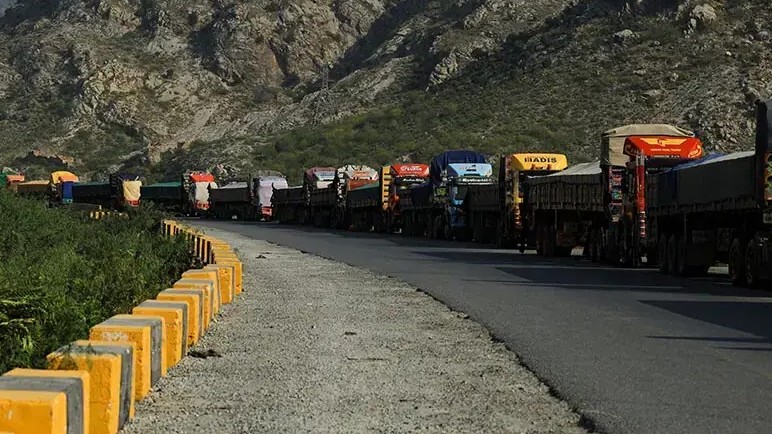
The Kabul Tribune (KT) —Pakistan’s business, industrial and transport sectors—particularly in Khyber Pakhtunkhwa (KP)—are bracing for heavy economic losses after the Taliban announced a suspension of all trade ties with Islamabad, Pakistani media reported.
According to Dawn newspaper, the Taliban’s sudden announcement has sent “shock waves” across commercial circles, raising fears of severe financial repercussions and long-term damage to Pakistan’s position in regional markets.
The concerns follow a video message by Mullah Abdul Ghani Baradar, the Taliban’s deputy prime minister for economic affairs, who warned Afghan traders and industrialists against doing business with Pakistan. He said all trade contracts with Pakistani companies will end within three months and urged Afghan businesses to seek “new avenues” with alternative countries.
Ziaul Haq Sarhadi, vice president of the Pakistan–Afghanistan Joint Chamber of Commerce, told Dawn that Pakistan now risks losing a major export market in Afghanistan and Central Asia. He warned that Afghanistan could easily increase trade with Iran, Turkey and Central Asian states — potentially sidelining Pakistan permanently.
Sarhadi said Pakistan exports between $100 million and $200 million worth of goods to Afghanistan every month, including fresh fruit, cement, medicines, medical equipment, plastic products, agricultural tools, shoes and textiles.
Zahidullah Shinwari, former head of the Sarhad Chamber of Commerce, said the halt in trade will not only deprive Pakistan of the Afghan and Central Asian markets but will also sharply reduce government tax revenues.
He added that KP’s industries — heavily dependent on Afghan markets — will be hit the hardest. Many major factories in the province, especially cement producers that rely on coal imported from Afghanistan, may be forced to cut production or even shut down if imports stop.
The report warns that the situation could trigger widespread unemployment, factory closures and financial collapse for many industrial owners in the province.





