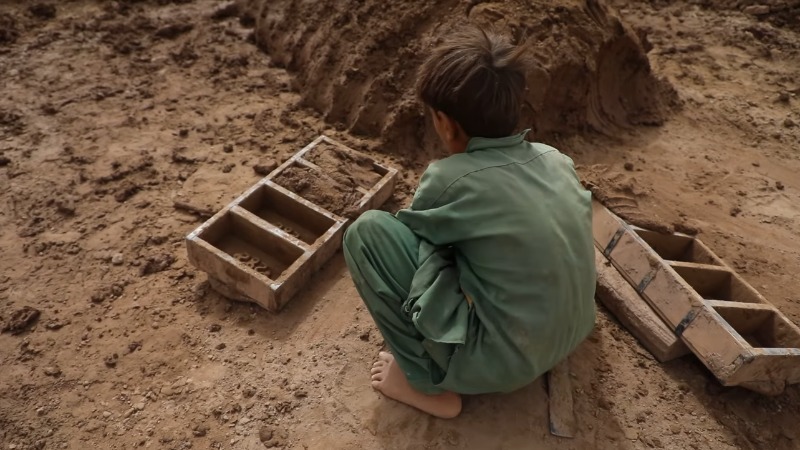
The Kabul Tribune (KT) — Afghan children are increasingly being forced into child labour as hunger deepens across the country amid international aid cuts, World Vision reported.
In northwestern Afghanistan’s Badghis province, women wait
for hours in the blistering heat at makeshift distribution points, hoping to
receive small packages of humanitarian assistance — 2,900 Afghanis (about $40)
in cash, along with nutrient supplements and fortified cereal for young
children and mothers. For many, it’s the only thing standing between survival
and starvation.
“Every month, I come here to collect food and cash,” said
Marzia*, a 38-year-old widow and mother of five. “It’s the only reason my
children are still standing.” But even this limited help is now at risk.
According to World Vision, eight in ten Afghan families
cannot afford a nutritious diet, and three in four must borrow money just to
buy basic groceries. Female-headed households like Marzia’s are among the
hardest hit — two-thirds can no longer afford even the most basic nutrition.
Hunger is pushing millions of children into the streets to
scavenge or work. Marzia’s eldest son, Hamidullah, 14, spends his days
collecting scrap metal alongside his younger siblings to earn a few coins. On
good days, they make 10 Afghanis — about 50 cents.
Across Afghanistan, one in five children between ages 5 and
17 are engaged in child labour, many in hazardous conditions, including brick
kilns, carpet weaving, street vending, and mining.
“I want nothing more than to send my children to school,”
Marzia said. “But when we can’t afford food, they don’t have that choice.”
World Vision warns that 14.8 million Afghans — nearly
one-third of the population — are food insecure, and the situation is
deteriorating as humanitarian operations shrink. In March 2025 alone, 396
nutrition sites across Afghanistan were closed, cutting off access to essential
services for 80,000 women and children.
Funding cuts are forcing the United Nations Office for the
Coordination of Humanitarian Affairs (OCHA) to scale back its 2025 Humanitarian
Needs and Response Plan from 16.8 million people to 12.5 million — a 26 percent
reduction.
“These cuts will have devastating consequences for families
already on the edge of survival,” said Blerina Lako, World Vision Afghanistan’s
operations director. “In a country where nearly 90 percent of households cannot
afford a nutritious diet, fewer food distributions and cash transfers could
push many deeper into hunger, malnutrition, and harmful coping mechanisms.”
World Vision estimates that 3 million Afghan children under
five are suffering from acute malnutrition, while hunger threatens one in three
people nationwide.
Marzia, who was widowed during the war and wounded while
pregnant, now struggles to care for her five surviving children, including her
youngest son, Abdullah, who was born without limbs after she was shot. “He
hadn’t even come into the world yet, and he was already marked by war,” she
said.
Last year, World Vision reached 870,649 Afghans, including
over half a million children, with nutrition and health services. But the
organisation warns that without urgent funding, those fragile gains could be
lost.
“I have already lost a child to malnutrition,” said
Freshta*, six months pregnant and waiting for food aid. “This food is what
keeps my children alive.”
*Names have been changed for protection.





