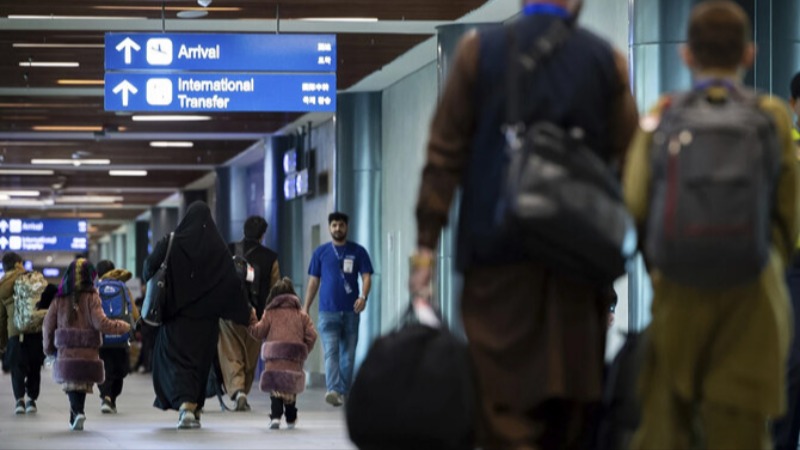
The Kabul Tribune (KT) — Human Rights Watch (HRW) has criticized the Trump administration’s plan to drastically cut U.S. refugee admissions and reshape the resettlement program, warning that the move will endanger thousands of vulnerable people, including Afghans forced to return to Taliban-controlled areas.
The rights group said the administration is preparing a
“two-pronged attack” on refugee resettlement — first, by reducing the annual
admissions cap from 125,000 to just 7,500, and second, by changing the criteria
for who qualifies for rescue.
According to documents obtained by The New York Times, the
new guidelines would prioritize refugees “who can fully and appropriately
assimilate.” HRW said that in practice, this means favoring white European
applicants, including Afrikaner South Africans and Europeans who claim
persecution for opposing mass migration or supporting populist political
parties.
HRW said the policy shift “racializes refugee protection”
and undermines decades of U.S. leadership in offering refuge to persecuted
people regardless of race or religion.
“Refugees are being replaced by nonrefugees — people who
don’t meet the definition of persecution under international law,” the
organization said.
The group pointed to the situation of Afghan refugees in
Pakistan, many of whom have been deported back to Afghanistan after the U.S.
suspended resettlement.
Among them is Mursal, a 28-year-old Afghan woman who worked
with the U.S. government and had already received a resettlement offer. The Washington
Post reported that Pakistani authorities forced her back into Afghanistan,
where she is now in hiding.
“Everyone knows we worked with the U.S.,” she told the
newspaper. “We fear what will happen if someone informs the Taliban’s
intelligence unit.”
HRW said that by curtailing resettlement and inserting
politically motivated priorities, the U.S. risks dismantling a system that has
long helped countries hosting large refugee populations — such as Pakistan,
Bangladesh, and Chad — avoid further instability.
“What has stopped many host countries from sending refugees
back to danger has been the assurance that the world is watching,” HRW said.
“By closing that door, the U.S. is telling refugees everywhere that they are on
their own.”





