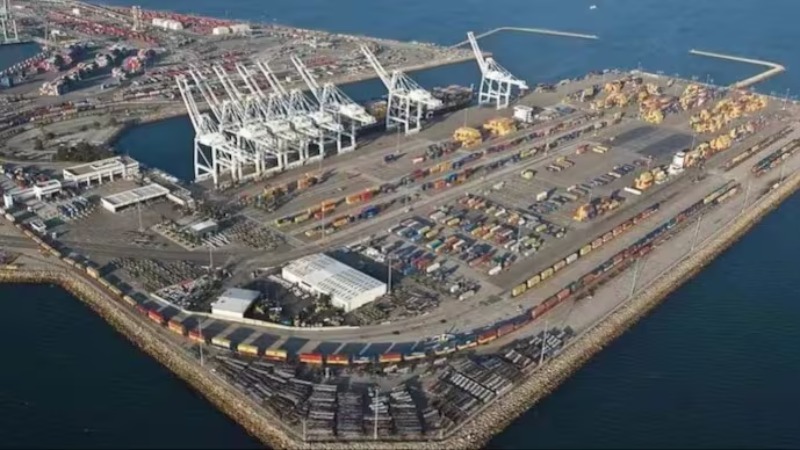
The Kabul Tribune (KT) — U.S. sanctions took effect Monday on India’s development of Iran’s Chabahar port, ending a rare exemption once granted to New Delhi and putting fresh pressure on a key U.S. partner in Asia, AFP reported.
The move is part of former President Donald Trump’s “maximum
pressure” campaign against Tehran and comes a day after broad United Nations
sanctions against Iran snapped back into force over its nuclear program.
Washington had granted an exemption in 2018 to allow India
to continue work on Chabahar, billed as a vital trade route into Afghanistan
that bypassed Pakistan. At the time, Kabul was still controlled by a
U.S.-backed government and seen as central to regional stability.
That rationale has faded since the Taliban retook power in
2021. U.S. officials said the exemption was no longer justified. State
Department spokesman Tommy Pigott said the decision was “consistent with
President Trump’s maximum pressure policy to isolate the Iranian regime.”
Under U.S. law, Indian firms involved in Chabahar —
including the state-run India Ports Global Limited — have 45 days to wind down
operations or risk being cut off from the American financial system. Analysts
warned that blacklisting an Indian entity could have a “cascading effect” on
banks and global partners wary of sanctions exposure.
India has invested heavily in Chabahar, signing a 10-year,
$370 million contract last year despite Afghanistan’s closure as a trade
corridor. The port is considered strategically important for New Delhi because
of its proximity to Pakistan and China’s nearby development of Gwadar port in
Baluchistan.
Indian foreign ministry spokesman Randhir Jaiswal said New
Delhi was “examining the implications” of the sanctions decision. Analysts
noted that India has historically complied with U.S. sanctions, even when
reluctantly halting oil imports from Iran under Trump’s earlier measures.
Still, some strategists argue that India may see value in
maintaining ties with Tehran. “India may choose to wear the sanctions as part
of a broader effort among non-Western great powers, including China and Russia,
to reduce reliance on the U.S. economy,” said Kadira Pethiyagoda, a foreign
policy analyst.





