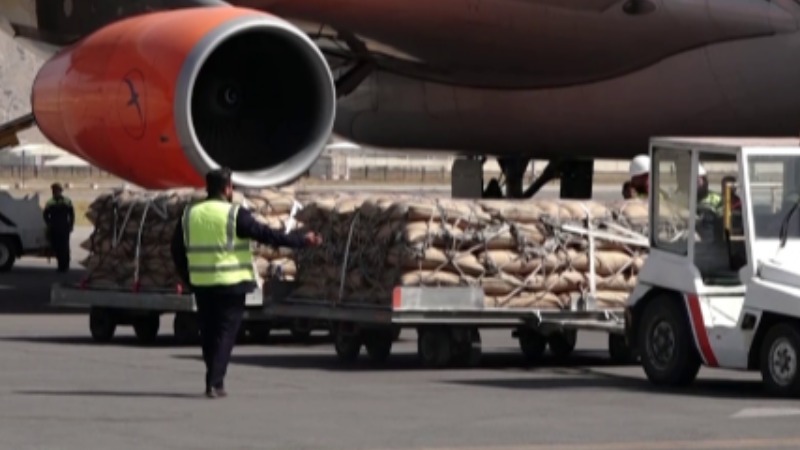
The Kabul Tribune (KT) — Trade between Afghanistan and European countries has been on the rise this year despite sanctions and a lack of formal recognition for the Taliban regime, The Diplomat reported.
According to the Taliban’s Ministry of Industry and
Commerce, trade between Afghanistan and Europe “is currently running smoothly,”
with total volumes increasing compared to last year. Ministry spokesperson
Akhundzada Abdul Salam Jawad said that in the first eight months of 2025,
Afghan exports to European countries reached more than $17 million, while
imports totaled nearly $143 million. The main trade partners include Germany,
Sweden, France, Italy, the Netherlands, Spain, and the United Kingdom.
Afghanistan’s Chamber of Commerce and Investment (ACCI) said
trade relations have grown despite limited transit routes, visa restrictions,
and the absence of product standardization systems. “There is high demand for
Afghan products in European markets,” ACCI spokesperson Jan Aqa Naveed said.
“However, challenges remain, and Afghanistan needs bilateral agreements with
countries along the routes leading to the European Union — particularly along
the Lapis Lazuli corridor.”
The Lapis Lazuli Corridor, inaugurated in 2018, connects
Afghanistan to Europe through Turkmenistan, Azerbaijan, Georgia, and Turkey.
The European Union remains one of Afghanistan’s key trading
partners after its neighboring countries, including Iran, China, India,
Pakistan, Uzbekistan, and Kazakhstan. Afghanistan benefits from the EU’s
“Everything but Arms (EBA)” arrangement, which grants duty-free access for
products from least-developed countries.
In 2023, total trade between the EU and Afghanistan amounted
to €148 million, accounting for 3.6 percent of Afghanistan’s total trade. That
figure more than doubled in 2024, reaching €302 million — with €39 million in
Afghan exports and €263 million in imports from the EU. The European Commission
ranked the EU as Afghanistan’s seventh-largest trading partner overall in 2024.
Still, significant challenges persist. High transport costs,
weak infrastructure, foreign exchange barriers, and tariff policies continue to
constrain trade. These issues have been compounded since the Taliban’s takeover
of Kabul in 2021, which prompted EU sanctions on the regime. The sanctions
currently target five entities and 135 individuals, including asset freezes.
While maintaining sanctions, the EU has continued to provide
humanitarian assistance to Afghanistan. In 2025 alone, it provided over €161
million through U.N. agencies and nongovernmental organizations, ensuring aid
reached Afghans without funding the Taliban.
Despite limited engagement, the EU and its member states
have made it clear that trade does not equal recognition. The bloc does not
recognize the Taliban as Afghanistan’s legitimate government and insists that
any potential recognition depends on the formation of an inclusive government
that respects human rights and international obligations.
No EU member state currently maintains a diplomatic mission
in Afghanistan. Nor have they accredited Taliban representatives, though
Germany has allowed Taliban envoys to assist with the deportation of Afghans
from its territory.
The EU’s position remains firm: modest increases in trade
will not shift its stance toward the Taliban regime. Recognition, officials
say, depends on tangible political and human rights progress — not trade
figures.





