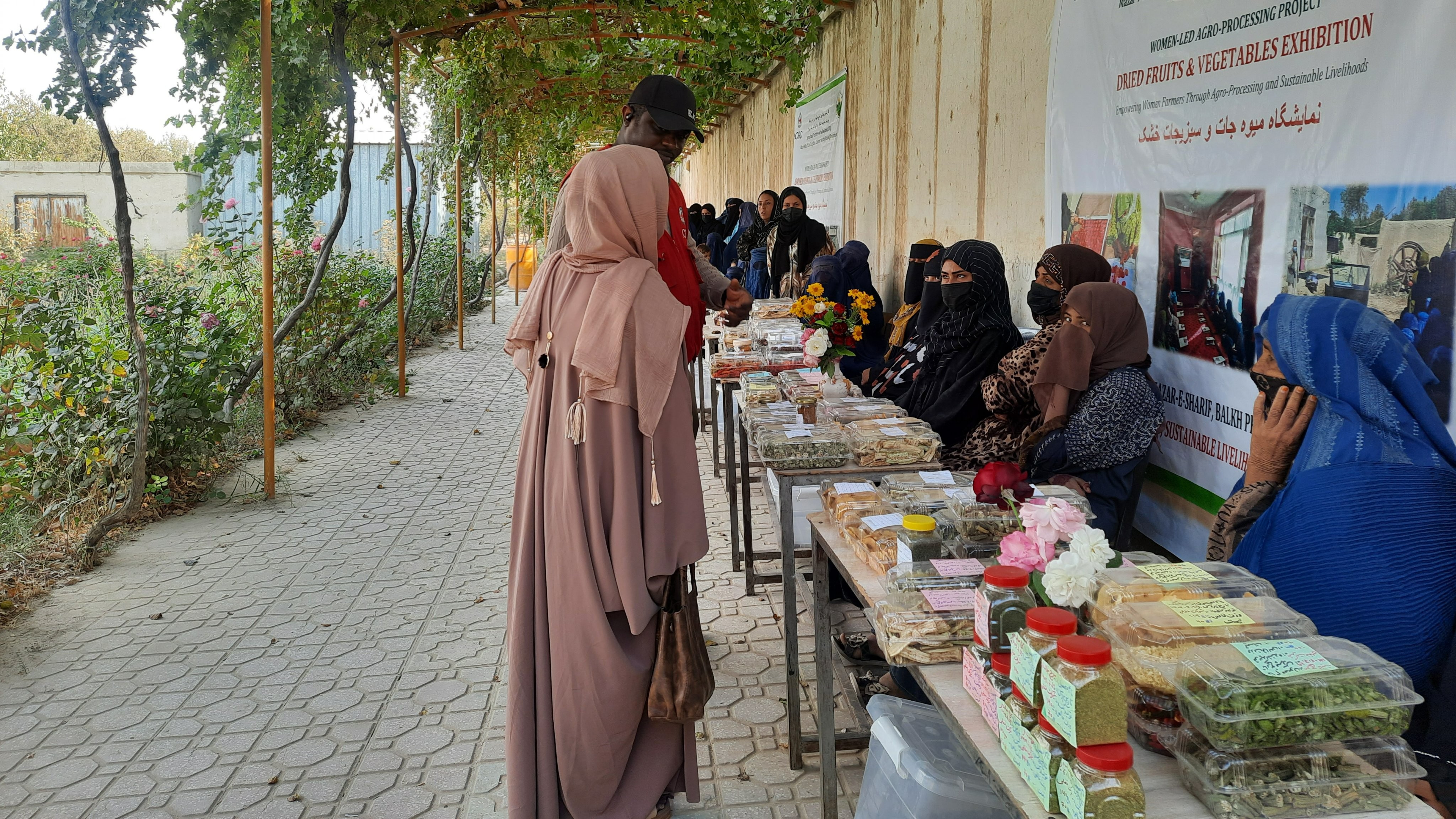
The Kabul Tribune (KT)— Restrictions on Afghan women's participation in humanitarian operations remain widespread despite a decline in reports of new formal directives, with half of surveyed aid organizations saying women employees are unable to report to their offices in some provinces, according to a report by UN Women and the Asia-Pacific Gender in Humanitarian Action Working Group.
The report, based on the 16th round of a survey conducted
from Oct. 7 to 26, 2026, found that 32% of surveyed organizations reported
women staff being stopped by the Taliban's Ministry for the Promotion of Virtue
and Prevention of Vice while travelling to work. It said this was the highest
level recorded across all rounds of the survey.
The findings were based on responses from 90 organizations,
including 72 national nongovernmental organizations and civil society
organizations, 10 international nongovernmental organizations and eight U.N.
agencies. Of the national organizations, 62 were women-led organizations.
The survey found that 36% of organizations reported
receiving no new instructions or facing no new impediments. However, practical
restrictions on women's work continued to affect humanitarian and basic human
needs operations.
Only 42% of organizations said they remained fully
operational with both women and men staff. The report also found that fewer
organizations had agreements with the Taliban authorities allowing women to
work at project locations and offices.
Meanwhile, 66% of surveyed organizations said they had
accepted conditions imposed by the Taliban administration to continue
operating.
The report also noted an increase in the proportion of
respondents working on gender-based violence, rising to 60% from 44% in June.
The share working on human rights and gender equality increased to 69% from 59%
over the same period.
The findings suggest that restrictions are increasingly being
enforced through practical barriers rather than new formal instructions,
continuing to limit women's participation in humanitarian work across
Afghanistan.