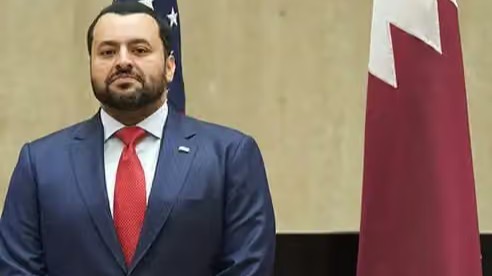
The Kabul Tribune (KT)— Qatar Minister of State for Foreign Affairs, Mohammed bin Abdulaziz Al-Khulaifi, is expected to visit Afghanistan, Pakistan and Uzbekistan next week as Doha seeks to revive mediation efforts between the Taliban and Islamabad, Afghanistan International reported, citing sources.
The sources said Qatar hopes to complement diplomatic
efforts with economic projects to help improve relations between the Taliban
and Pakistan. Al-Khulaifi is expected to travel to Afghanistan and Pakistan on
Saturday, followed by a visit to Uzbekistan and other countries in the region.
One objective of the trip is to renew efforts to mediate
between the Taliban and Pakistani officials and create an opportunity for talks
aimed at easing tensions, the sources told Afghanistan International. Qatar has
consulted both sides about the possibility of playing a mediating role, they
said.
Qatar’s government has not publicly commented on the
reported travel plans or the renewed mediation effort.
Al-Khulaifi attended the eighth Qatar-U.S. Strategic
Dialogue in Washington on Tuesday, where participants discussed regional
developments, including Afghanistan, the peaceful resolution of conflicts and
mediation efforts.
Economic Projects and Regional Connectivity
Qatar’s efforts could also focus on economic cooperation, including
railway links, trade and transport connections between Afghanistan, Pakistan
and Central Asia, according to the report.
At the 30th meeting of the Economic Cooperation
Organization’s Council of Ministers in Islamabad on Nov. 15 and 16, Pakistani
Foreign Minister and Deputy Prime Minister Ishaq Dar emphasized regional
connectivity, trade and economic integration. The Taliban did not send a
representative to the meeting.
The proposed railway linking Uzbekistan, Afghanistan and
Pakistan was among the regional connectivity projects discussed. If completed,
it would provide Central Asian countries with access to Pakistani ports through
Afghanistan.
Energy cooperation between Pakistan and Turkmenistan is
another part of the region’s connectivity agenda. At a meeting of the two
countries’ Joint Intergovernmental Commission in Islamabad on Nov. 16,
officials discussed progress on the Turkmenistan-Afghanistan-Pakistan-India gas
pipeline, known as TAPI, and a proposed electricity transmission project
linking the three countries.
The foreign ministers of Pakistan and Turkmenistan also
discussed the political and technical coordination needed to advance TAPI and
agreed to hold a meeting of the project’s steering committee.
Qatar’s Previous Mediation Efforts
Qatar has previously mediated between the Taliban and
Pakistan. On Oct. 19, 2025, the two sides reached a ceasefire agreement in Doha
through Qatari and Turkish mediation. They later held five days of talks in
Istanbul on consolidating the truce and establishing a mechanism to monitor it.
On Nov. 8, Qatar’s ambassador to Afghanistan, Murdef bin Ali
Al-Qashouti, spoke about Doha’s diplomatic efforts to connect Afghanistan with
the international community at the Afghanistan Policy and Dialogue Forum in
Kabul.
The Qatari Embassy said the forum focused on “Qatar’s role
in connecting Afghanistan with the world.” Participants also discussed the 2020
Doha Agreement between the United States and the Taliban and Qatar’s role in
the 2025 ceasefire between the Taliban and Pakistan.
Qatar’s Foreign Ministry said Al-Khulaifi met with Stephen
Doughty, Britain’s deputy foreign secretary for the Middle East and North
Africa, in London on Nov. 17. Their discussions included cooperation on
mediation and recent developments in Afghanistan.
Security Disputes Continue to Strain Relations
Persistent disagreements over security remain a major
obstacle to improving relations between Pakistan and the Taliban.
Pakistan accuses the Taliban of allowing fighters from the
Tehreek-e-Taliban Pakistan, or TTP, to operate from Afghan territory. The
Taliban denies providing shelter to the militants and says Pakistan’s security
problems are an internal matter.
At a news conference on Nov. 20, a Pakistani Foreign
Ministry spokesperson said Afghanistan had not been invited to the ECO foreign
ministers’ meeting because Pakistan does not recognize the Taliban
administration. The spokesperson also said Afghanistan’s membership in the
organization had been suspended.
The reported Qatari initiative comes as Pakistan seeks to
expand trade and transit links with Central Asia, with Afghanistan serving as a
potential land corridor. The proposed Uzbekistan-Pakistan railway through
Afghanistan, the TAPI pipeline and regional electricity transmission projects
are among the initiatives that could connect the economic interests of
Afghanistan, Pakistan and Central Asian countries.