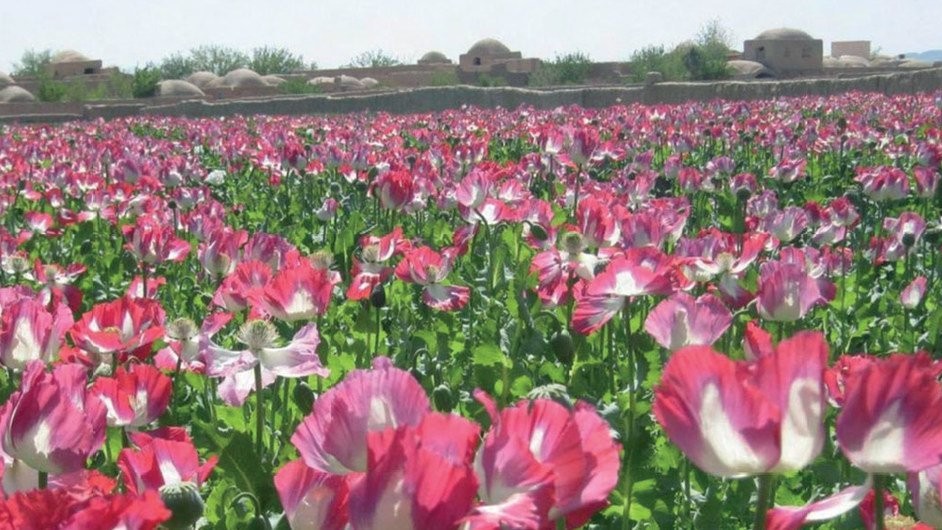
The Kabul Tribune (KT)— Opium poppy cultivation in Afghanistan increased sharply in 2026, rising from about 10,000 hectares in 2025 to more than 43,000 hectares, despite remaining well below pre-ban levels, according to a report by the United Nations Office on Drugs and Crime (UNODC).
The estimated cultivated area ranged from 32,000 to 61,000
hectares. Poppy cultivation was recorded in 16 of Afghanistan’s 34 provinces,
five more than the previous year. The report said the increase suggests that
the drug ban in Afghanistan is weakening.
Cultivation remains concentrated in the northeast,
particularly in Badakhshan province, which accounted for 76% of the total
cultivated area.
National opium production also increased from about 300 tons
in 2025 to just under 1,500 tons in 2026, with estimates ranging from 800 to
2,400 tons.
Despite lower production volumes, total income from
harvested opium sales has recovered to pre-ban levels, remaining an attractive
source of income for farmers, traders and others involved in the opiate
economy.
Opium generated an estimated $525 million for traders in
Afghanistan in 2026, comparable to the average between 2018 and 2021, but still
below the peaks recorded in years such as 2017 and 2022, the report said.
Although prices for dried opium declined from about $570 per
kilogram in 2025 to $500 in 2026, they remained substantially above pre-ban levels
of less than $100 per kilogram. The higher prices contributed to increased
overall revenues despite lower production.
The report estimated that income from opium sales was
equivalent to 2.7% of Afghanistan’s gross domestic product and 8.5% of its
agricultural sector. These estimates do not include additional income generated
through processing, trafficking, exports and other activities along the supply
chain.
UNODC said farmers had adapted to actual or perceived
enforcement pressures by hiding small poppy plots within cereal fields,
cultivating inside walled compounds and staggering planting and harvesting
times to reduce the risks of detection, eradication and adverse weather
conditions.
In Helmand province, where cultivation reached 3,500
hectares, more than 90% of opium poppy fields were concealed. More than 50%
were planted within cereal fields and over 40% inside walled areas.
The report also pointed to large regional differences in
opium prices, suggesting that Afghanistan’s market has not yet stabilized and
may encourage internal trafficking.
Some traders may seek to buy opium in the northeastern
region, where most cultivation takes place and prices are lowest, and resell it
in areas where prices can be twice as high, such as the southwest.
Such price differences could create lucrative opportunities
for trafficking networks and encourage migration for cultivation and
harvesting, as has happened in the past.
Seizure data reported to UNODC suggest that opiate
trafficking in the region has declined in recent years but has remained
resilient despite the drugs ban.
The report said the continued trafficking was most likely
supported by the release of stocks accumulated before the ban, which helped
mitigate the disruption in supply caused by lower cultivation. However, those
stocks may have become increasingly depleted. UNODC estimated that
Afghanistan’s opium reserves could have lasted through 2025 or 2026.
The sharp increase in opium prices following the ban also
allowed traffickers to release stocks gradually while making large profits. If
those stocks are now largely exhausted, there may be a strong incentive to
resume poppy cultivation.
For farmers, many of whom were unable to accumulate large
stocks and continue to face severe economic hardship, opium cultivation may
remain one of the few available sources of income despite the risks of
enforcement.
UNODC said these factors could contribute to a renewed
increase in opium poppy cultivation and heroin trafficking beyond 2026.
However, future developments will depend on whether the market stabilizes at
relatively low production and high prices or returns to higher production and
lower prices, as well as changes in demand, the emergence of new consumer
markets and alternatives to heroin, and opiate production in other countries.
The report also said methamphetamine trafficking in the
region had not shown strong signs of decline since the drugs ban, unlike opiate
trafficking, pointing to a sustained supply. However, the share of
methamphetamine originating in Afghanistan remains unclear.
UNODC said continued monitoring of cultivation, production,
prices and trafficking in Afghanistan, as well as demand and market trends in
destination countries, would be critical to determining whether the recent
increase is a temporary adjustment or the beginning of a renewed rise in opium
production and heroin trafficking.