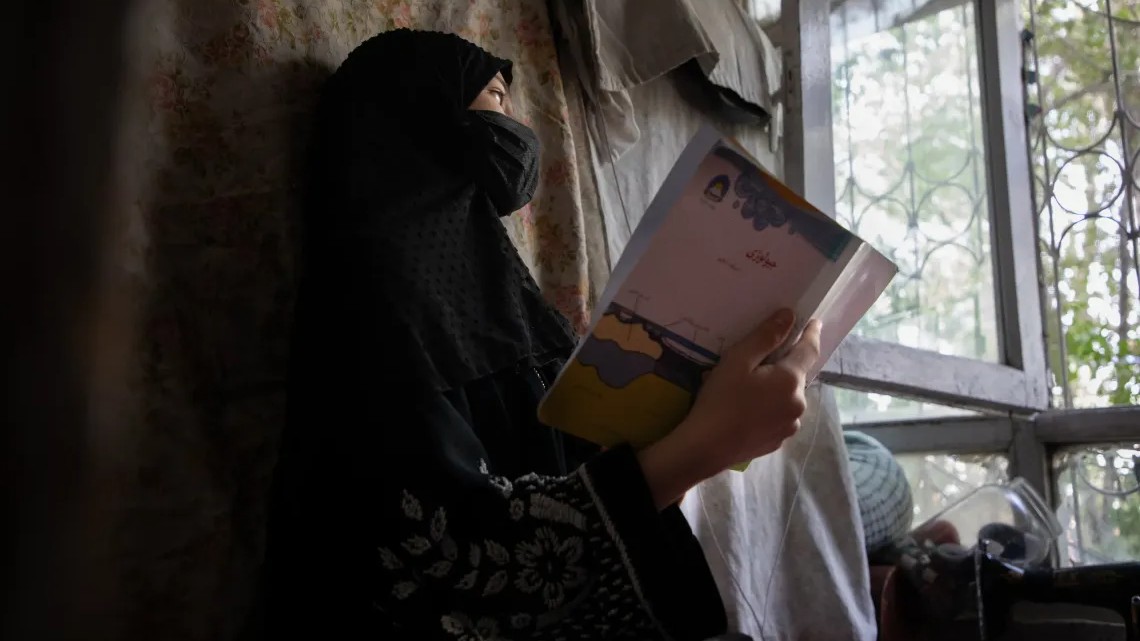
The Kabul Tribune (KT) — More than 2.2 million girls in Afghanistan remain barred from public education beyond Grade 6, the European Union said, condemning Taliban restrictions on women and girls and calling for the policies to be reversed unconditionally.
In a statement at UNESCO’s 225th Executive Board, the EU
said the rights situation for Afghan women and girls had deteriorated further
in 2026, with restrictions limiting their access to education, employment,
freedom of movement and participation in public life.
Afghanistan is the only country where girls are prohibited
from continuing public education beyond Grade 6, the EU said.
The bloc commended UNESCO’s efforts to provide alternative
learning opportunities for Afghan women and girls but stressed that such
programs could not replace formal, inclusive and quality education.
In 2025, the EU and UNESCO launched a partnership worth 4.7
million euros to support economic empowerment in Afghanistan through
community-based skills development and literacy training.
The EU also pledged continued support for independent Afghan
media, civil society organizations and human rights defenders, including those
working to advance women’s rights despite what it described as a restrictive
and dangerous operating environment.
Its support for UNESCO-led initiatives includes programs on
media and information literacy, documentary heritage, freedom of expression and
journalist safety, the statement said.
The EU also raised concerns about threats to Afghanistan’s
cultural heritage, illegal excavations, the illicit trafficking of cultural
goods and risks facing cultural professionals, particularly women, whose
livelihoods have been constrained.
The bloc welcomed UNESCO’s work in Afghanistan and noted the
extension of the United Nations Strategic Framework for Afghanistan through
2030. It said continued international engagement and financial support remained
important to UNESCO’s work in the country.