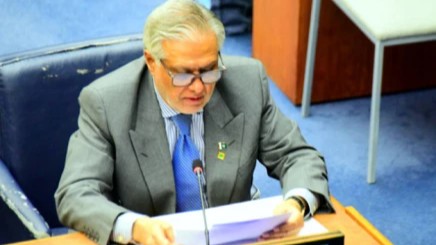
The Kabul Tribune (KT) — Pakistan’s Deputy Prime Minister and Foreign Minister Ishaq Dar said he had urged Afghanistan’s Taliban leaders to prevent Afghan territory from being used for attacks against other countries, particularly Pakistan, warning that continued militant threats were undermining regional stability.
Speaking at a conference in Islamabad, Dar recalled three
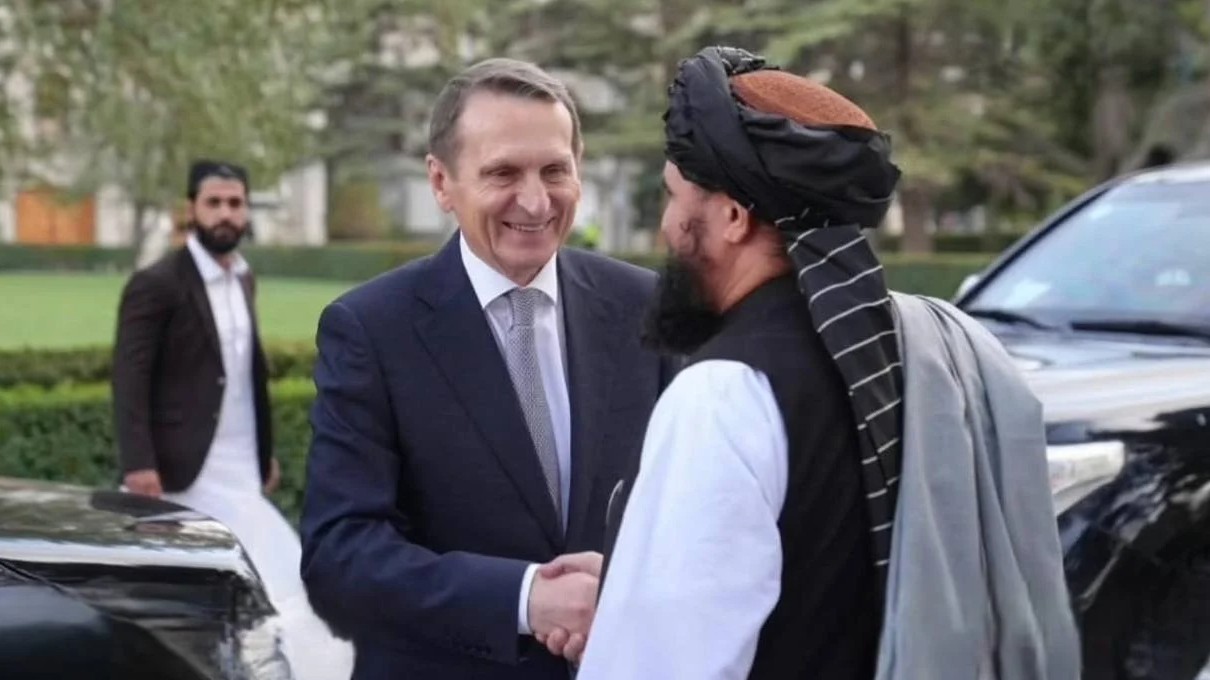
visits to Afghanistan last year, during which he met senior Taliban officials,
including Prime Minister Mullah Mohammad Hassan Akhund, Deputy Prime Minister
Abdul Salam Hanafi and Foreign Minister Amir Khan Muttaqi.
Dar said he had agreed to the Afghan side’s requests on
trade, economic affairs, refugees and political matters, but had made one
central demand: that Afghan territory not be used against any country,
especially Pakistan.
He also cited Pakistan’s decision to upgrade diplomatic
relations with the Taliban administration to ambassadorial level and an
agreement on a feasibility study for the trans-Afghan railway project as
examples of efforts to strengthen bilateral ties.
Dar said Pakistan had lost more than 90,000 people to
terrorism and suffered substantial economic losses. He urged Taliban leaders to
take verifiable action against groups that threaten Pakistan and other
neighboring countries.
Afghanistan’s Taliban authorities have repeatedly disputed
Pakistan’s allegations that militant groups use Afghan territory to launch
attacks across the border.
Pakistan’s Information Minister Attaullah Tarar, who also
addressed the conference, said Pakistan sought peaceful coexistence with
Afghanistan but warned that its desire for peace should not be mistaken for
weakness.
Tarar said Pakistan had paid a heavy price in human lives
and economic damage in its fight against terrorism. He cited losses exceeding
$100 billion, a figure higher than the nearly $50 billion mentioned in Dar’s
remarks.
“When we represent Pakistan at conferences like this one, we
stand before you as ambassadors of peace,” Tarar said, describing Pakistan’s
counterterrorism efforts as a contribution to international security.
He also pointed to Pakistan’s recent role in facilitating
mediation between the United States and Iran, crediting Prime Minister Shehbaz
Sharif, Dar and military chief Field Marshal Syed Asim Munir with efforts to
advance the process.
Tarar said Pakistan’s geographic position and shared border
with Afghanistan made regional stability a strategic priority. A peaceful
Afghanistan, he said, could expand trade with Central Asia, attract foreign
investment and strengthen regional connectivity.
He added that Pakistan had engaged with Afghanistan’s interim
government to promote peace and prosperity, but said its appeals had not
produced the desired results.
Tarar also said Pakistan had hosted more than 4 million
Afghan refugees over four decades and expressed disappointment that what he
described as Pakistan’s hospitality had not been reciprocated.
He alleged that militant groups maintained safe havens in
Afghanistan and cited U.N. and independent assessments estimating that more
than 6,000 members of the Tehreek-e-Taliban Pakistan, or TTP, were in the country.
He said the overall number of militants was estimated to exceed 20,000.
According to Tarar, the TTP has exploited Afghan territory
for recruitment, training and planning attacks since the Taliban returned to
power in 2021. He said Pakistan had responded to attacks because it could not
allow militants to operate from safe havens across the border.
The Taliban administration has disputed Pakistan’s
accusations regarding militant activity on Afghan soil.
Tarar also criticized restrictions imposed by Afghanistan’s
Taliban authorities on women, particularly bans on girls’ education and limits
on women’s employment. He said the restrictions undermined basic rights and
economic participation.
Referring to a recent visit to Kohat in Pakistan’s Khyber
Pakhtunkhwa province following a militant attack, Tarar said he had met injured
people receiving treatment at the Combined Military Hospital.
He also cited a U.N. Monitoring Team report, saying it
documented the relocation of nearly 2,000 family members of TTP militants from
border areas to locations farther inside Afghanistan.
“If Afghanistan continues to provide safe havens to these
terrorists, how can peace be achieved?” Tarar asked.
Pakistan has repeatedly called on the Taliban administration
to take verifiable and lasting action against militant groups operating from
Afghan territory, particularly the TTP. Pakistani officials say attacks linked
to the group remain a major security concern, while Taliban authorities have
rejected accusations that Afghanistan is being used to threaten other
countries.