The Kabul Tribune (KT) — International officials and Afghan women’s rights advocates at a U.N. General Assembly side event on Afghanistan called for greater attention to human rights, accountability and the country’s worsening humanitarian situation, while warning against treating restrictions imposed by the Taliban as a new normal.
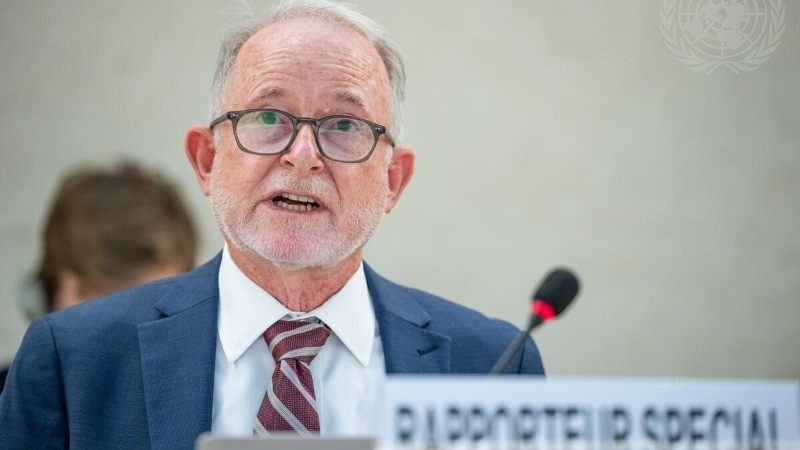
U.N. Special Rapporteur on the situation of human rights in
Afghanistan Richard Bennett said international condemnation without
consequences had failed to deter abuses by the Taliban.
“The Taliban are constantly testing the limits of what the
international community will tolerate,” Bennett said. “Condemnation without
consequences is not enough.”
Bennett also warned against normalizing relations with the
Taliban without progress on fundamental rights. He said restrictions had
instead become increasingly codified and enforced.
He further raised concerns about declining international
attention to Afghanistan’s humanitarian crisis, saying humanitarian funding had
fallen while poverty, food insecurity and malnutrition remained severe.
Australia’s Deputy Permanent Representative to the U.N.,
Beth Delaney, said her country would not accept the treatment of Afghan women
and girls by the Taliban becoming a “new normal.”
“Australia stands with the people of Afghanistan,” Delaney
said, announcing that Australia had provided an additional $50 million in
humanitarian support for Afghans.
Tonni Brodber, head of the secretariat of the U.N. Women’s
Peace and Humanitarian Fund, said funding could be used as a tool to help
dismantle systems of oppression. She also praised the advocacy and solidarity
of Afghan women.
France’s Ambassador-at-Large for Human Rights, Isabelle
Lonvis-Rome, said France would not compromise on the rights of Afghan women and
girls and would continue pursuing accountability for rights violations under
the Taliban.
Former Afghan Mines Minister Nargis Nehan said Afghan women
had been “suppressed and isolated by the Taliban” and “abandoned by the world.”
Alyse Nelson, CEO of Vital Voices Global Partnership, said
Afghan women already had a voice and a vision for their future but needed
sustained funding, protection and political support.
The discussions came as international officials and civil
society representatives continue to debate how the international community
should engage with the Taliban while maintaining pressure over human rights and
addressing Afghanistan’s humanitarian needs.