The Kabul Tribune (KT) — Floods, landslides and other weather-related disasters have affected more than 92,000 people across Afghanistan since the beginning of 2026, adding to the country’s already severe humanitarian needs, according to the United Nations Office for the Coordination of Humanitarian Affairs.
Between Jan. 1 and early August, natural disasters affected communities in all 34 provinces and 202 districts, killing 97 people and injuring 331 others, according to OCHA. Nearly 10,000 homes were damaged and more than 2,100 were destroyed, affecting almost 13,000 families.
The latest wave of disasters, between July 20 and Aug. 3, affected nearly 5,000 people in 10 provinces, including Ghazni, Kabul, Kapisa, Laghman, Logar, Nuristan, Paktia, Paktika, Panjshir and Parwan.
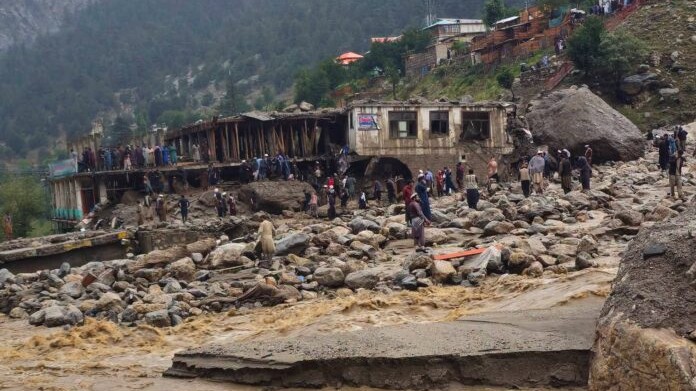
Nuristan, in eastern Afghanistan, was among the hardest-hit areas. Floods and landslides killed dozens of people, including a humanitarian worker, damaged or destroyed hundreds of homes and displaced families in communities already facing limited access to basic services.
More than 51,000 people have been affected by natural disasters in eastern Afghanistan alone, while significant impacts have also been reported in southern and western parts of the country.
Floods and flash floods have been the largest driver of disaster-related humanitarian needs this year, affecting nearly 88,000 people. Seasonal rainfall, rapid snowmelt, environmental degradation and inadequate infrastructure have increased the risks, particularly in rural and mountainous communities.
The disasters have damaged homes, agricultural land, roads, irrigation systems, water networks and local markets, leaving families with fewer ways to earn a living and increasing their reliance on humanitarian assistance.
In Nuristan, survivors told OCHA that flash floods had destroyed homes, crops and livelihoods.
“Before the flood, I had a very beautiful home. We lived happily and had everything,” one woman said. “When the flood came, it swept away our entire house and all of our belongings.”
Another survivor said families were struggling to live in temporary shelters after being forced from their homes.
“We are living in a tent under very difficult conditions,” the survivor said, adding that the family lacked adequate lighting and money to refill its gas cylinder.
Agricultural losses have also deepened the crisis. One resident said floods destroyed 2.5 jeribs of farmland along with the crops that had been cultivated there.
Women and children have faced particular difficulties, including injuries and limited access to sanitation, hygiene and safe drinking water while living in temporary shelters.
“Our children were injured, and women were also injured,” another survivor said. “Our request to the international community is to help and support the affected women and children.”
OCHA spokesperson Olga Cherevko said women had been disproportionately affected by the flooding.
“They now have to navigate taking care of their families in temporary shelters, without proper access to sanitation, hygiene or safe drinking water,” Cherevko said.
Humanitarian organizations are expanding assistance in education, food security, health, protection, shelter and water, sanitation and hygiene, despite access challenges caused by damaged roads and flooding.
But survivors say emergency assistance may not be enough to meet their longer-term needs.
“The assistance provided by the organizations that have supported us will not be enough to meet our needs beyond one month,” one survivor said.
Cherevko said continued assistance would be critical as affected communities rebuild.
“What matters most now is that these communities continue to be supported,” she said, adding that assistance is needed not only to help families rebuild their lives but also to prepare communities for future disasters.
The increasing frequency and geographic spread of natural disasters are compounding Afghanistan’s existing humanitarian vulnerabilities. Decades of conflict, environmental degradation and inadequate investment in infrastructure have weakened communities’ ability to recover, while changing weather patterns may be contributing to more intense and unpredictable events.
OCHA said longer-term investments in early warning systems, community preparedness, disaster risk reduction and climate adaptation will be essential to reduce future losses and strengthen resilience.
For many Afghan families, the immediate danger from this year’s floods may have passed, but the difficult process of rebuilding homes, livelihoods and communities is only beginning.





