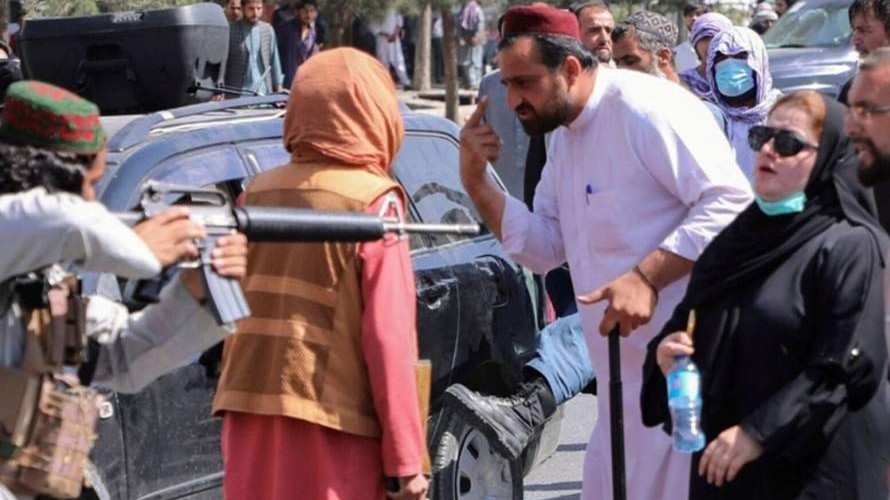
The Kabul Tribune (KT) — The Taliban’s return to power in 2021 has brought sweeping restrictions on the rights and daily lives of women and girls, Amnesty International said, describing a systematic campaign that has curtailed their education, movement, careers and choices and pushed them out of public life.
When the Taliban seized power in 2021, they dismantled key institutions established to protect women’s rights, including the Ministry of Women’s Affairs, which was replaced by the Ministry of Propagation of Virtue and Prevention of Vice. Girls’ secondary education was suspended in most provinces, while women protesters and activists faced intimidation and arbitrary arrest.
The restrictions also extended to women’s freedom of movement. Women were barred from traveling long distances — defined as 72 kilometers, or about 45 miles — without a male chaperone, known as a mahram.
In 2022, the restrictions expanded. Girls were barred from secondary schools nationwide, and women were banned from attending public and private universities. Female television presenters were required to cover their faces while on air. Women were also prohibited from working for national and international nongovernmental organizations, while authorities imposed requirements for what they described as “proper hijab,” including full-body coverings.
The restrictions continued to widen in 2023. Women were banned from working in beauty salons, while limits on their access to parks, gyms and other recreational spaces remained in place. The Taliban also intensified its crackdown on women activists and civil society groups and barred women from working for the United Nations.
By 2024, the restrictions had reached further into women’s private and public lives. The Taliban adopted a Vice and Virtue Law that tightened rules governing women and girls, including restrictions on their voices, movement, clothing and presence in public.
Women and girls were detained over alleged violations of dress codes, while women were also barred from medical, nursing, midwifery and other allied health training.
Amnesty International said the measures over five years amounted to a systematic attack on the rights of women and girls in Afghanistan, leaving them with increasingly limited access to education, employment, public spaces and basic freedoms.





