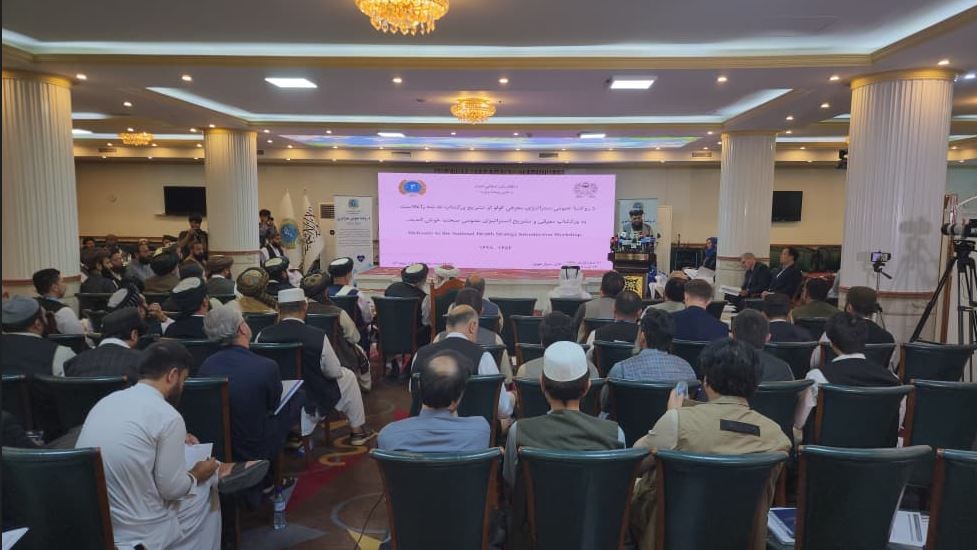
The Kabul Tribune (KT) — The Taliban’s Ministry of Public Health has unveiled a new five-year strategic plan aimed at improving and expanding health services across Afghanistan.
Ministry officials said the plan includes programs designed to address the country’s basic health needs and improve access to healthcare, particularly in remote areas.
Taliban Public Health Minister Noor Jalal Jalali said strengthening the private health sector, improving the capacity of healthcare workers, expanding health services, establishing health centers in remote areas, increasing coordination among government institutions and implementing administrative reforms are among the plan’s key priorities.
Jalali also pointed to shortages in healthcare facilities and infrastructure, saying that despite international aid and significant financial resources provided to Afghanistan over the past two decades, many remote areas still lack adequate health centers.
He also said Afghanistan’s capital still lacks a standard hospital capable of meeting the needs of the population.
Jalali said implementing the five-year plan would help provide Afghans with better and more standardized healthcare services.
Taliban Deputy Prime Minister for Administrative Affairs Abdul Salam Hanafi said decades of war had caused extensive damage to Afghanistan’s infrastructure, including the health sector.
Hanafi said several hospitals were damaged during the conflicts and some healthcare workers were killed.
He also criticized what he described as a lack of attention to the health sector under the previous government, saying Afghanistan had not built adequately equipped and standardized hospitals to meet the country’s needs over the past 20 years.
Hanafi said that in some cases healthcare equipment had been provided but was not used effectively because of poor management and a lack of proper utilization.
He described the new five-year plan as an important step and said it would be financed and implemented through the Taliban’s domestic budget. He said the plan aims to improve healthcare services and establish standardized health centers in remote areas.
Meanwhile, Abdul Latif Nazari, the professional deputy minister at the Ministry of Economy, identified increasing household incomes, reducing maternal and newborn mortality, and strengthening the capacity of skilled workers as key factors for sustainable development.
Representatives of international health organizations who attended the meeting also emphasized the need to strengthen Afghanistan’s healthcare system and pledged to continue their cooperation in the health sector.
Afghanistan continues to face significant challenges in accessing healthcare, particularly in remote and underserved areas. Shortages of health facilities, skilled personnel and healthcare infrastructure remain among the major challenges facing the country’s health system. Successful implementation of the new plan will depend not only on funding but also on strengthening healthcare workers’ capacity and expanding services to remote communities.