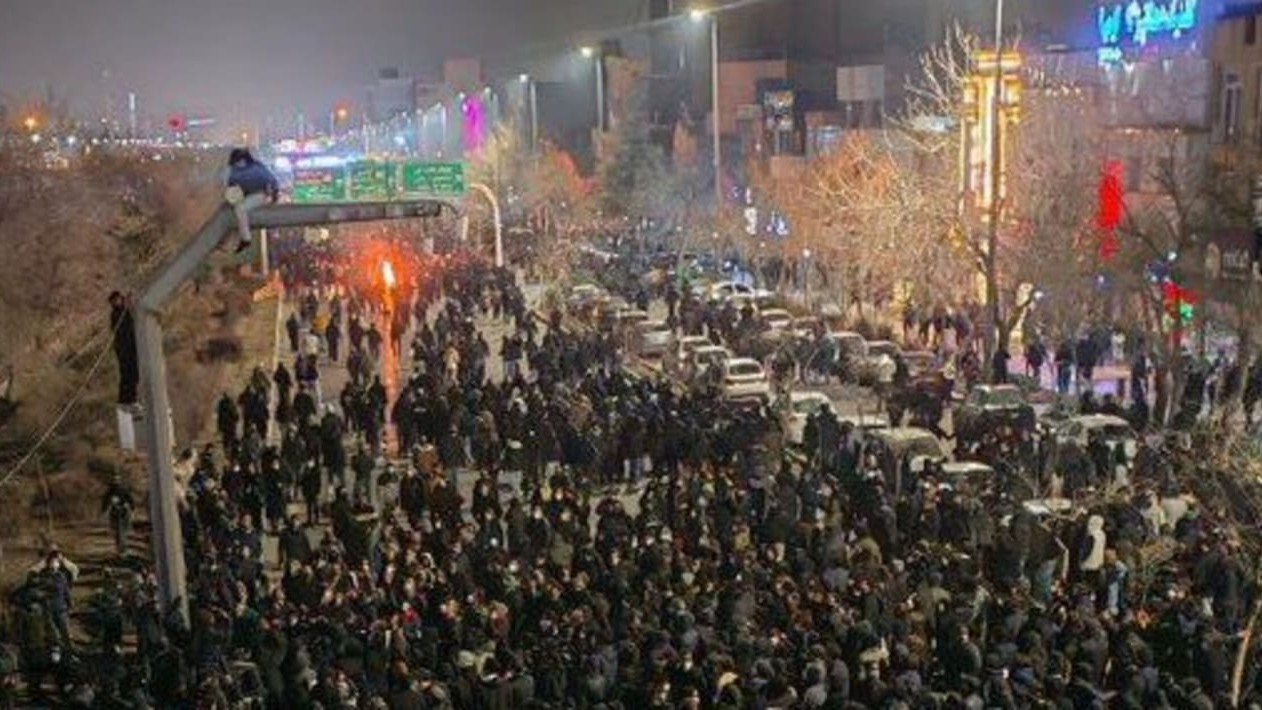
The Kabul Tribune (KT) — At least 60 people are at risk of execution in Iran, including three individuals who were under the age of 18 at the time of their alleged offenses, Amnesty International said, warning of an escalating use of the death penalty to suppress dissent.
According to the rights organization, Iranian authorities
have executed at least five people over the past two weeks, including two
protesters publicly executed on Tuesday and at least three other protesters
executed last week. Amnesty International said the latest executions mark a
further escalation in Tehran's use of capital punishment against protesters.
The organization said Iranian authorities have arbitrarily
executed at least 26 people this year in connection with the January 2026
protests, following what it described as grossly unfair trials conducted by
Revolutionary Courts. It added that at least 26 other people have also been
executed on politically motivated charges, while hundreds more have been
executed for drug-related and other criminal offenses.
"The Iranian authorities are unleashing a horrifying
wave of executions and death sentences to punish and suppress dissent,"
said Heba Morayef, Amnesty International's Regional Director for the Middle
East and North Africa.
Amnesty International urged United Nations member states to
take coordinated diplomatic action to pressure Iran to halt further executions,
support the creation of an independent international justice mechanism and
press the U.N. Security Council to refer Iran's human rights situation to the
International Criminal Court.
The organization said many of those sentenced to death were
convicted on broadly defined charges such as "enmity against God"
(moharebeh) and "corruption on earth" (efsad-e fel arz). It said some
defendants were sentenced to death for alleged acts including arson, damaging
property or blocking roads, which it argued do not meet the threshold for
capital punishment under international law.
Amnesty International also criticized Iran's Espionage Law,
enacted after the June 2025 conflict, saying it criminalizes activities
protected under international human rights law, including peaceful
participation in protests and sharing information with international media.
According to the organization, thousands of people were
arrested during the January 2026 protests, and the actual number of individuals
facing execution is likely much higher than currently documented because many
families are afraid to report death sentences publicly.
Amnesty International said documented cases involved
allegations of enforced disappearance, torture, denial of legal representation,
forced confessions and unfair trials. It also expressed concern that Iran's
Supreme Court has upheld death sentences without meaningful judicial review.
Among those identified as facing execution are Benyamin
Naghdi, a martial arts athlete sentenced to death after his arrest during
protests in Shiraz, and Peyman Ganji, who was sentenced to death over
allegations linked to arson that he has denied. Amnesty International said
neither man was accused of involvement in the deaths of security personnel.
The organization also warned that Erfan Amiri, Mansour
Jafari and Matin Mohammadi, who were all under 18 at the time of the alleged
offenses, remain at risk of execution despite international law prohibiting the
death penalty for juvenile offenders.





