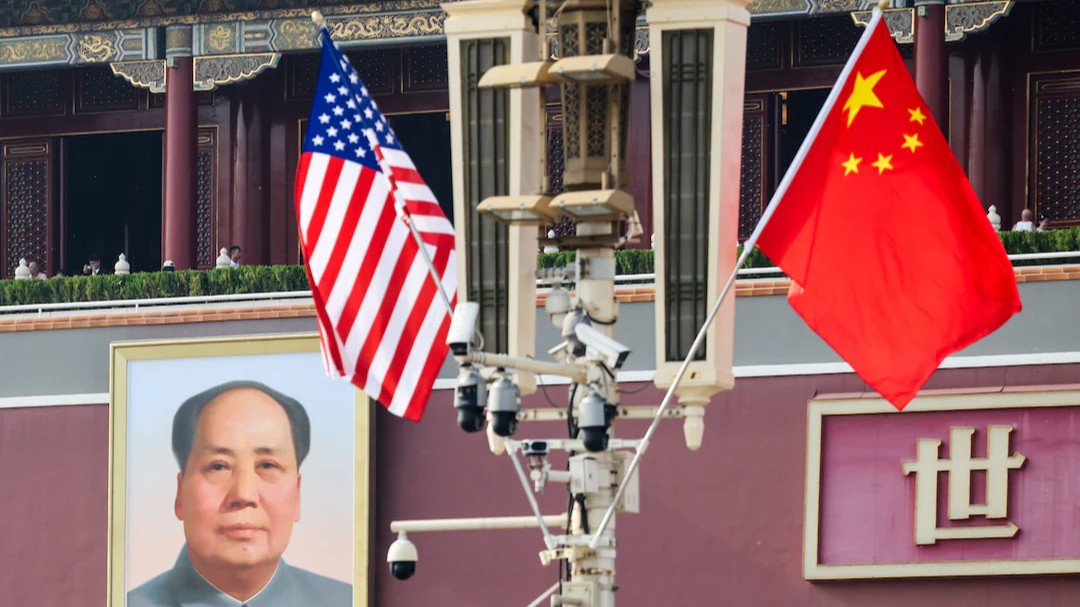
The Kabul Tribune (KT) — Donald Trump and Xi Jinping are expected to consider reducing tariffs on about $30 billion worth of imports as part of a proposed managed trade framework between the United States and China, according to a report by Reuters.
The initiative focuses on non-sensitive goods, with both sides aiming to ease trade barriers without crossing national security limits. The proposal, informally referred to as a “Board of Trade,” was first introduced in March by U.S. Trade Representative Jamieson Greer as a key outcome for the upcoming summit between the two leaders.
Unlike previous negotiations, Washington is no longer pressing Beijing to overhaul its state-led economic system. Instead, the approach emphasizes setting numerical trade targets in non-strategic sectors while maintaining tariffs and export controls on sensitive technologies.
Greer described the plan as an “adapter” that could connect two fundamentally different economic systems, saying the goal is to optimize trade flows and achieve greater balance rather than reshape China’s governance model.
Senior officials from both countries have already held preliminary discussions. U.S. Treasury Secretary Scott Bessent and Chinese Vice Premier He Lifeng met for several hours in South Korea earlier this week to prepare economic proposals for the leaders’ talks, though no official statements were released afterward.
Sources familiar with the discussions indicated that both sides are considering a reciprocal framework involving tariff reductions on goods worth around $30 billion each. However, it remains unclear whether specific products will be finalized during the summit or in follow-up meetings.
Analysts say the scope of the initiative may initially be limited. Wendy Cutler noted that non-sensitive goods now represent a relatively small share of overall U.S.-China trade, suggesting the mechanism could start modestly and expand over time.
Trade between the two countries has declined significantly in recent years. According to U.S. data, bilateral goods trade fell to $415 billion in 2025, down from $582 billion in 2024, while the U.S. trade deficit with China dropped to $202 billion, its lowest level in two decades.
China continues to impose additional tariffs on U.S. imports, including duties on energy and agricultural products, while the United States maintains tariffs on a wide range of Chinese consumer goods introduced during earlier trade disputes.
The two sides are also expected to discuss a separate concept known as a “Board of Investment,” though U.S. officials have signaled that large-scale bilateral investment programs remain unlikely at this stage due to political and economic concerns.





