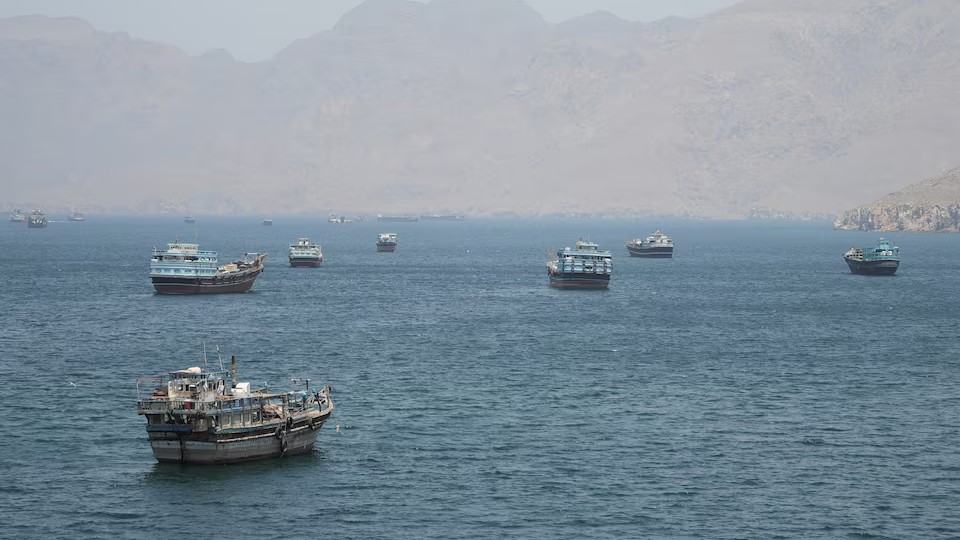
The Kabul Tribune (KT) — Reuters reported that a fragile calm settled over the Strait of Hormuz on Saturday, but the United States and Iran remained far from ending more than two months of conflict, as Washington awaited Tehran’s response to a proposed path toward peace talks.
Marco Rubio said Friday that the United States expected a
response from Iran within hours. However, by Saturday, there was no indication
from Tehran regarding the proposal, which seeks to formally end the war before
negotiations begin on more contentious issues, including Iran’s nuclear
program.
Rubio met Mohammed bin Abdulrahman al Thani in Miami on
Saturday, where both sides emphasized the need for continued cooperation to
deter threats and promote stability across the Middle East, according to U.S.
State Department spokesperson Tommy Pigott. The statement did not explicitly
mention Iran.
Meanwhile, a Qatari liquefied natural gas tanker was sailing
toward the strait en route to Pakistan, marking a potentially significant
development. Sources said the transit was approved by Iran as a
confidence-building measure involving Qatar and Pakistan, both acting as
mediators in the conflict. If completed, it would be the first such passage
since the war began.
With U.S. President Donald Trump expected to visit China
next week, pressure has intensified to resolve the conflict, which has
disrupted global energy markets and raised concerns about the broader world
economy.
Despite a ceasefire declared a month ago, recent days have
seen renewed clashes in and around the strait. The United Arab Emirates
reported coming under fresh attack on Friday.
Iran has largely restricted non-Iranian shipping through the
strait since the conflict began on February 28, following U.S.-Israeli
airstrikes across the country. Before the war, roughly one-fifth of the world’s
oil supply passed through the narrow waterway.
Iranian media, including Fars News Agency and Tasnim News
Agency, reported sporadic clashes Friday between Iranian forces and U.S.
vessels. While the situation later calmed, Iranian sources warned that further
confrontations remained possible.
The U.S. military said it struck two vessels linked to Iran
that were attempting to enter an Iranian port, forcing them to retreat after
being hit.
Washington imposed a blockade on Iranian vessels last month.
However, a reported assessment by the Central Intelligence Agency suggested
Iran may not face significant economic pressure from such measures for several
months, raising questions about U.S. leverage. A senior intelligence official
later dismissed those claims as inaccurate.
Beyond the strait, the conflict has also escalated
regionally. The United Arab Emirates said its air defenses intercepted two
ballistic missiles and three drones launched from Iran on Friday, leaving three
people moderately injured.





