The Kabul Tribune (KT) — A researcher with Human Rights Watch says restrictions imposed by the Taliban on women’s media appearances are having far-reaching effects, limiting Afghan women’s freedom of expression not only inside Afghanistan but also abroad.
Freshta Abbasi said she encountered the impact of those
rules firsthand while corresponding with an Afghan journalist about a recent
report she authored. Despite being the report’s author, the journalist
requested a male colleague to appear in a video interview instead.
Abbasi later learned the request stemmed from directives by
the Taliban’s Ministry for the Propagation of Virtue and the Prevention of
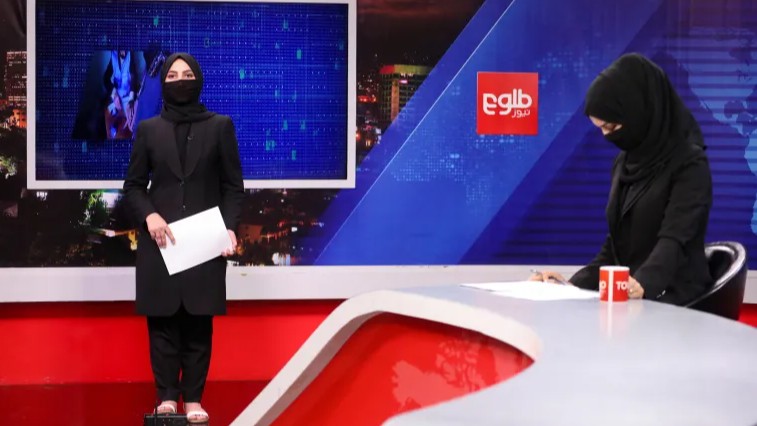
Vice, which has instructed media outlets that Afghan women — regardless of
where they live — must appear in a full hijab with their faces covered when
speaking on air.
She said the experience underscored how Afghan women are
being sidelined as credible voices and reduced to their gender, even when
speaking from outside the country.
“Being a woman from Afghanistan was enough to justify
silencing me,” Abbasi said in a statement, adding that such practices force
women to choose between complying with restrictive rules or losing the
opportunity to speak publicly.
Human rights advocates warn the policy reflects a broader
system of repression that has intensified since the Taliban’s return to power
nearly five years ago. Women in Afghanistan are barred from education beyond
sixth grade, face sweeping employment restrictions and have largely been
excluded from public life. In some areas, female journalists are no longer
allowed to work, and women’s voices are banned from radio and television
broadcasts.
Abbasi said the Taliban’s directives to media outlets
illustrate how those restrictions are extending beyond Afghanistan’s borders, as
international and regional media face pressure to comply with the group’s rules
when featuring Afghan women.
She said such measures have “serious implications” for
Afghan women’s right to freedom of expression globally, warning that media
organizations risk reinforcing discriminatory policies by adhering to them.
Abbasi said she would not comply with the restrictions,
emphasizing that Afghan women should not be required to accept discriminatory
conditions in order to participate in public discourse.
“Wherever we are, our voices matter,” she said.