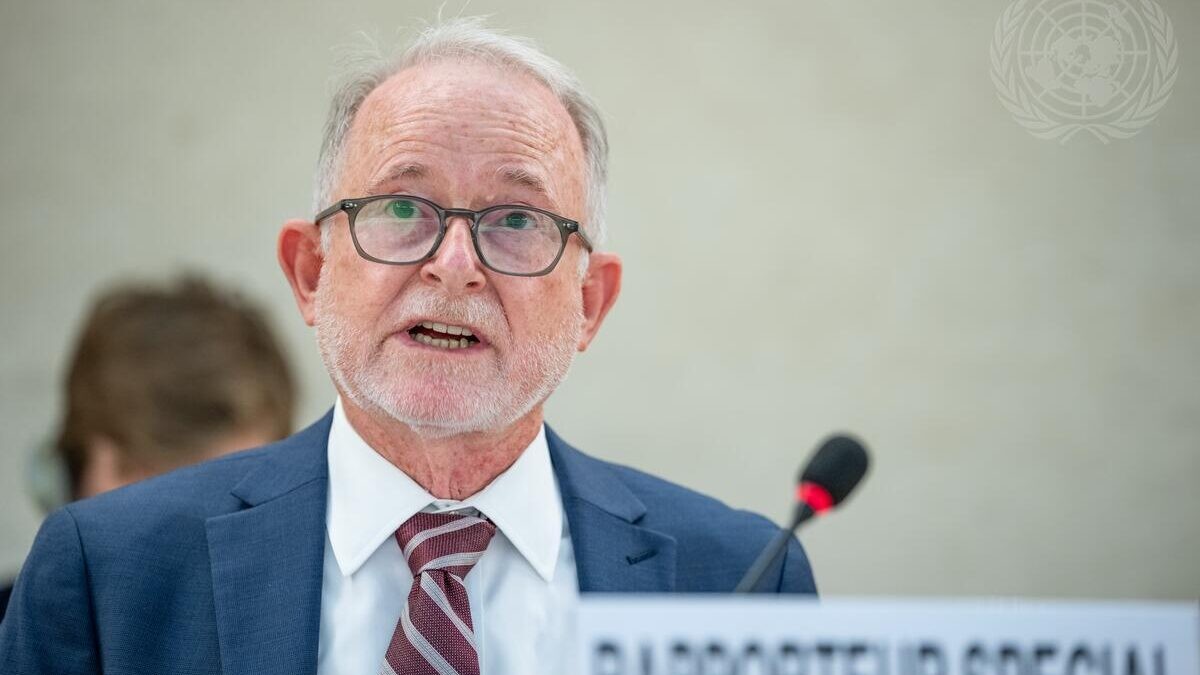
The Kabul Tribune (KT) — Richard Bennett, the United Nations special rapporteur on human rights in Afghanistan, told the United Nations Human Rights Council that Afghans — particularly women and girls — are facing what he described as an institutionalized system of “discrimination, oppression and gender domination” imposed by the Taliban, which he said may amount to crimes against humanity.
In his report, Bennett said the Taliban have established an
ideological governing structure rooted in “patriarchal gender stereotypes,”
designed to strip women of their rights and autonomy since returning to power.
He said Taliban policies have infiltrated all areas of
women’s lives, severely restricting their rights to education, employment,
freedom of movement, health care, access to justice, and freedoms of
expression, association, assembly and participation in public life.
According to the report, these restrictions are enforced
through discriminatory decrees, coercive measures, physical violence and
ideological indoctrination.
Bennett warned that a “highly repressive” social order is
being normalized in Afghanistan, gradually eroding the independence of women
and girls and causing profound consequences for their physical and mental
health, health-seeking behavior and survival.
He said the policies not only violate women’s rights but
also endanger the sustainability of Afghanistan’s health system, with impacts
that will be felt for generations.
The report highlights serious shortages of qualified
personnel, particularly female health workers and specialists in emergency and
advanced care. Bennett attributed the significant migration of skilled
professionals to economic pressures and what he described as the Taliban’s
repressive policies.
He said economic hardship in rural areas has pushed health
workers toward urban centers, leaving rural communities facing even greater
staff shortages.
Bennett also raised concerns over appointments within the
Taliban-run Public Health Ministry, saying senior officials lack technical
expertise or professional experience in health care, reflecting a broader
pattern of politically and ideologically driven appointments.
He added that many managerial roles in hospitals and health
institutions are now held by individuals without medical training, while
numerous women who previously served in administrative and leadership positions
have been dismissed.
The U.N. special rapporteur further said he had received
multiple reports that women have been denied access to medical care, including
emergency services, because they were not accompanied by a male guardian.
Bennett said the findings were based on focused group
discussions and individual interviews with 137 Afghan citizens from diverse
backgrounds across 29 provinces. Participants included current and former
health workers, civil society members working in health-related sectors, and
health care recipients.
He added that the report also reflects the views of at-risk,
vulnerable and marginalized groups, including women in remote and rural areas,
persons with disabilities, children and adolescents, and survivors of
gender-based violence.
Bennett warned that without urgent and sustained
international action, Afghanistan faces a deeply concerning path with
immediate, cumulative and long-term consequences.





