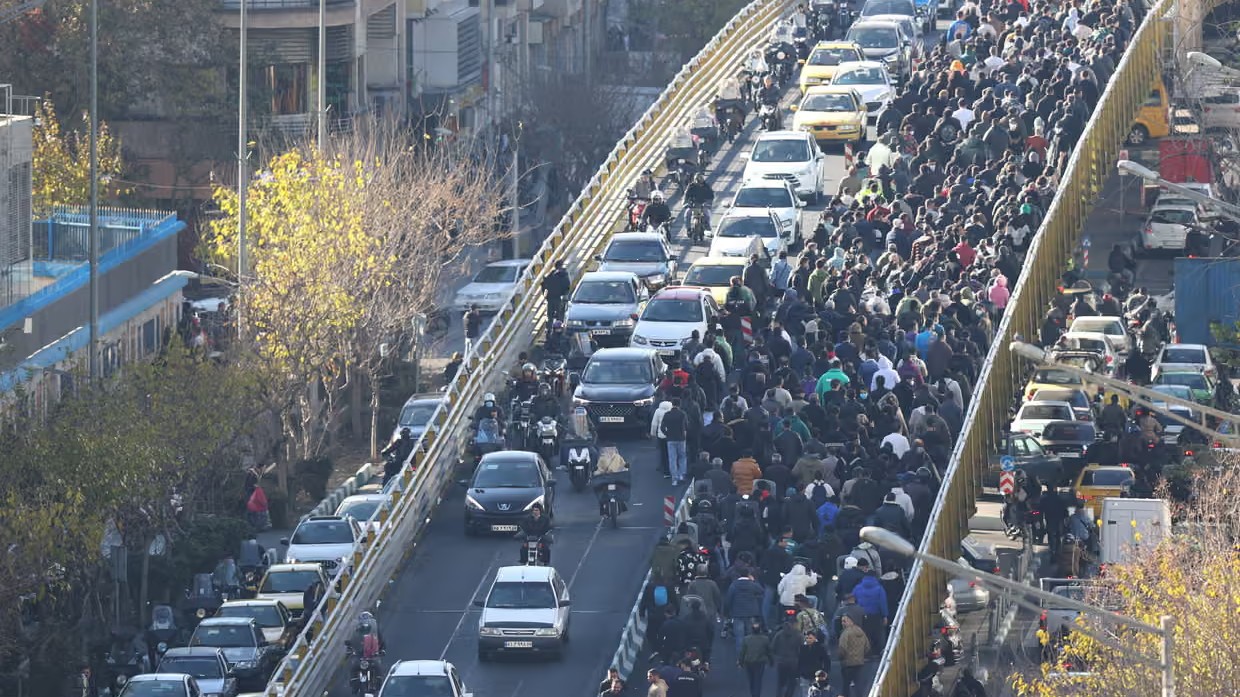
The Kabul Tribune (KT) — Iran was plunged into a near-total internet blackout on Thursday night as protests over worsening economic conditions spread across the country, increasing pressure on the country’s political leadership.
The outage was first reported by the internet
freedom monitor NetBlocks. While Iranian authorities did not immediately
comment on the cause, Tehran has previously shut down internet access during
periods of widespread unrest.
NetBlocks earlier reported disruptions in the
western city of Kermanshah as security forces intensified their crackdown on
protesters. The Norway-based group Iran Human Rights said Iranian security
forces have killed at least 45 protesters, including eight children, since
demonstrations began in late December 2025.
Protests have now entered their 12th day and
spread to all 31 provinces, according to rights groups. Shopkeepers in Kurdish
regions and dozens of other cities closed their businesses on Thursday after
calls for a general strike by several Kurdish political groups.
In the southern province of Fars,
demonstrators reportedly pulled down a statue of Qassem Soleimani, a former
senior commander of Iran’s Revolutionary Guard Corps’ Quds Force who is revered
by government supporters.
Iran Human Rights said Wednesday was the
deadliest day so far, with at least 13 protesters killed. Its director, Mahmood
Amiry-Moghaddam, said the crackdown is becoming “more violent and more
extensive every day,” adding that hundreds have been wounded and more than
2,000 people arrested.
Iranian state media and official statements
have acknowledged at least 21 deaths, including members of the security forces,
according to a tally by Agence France-Presse.
The current unrest marks the largest wave of
protests in Iran in three years. While it has not reached the scale of the 2022
“Woman, Life, Freedom” movement, analysts say it has alarmed Iran’s political
and security establishment.
President Masoud Pezeshkian on Thursday called
for restraint, urging security forces to avoid violence and calling for
dialogue and engagement with protesters. “Any violent or coercive behavior
should be avoided,” he said in a statement.
The protests were triggered by a sharp
depreciation of Iran’s currency and deepening economic hardship. The government
recently ended a subsidized exchange rate for importers, a move that has
already caused food prices to surge. The average price of food has risen by
more than 70% over the past year, while medicine prices have increased by about
50%, according to local reports.
Iranian authorities have blamed the economic
crisis largely on external factors, particularly Western sanctions linked to
Iran’s nuclear program, saying their ability to address the situation is
limited.
Unlike the 2022 protests, the current movement
appears decentralized and lacks a clear central leader. Exiled crown prince
Reza Pahlavi has attempted to position himself as a figurehead, calling on
Iranians to protest by shouting from their windows at night. It remains unclear
how much support he commands.
Iranian authorities have accused protesters of
violence and foreign-backed sabotage, while acknowledging what they describe as
a legitimate right to protest. State-linked outlets have reported attacks on
police, including the stabbing of a police colonel in Tehran and an assault on
a police station in Chenaran that reportedly left five people dead.
The
unrest comes as Iran also faces heightened external pressure, including
warnings from U.S. President Donald Trump, who has threatened to intervene if
protesters are killed — comments that have drawn sharp reactions from Iranian
military and foreign ministry officials.