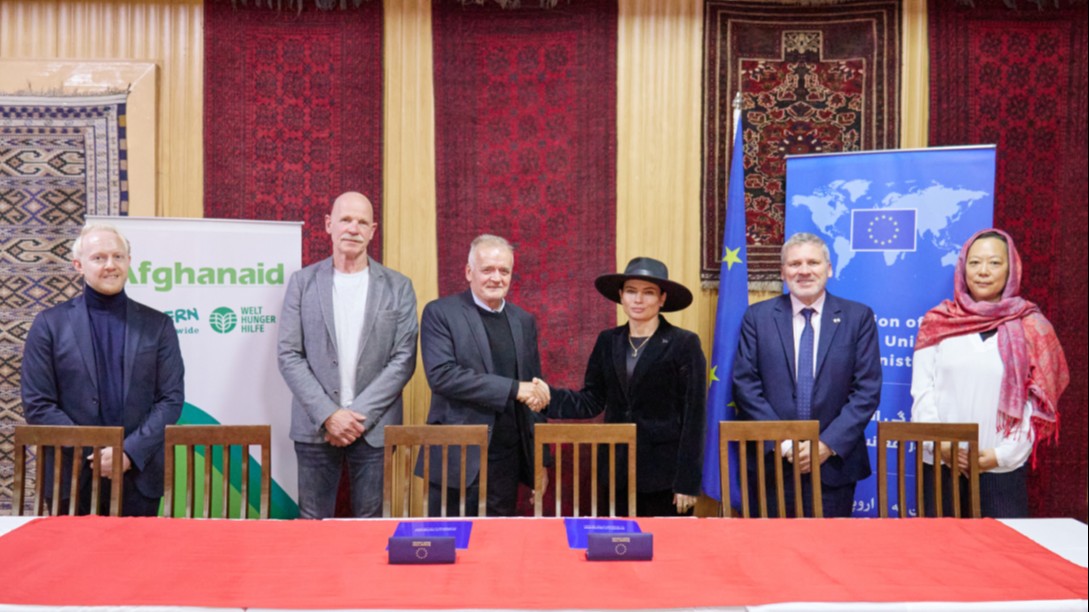
The Kabul Tribune (KT) — The European Union has announced a €7 million investment to strengthen climate resilience and support sustainable rural livelihoods across Afghanistan through the second phase of the Faragir project, implemented in partnership with Afghanaid, Concern Worldwide and Welthungerhilfe.
According to the EU, the funding builds on the success of
the project’s first phase and aims to help remote Afghan communities adapt to
climate change, improve skills and gain better access to markets. The
initiative focuses on community-led climate adaptation and long-term livelihood
development.
“Investing in climate resilience at the community level is
essential for Afghanistan’s future stability and self-sufficiency,” said Veronika
Boskovic-Pohar, the EU’s chargée d’affaires to Afghanistan. She said the
funding would help even the most remote households protect their assets against
extreme weather and develop sustainable, market-ready skills.
The Faragir Phase II project will be implemented in six
provinces and is designed to address interconnected challenges facing rural
communities, including recurring droughts and floods and limited economic
opportunities.
The project will focus on several key areas, including climate
adaptation through tools and infrastructure to manage climate-related risks; livelihood
strengthening by expanding access to shared natural resources and providing
advanced skills training to selected households; and market access to support
more resilient rural economies.
The initiative will also maintain a strong emphasis on inclusion,
with a particular focus on empowering women and people with disabilities, the
EU said.
The European Union has supported rural development and
livelihoods in Afghanistan for more than a decade. Afghanaid has been operating
in the country since 1983, maintaining long-term engagement with local
communities.





