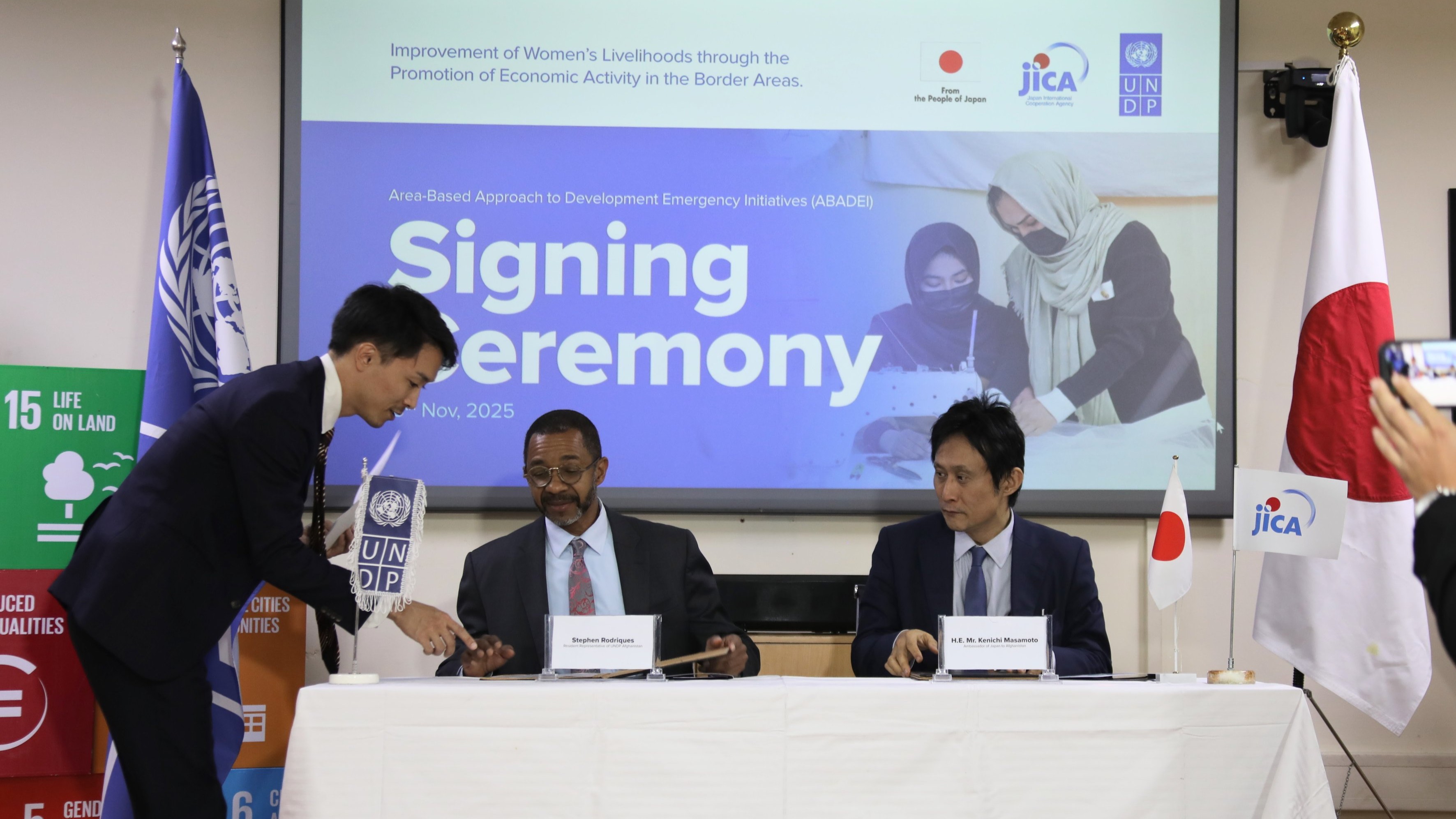
The Kabul Tribune (KT) — The United Nations Development Programme (UNDP) announced in a post on X today that it has launched a new two-year project, in partnership with the Government of Japan and the Japan International Cooperation Agency (JICA), aimed at expanding economic opportunities for Afghan women, particularly in border regions.
According to UNDP’s post on X, the initiative will support 2,100
women-led micro, small and medium enterprises (MSMEs) and strengthen community
assets as part of a broader effort to promote inclusive economic recovery.
The project — titled “The Project for the Improvement of
Women’s Livelihoods through the Promotion of Economic Activity in the Border
Areas” — is funded by the Government of Japan with a budget of JPY 864 million
(approximately USD 5.6 million).
UNDP says the initiative will expand access to
community-based productive infrastructure through 73 small-scale projects,
while improving women entrepreneurs’ access to finance and markets. The project
also includes subsidized loans, business training, and measures to support
women’s leadership in local economies.
The program builds on the earlier WE-ACT project, which
supported 1,260 women-led MSMEs and created more than 2,500 jobs, most of them
filled by women. It also continues infrastructure work that has strengthened
community resilience in several provinces.
The Exchange of Notes for the new project was signed by
Japan’s Ambassador to Afghanistan, Kenichi Masamoto, and UNDP Afghanistan
Resident Representative Stephen Rodriques.
Ambassador Masamoto said Japan “stands with the people of
Afghanistan, especially women, in their pursuit of economic independence and
dignity,” adding that the new initiative will create meaningful livelihood
opportunities for Afghan women.
Rodriques said the partnership with Japan and JICA
“continues to empower Afghan women to overcome barriers, access livelihoods,
and contribute to community resilience,” emphasizing that investing in women is
vital for Afghanistan’s economic future.
The project is implemented under UNDP’s ABADEI framework,
which supports local resilience, job creation, and inclusive economic recovery
across Afghanistan, with women’s empowerment at its core





