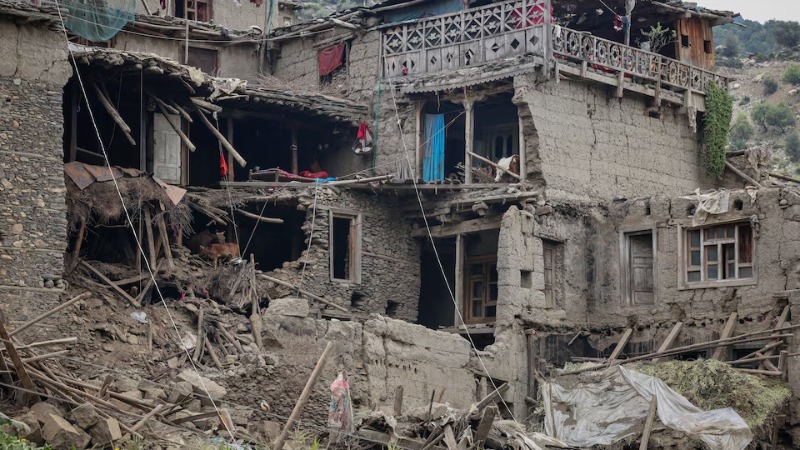
The Kabul Tribune (KT) — Nearly half a million people in eastern Afghanistan need urgent health assistance after a series of earthquakes left more than 2,200 people dead, thousands injured and widespread destruction, the World Health Organization said Sunday.
The Aug. 31 quake killed 2,205 people, injured 3,640 and
destroyed 6,782 homes across Nangarhar, Kunar, Nuristan and Laghman provinces,
according to WHO. At least 21 health facilities were damaged, complicating
access to care in areas already struggling with limited services.
The agency said it has deployed six mobile health teams to
affected areas, delivered thousands of medical supplies and pre-positioned 52
metric tonnes of aid, with another 100 tonnes ready for use if needed. WHO
warned, however, that it faces a $6 million funding gap for its rapid lifesaving
response.
Disease risks are rising as families remain in temporary
settlements after aftershocks made many homes unsafe. WHO has dispatched 17
surveillance teams, including four dedicated to camps for displaced people, to
track potential outbreaks. Between Sept. 2 and 24, health workers recorded
8,506 cases of infectious diseases in Kunar province, including 5,261 acute
respiratory infections, 2,494 diarrheal cases — nearly 1,800 of them acute
watery diarrhea — 385 confirmed malaria cases and 366 suspected COVID-19
infections.
Rapid diagnostic testing confirmed two cholera-like
infections and 39 COVID-19 cases, WHO said. The agency warned that long-term
needs such as rehabilitation, trauma care and psychosocial support are also
growing.
The situation worsened Sept. 23 when another 4.5-magnitude
quake struck Nangarhar’s Dari Noor district, injuring 28 people — including
three staff from a World Food Program partner — and damaging homes in several
villages. Four patients remain hospitalized.
With six new displacement camps already established in
Kunar, thousands of families remain unable to return home. WHO launched an
emergency appeal for $6.9 million over the next six months to sustain health
services, expand rehabilitation support and maintain care for displaced
populations.





