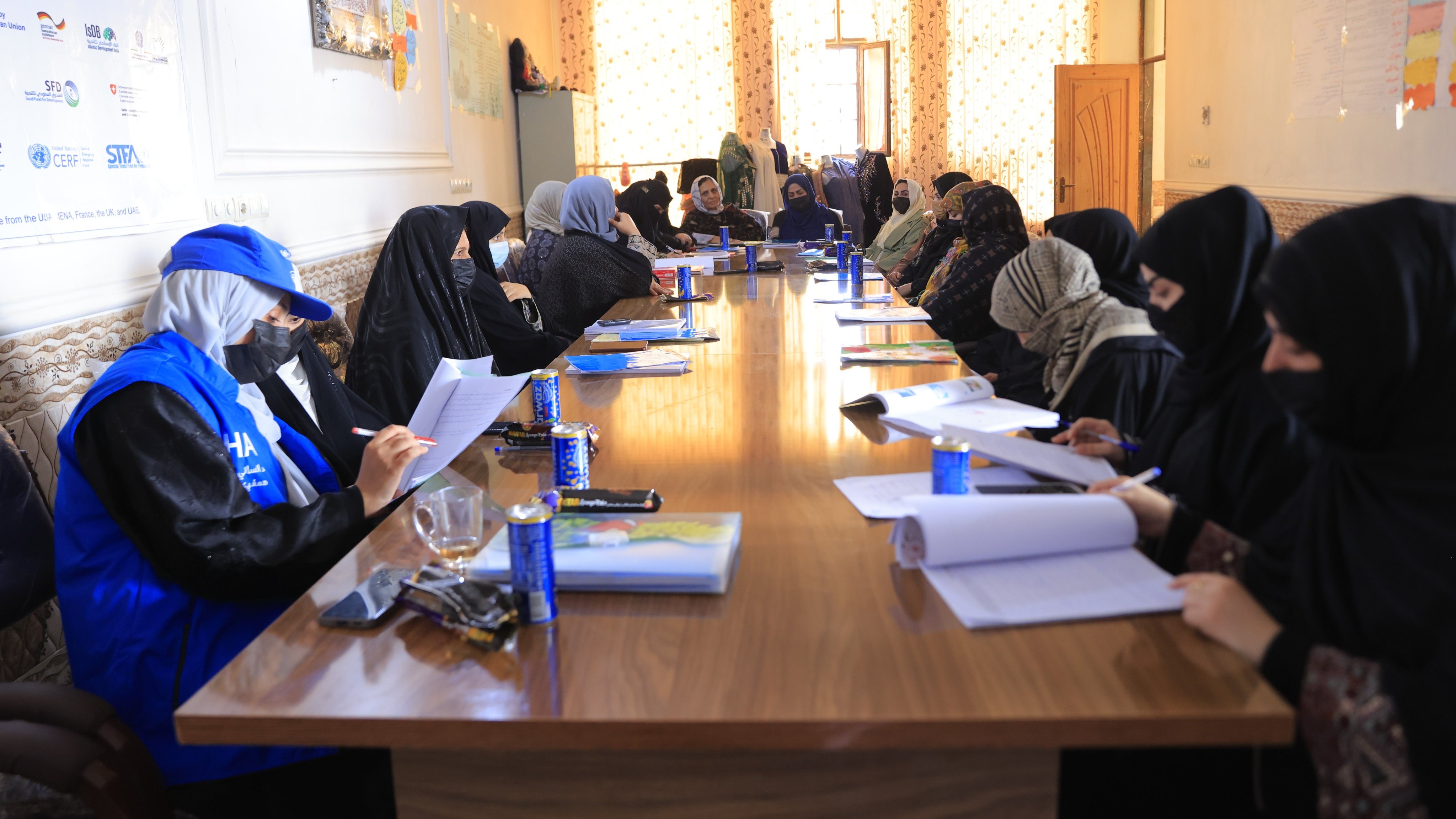
The Kabul Tribune (KT) — Twenty women entrepreneurs in Afghanistan’s southwestern Nimroz province are improving their business skills through a livelihoods programme supported by the United Nations refugee agency, as women returning from Iran face challenges rebuilding their lives and earning a living.
One of the participants is Malalay, a mother of two who
returned to Afghanistan from Iran. She said the training was already proving
useful to her business, even before she had completed the programme.
“Even before completing the programme, I can see its
usefulness in my business,” she said.
The programme comes as Afghanistan faces a continued influx
of returnees from neighboring countries, including Iran. Nearly 1.3 million
Afghans returned from Iran and Pakistan between January and September 2026, including
573,000 from Iran, according to a United Nations returnee overview published in
November. The report says the large-scale returns have increased pressure on
housing, basic services and employment opportunities.
For women returning from Iran, rebuilding a livelihood can
be particularly difficult. Taliban restrictions have limited women’s access to
employment, education and freedom of movement, while some women in returnee
households are unable to work or safely access markets, according to a U.N.
response plan.
The restrictions include a ban on girls’ education beyond
sixth grade, the exclusion of women from most public-sector employment and
requirements for a male guardian for certain travel. Women-led businesses have
nevertheless remained an important source of economic opportunity for some
Afghan women, despite the restrictions.
The UN-backed programme in Nimroz offers participants an
opportunity to strengthen their business skills as they seek to maintain or
expand their livelihoods in a difficult economic and social environment.
UN agencies have warned that the scale of returns requires
sustained support to help families rebuild their lives, with particular
attention to women and children.