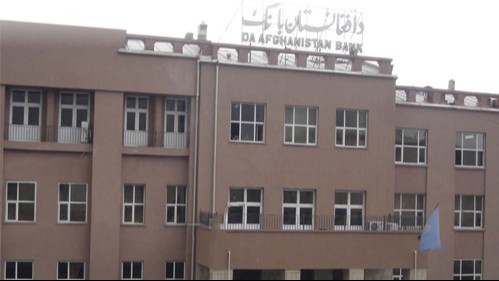
Kabul Tribune (KT) — Da Afghanistan Bank (DAB) says its national payment system connects all government institutions, while 10 electronic money institutions are operating in the country and providing financial services domestically and internationally.
Hasibullah Noori, a spokesman for the central bank, made the
remarks in response to the World Bank’s latest report, which highlighted
structural challenges and significant limitations in Afghanistan’s financial
sector.
Noori said the country’s national payment switch is advanced
and links all government institutions. He also said 10 electronic money
institutions are currently providing financial services to citizens inside and
outside Afghanistan.
Economic Challenges Persist
The World Bank’s Fall 2026 Afghanistan Development Update
projects that the country’s economy will grow by 3% in 2026, driven largely by
a strong harvest. However, output per person is expected to decline by 3.3% for
the third consecutive year, as the population is projected to grow by 6.6%.
The report says shrinking water reserves, fewer employment
opportunities and rising food prices continue to put pressure on households. In
September 2026, casual laborers had 14% fewer working days than a year earlier,
while their weekly earnings could buy 27% less wheat flour.
Despite the improved harvest, an estimated 15.9 million
people faced acute food insecurity in September and October 2026, according to
the Integrated Food Security Phase Classification (IPC).
The World Bank also reported that domestic revenue increased
by 10.2% in the first half of 2026, while public investment remained low, with
capital spending projected at about 1.3% of gross domestic product for the
fiscal year.