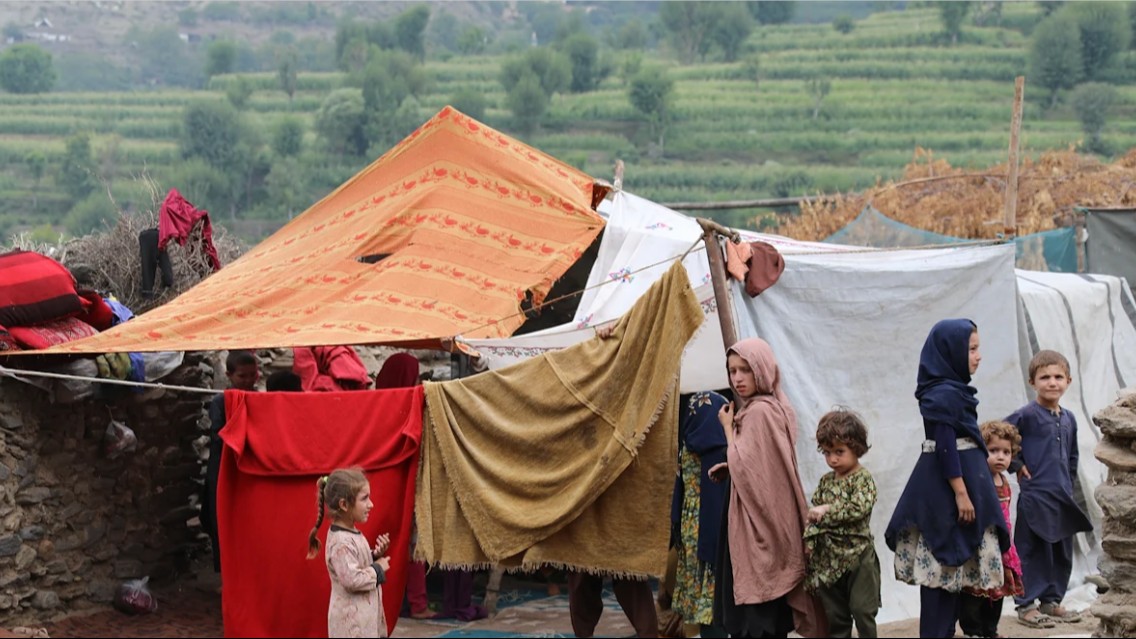
The Kabul Tribune (KT)— More than half of children displaced in Afghanistan have less food to eat after leaving their homes, while two in five report worsening health, according to a new report by Save the Children.
The report, titled Children on the Move, is based on
interviews with more than 800 children and caregivers in seven provinces of
Afghanistan. It found that displacement over the past three years has deepened
hunger, disrupted education and exposed children to heightened protection
risks. More than nine in 10 children surveyed had experienced displacement or
migration.
According to the report, 55% of children said they had less
food to eat after moving, 41% reported that their health had deteriorated, and
33% of caregivers said children's access to education had worsened.
Despite growing needs, assistance is failing to reach many
children. Fewer than one in 10 children surveyed said they had received any
assistance, while nine in 10 said they needed support to access food.
The findings come after more than 6.67 million Afghans
returned from Pakistan and Iran since September 2023, increasing the country's
population by up to 14% and putting greater pressure on families and
communities already struggling with poverty, food insecurity and repeated
crises.
Afghanistan also has about 7 million internally displaced
people, or around 14% of its population, as of 2025, according to the Internal
Displacement Monitoring Centre.
Economic hardship is the main driver of displacement in
Afghanistan. Nearly half of the children surveyed, 49%, said their families
moved because they could not find work or earn enough income, while a third
cited food shortages. Almost one in four said their families had relocated
because of deportation or pressure to leave another country.
Nearly seven out of 10 children surveyed had endured two or
more crises in the past three years, including drought, floods, earthquakes and
conflict.
The report also found that displacement and repeated crises
are affecting children's well-being and exposing them to protection risks. Just
over one in 10 children, or 11%, said they had experienced at least one
protection risk, including child labor, physical or verbal violence, or early
marriage. Caregivers reported that girls faced particularly high risks during
displacement journeys and after arriving in new locations.
Among those affected is Nooria, 8, who arrived in
Afghanistan for the first time earlier this year after her family left
Pakistan, where they had built their lives over five decades. Nooria, her
parents and three siblings arrived with little more than the clothes they
carried.
“We returned from Pakistan. We had a home there, and I had
many friends. I like Afghanistan too, but I miss my school and my friends. We
used to play together and laugh a lot,” Nooria said.
“We want to have a school like the one we had in Pakistan,
where we can continue our education,” she added.
Nooria's family cannot afford the transportation costs to
send her to school, but she attends classes at a Save the Children temporary
learning space.
Her mother, Nazoo, 28, said her husband was unemployed and
the family had no source of income to provide for their children's needs.
“I worry every day about how we will find food for our next
meal,” she said.
She added that leaving the country where the family had
built its life and arriving in Afghanistan with nothing had been particularly
difficult.
Ashish Damle, Save the Children's country director in
Afghanistan, said no child should have to leave home, school and community for safety
or survival, but displacement had become part of childhood for many.
He said children face dangerous journeys and serious
protection risks, while their families continue to struggle to afford food,
access health care and send their children to school.
Damle said girls and children with disabilities faced
greater protection risks and called for sustained funding to protect displaced
children along migration routes and ensure they can access essential services
wherever they settle.
“These children deserve more than day-to-day survival. They
deserve the chance to feel safe, return to school and rebuild their lives,” he
said.
Save the Children has been working in Afghanistan since
1976, including through periods of conflict, displacement and natural disasters.
The organization currently runs programs in nine provinces and works with
partners in 11 additional provinces, providing services in health, nutrition,
education, child protection, shelter, water, sanitation, hygiene and
livelihoods.
Editor's Note: This story is based on findings from Save the
Children's Children on the Move: Research Study Afghanistan 2026. Readthe original report.