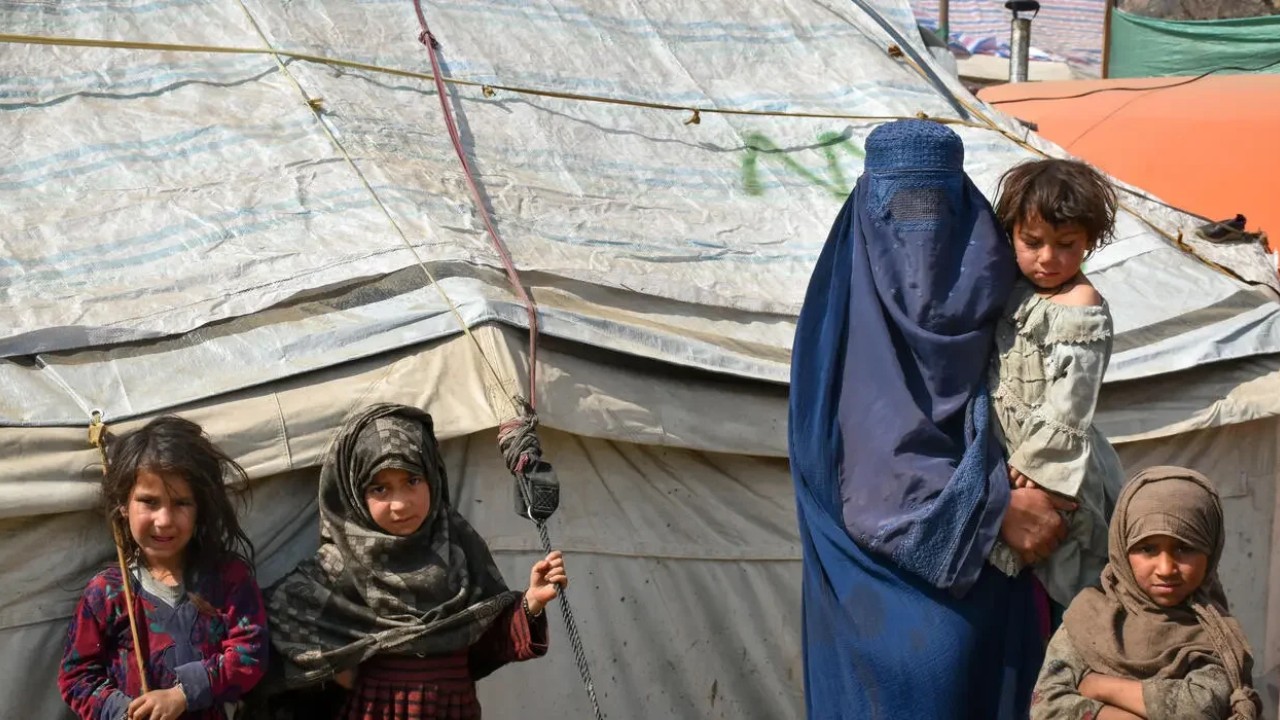
The Kabul Tribune (KT) — Nearly 16 million people in Afghanistan are facing crisis-level hunger, including 3.4 million living in emergency conditions, a United Nations aid official said Tuesday, warning that the situation is likely to deteriorate further as winter approaches.
Olga Cherevko, spokesperson for the U.N. Office for the Coordination of Humanitarian Affairs, said improved harvests and increased food supplies in markets had not prevented millions of families from going hungry because they could not afford adequate nutrition.
“A harvest can improve, markets can have food, but families can still go hungry,” Cherevko said, briefing reporters in Kabul after visiting southern and northeastern Afghanistan.
She called for immediate and sustained action to support vulnerable families before they exhaust their remaining resources.
Hunger crisis expected to worsen
Cherevko said Afghanistan’s food crisis was driven not only by food availability but also by unemployment, declining incomes and limited access to essential services.
The outlook is expected to worsen when winter begins next month, with around 19 million people projected to face acute food insecurity, she said.
The crisis reflects years of conflict, economic hardship, drought and repeated disasters that have weakened families’ ability to cope with further shocks, Cherevko added.
She said the figures represented children whose parents could not afford nutritious food and families with few resources left to meet their basic needs.
Restrictions on women threaten recovery
Cherevko also warned that restrictions imposed by Afghanistan’s Taliban authorities on women and girls could have long-term consequences for the country’s recovery and its ability to address malnutrition.
She cited a UNICEF report warning that, if current restrictions continue, Afghanistan could lose up to 20,000 women teachers and 5,400 female health workers by 2030.
The exclusion of women from education and public life could further weaken household incomes and limit access to essential health and nutrition services, she said.
Maternal health, access to medical care, dietary diversity, education and the ability to earn a living all influence nutrition outcomes, Cherevko added.
UN urges investment beyond humanitarian aid
Cherevko said humanitarian assistance remained essential to saving lives but could not permanently compensate for the lack of employment opportunities and public services.
She called for sustained investment in agriculture, rural livelihoods, local markets, job creation, water systems, health care and nutrition services, as well as greater opportunities for women to participate in economic activity.
“We cannot keep asking humanitarian aid to compensate indefinitely for the absence of economic opportunity and essential public services,” she said.
Cherevko urged the international community to act before winter, warning that waiting until families had exhausted their options would make the crisis more difficult to address.
Her remarks underscore the growing challenge facing aid agencies as food insecurity deepens in Afghanistan and humanitarian resources remain under pressure. She said long-term investment in livelihoods and essential services was necessary to help families become less dependent on emergency assistance.