The Kabul Tribune (KT)— Afghanistan’s Taliban rulers have maintained broad territorial and administrative control, but rising security incidents, mass returns, economic pressure, restrictions on women and girls and weakening basic services are creating risks that could undermine the country’s stability over the long term, the United Nations said in a new report.
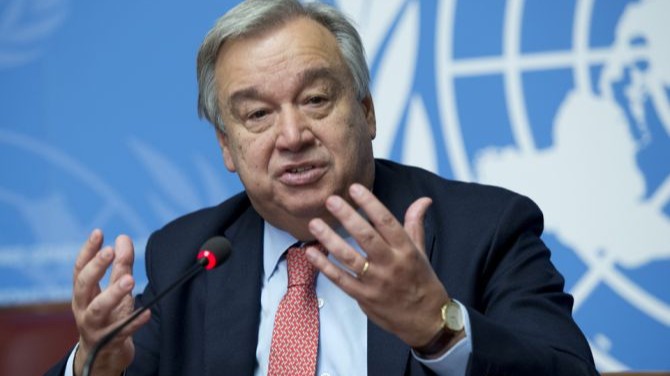
The report by U.N. Secretary-General António Guterres,
submitted to the Security Council on Sept. 9, covers developments from May 22
through Sept. 9 and provides a broad assessment of Afghanistan five years after
the Taliban returned to power. The U.N. said the Taliban’s overall control has
not been seriously challenged by armed opposition groups, but warned that the
appearance of stability masks accumulating problems.
“The appearance of relative stability” under the Taliban’s
territorial and administrative control “masks the accumulating risks” that
could affect Afghanistan’s stability in the short and long term, the report
said.
Among the U.N.’s main concerns are restrictions on women and
girls, the centralized nature of Taliban rule, economic pressures, reduced
capacity to provide basic services, large-scale returns of Afghans from
neighboring countries and continued activity by militant groups.
Nearly 1.15 million Afghans returned
The report highlighted the scale of returns as one of the
major pressures facing Afghanistan.
Nearly 1.15 million Afghans returned to the country between
Jan. 1 and Aug. 22, including about 686,200 from Pakistan, 465,000 from Iran
and 1,300 from Tajikistan. The U.N. said many of the returns were involuntary.
That followed the return of about 2.9 million Afghans in
2025, further increasing pressure on local labor markets and communities’
ability to absorb returnees.
Funding shortages also forced the World Food Program to
phase out cash assistance for returnees in June, leaving more than 400,000
vulnerable returnees without cash-for-food support.
Guterres called on countries to respect international
protection obligations and ensure that returns to Afghanistan are voluntary,
safe, dignified and accompanied by sustainable reintegration support.
Security incidents increase
Despite the Taliban’s continued territorial control, the
security environment remains volatile, the report said.
The U.N. recorded 2,947 safety and security incidents
between May 1 and July 31, an 11% increase from the same period a year earlier.
Anti-Taliban armed groups claimed 88 incidents across 21
provinces, of which the U.N. verified 55, including 30 attacks in July. The
report described those groups as decentralized and fragmented and said their
attacks had not significantly challenged Taliban control.
Islamic State-Khorasan also remained active, claiming an
attack on a Taliban military checkpoint in Nuristan on June 30 and the killing
of a Taliban official near Faizabad, Badakhshan, on July 29.
Tensions with Pakistan add to instability
The U.N. also identified tensions between Afghanistan and
Pakistan as a significant source of instability.
It recorded 399 civilian casualties in Afghanistan — 57
killed and 342 injured — from hostilities between the two countries between
April 1 and June 30.
The report said Pakistani airstrikes on June 28 in Kunar,
Paktika and Paktiya killed 28 civilians and injured 189. Pakistan told UNAMA
that the strikes targeted militant hideouts and support infrastructure linked
to groups responsible for attacks inside Pakistan and said its operations
complied with international law.
The Taliban Foreign Ministry rejected Pakistan’s account
that armed militants had been targeted or killed.
Guterres called on all sides to comply with international
law and protect civilians.
Restrictions on women remain central concern
The U.N. said the “institutionalized and increasingly
enforced denial” of the rights of women and girls remained among the most
significant challenges facing Afghanistan.
The report said restrictions on women’s education,
employment and participation in public life were having both immediate and
long-term consequences for Afghan society and were hindering the country’s
reintegration into the international system.
UNESCO estimated in August that 2.4 million Afghan girls had
been excluded from secondary education five years after the Taliban takeover.
The report also documented continued enforcement of Taliban
restrictions on women. It said morality officials and police detained at least
30 women in Herat on June 6 and 7 over alleged violations of dress
requirements. The women were released the following day.
The U.N. said security personnel later fired at protesters
who demonstrated against the detentions on June 9, killing one boy and injuring
at least four people. At least 17 protesters were arrested.
Humanitarian and economic pressures persist
The report said Afghanistan’s humanitarian needs remain
severe, with 13.8 million people projected to face crisis or emergency levels
of food insecurity and millions of children and pregnant and breastfeeding
women expected to experience acute malnutrition in 2026.
The humanitarian response plan remained heavily underfunded,
while shortages of international health financing contributed to the suspension
or closure of about 150 health facilities between January and June.
Economic conditions also remain fragile. The U.N. said the
closure of the Pakistan border since October 2025 had affected local economies
and customs revenue, while conflict in the Middle East disrupted trade through
Iran and increased transportation and transaction costs.
Regional economic engagement has continued. Afghan and Uzbek
traders signed 22 agreements worth $200 million, Kazakhstan opened a trade
house in Kabul, and Turkmenistan reported that construction of the
Turkmenistan-Afghanistan-Pakistan-India gas pipeline from Torghundi to Herat
was 67% complete.
The U.N. said such regional engagement had positive economic
effects but was unlikely by itself to guarantee Afghanistan’s long-term
stability.
Taliban governance remains centralized
Politically, the U.N. described the Taliban governing
structure as highly centralized, with major decisions made by Taliban leader Haibatullah
Akhundzada and institutional coherence maintained through loyalty to him.
The report said Taliban consultation and decision-making
mechanisms remained opaque. With no constitution in place, leadership decrees
continue to define the authorities’ interpretation of Islamic law, while the
morality ministry plays a central role in enforcing social restrictions.
The U.N. also documented killings, arbitrary arrests and
alleged torture or ill-treatment involving former government officials and
former members of Afghanistan’s security forces, despite the Taliban’s general
amnesty announced in 2021.
Between May and July, UNAMA documented at least 12 killings,
13 arbitrary arrests and detentions, and three cases of torture or
ill-treatment involving former officials and security personnel.
U.N. calls for policy changes
Guterres urged the Taliban authorities to lift restrictions
on women and girls, restore their access to education and employment, allow
Afghan female U.N. and humanitarian workers to return to their workplaces,
protect freedom of expression and the media, uphold the general amnesty and end
corporal punishment.
The report said continued international engagement through
the Doha process had produced limited progress in some areas, including
private-sector development and counter-narcotics, but fundamental disagreements
remained over human rights and Afghanistan’s international obligations.
The U.N. assessment presents Afghanistan’s current situation
as a contrast between strong Taliban control on the ground and a growing set of
economic, humanitarian, security and human rights pressures beneath that
stability. It concludes that regional engagement can help ease some of
Afghanistan’s isolation, but that longer-term stability will depend on
addressing challenges that remain unresolved.