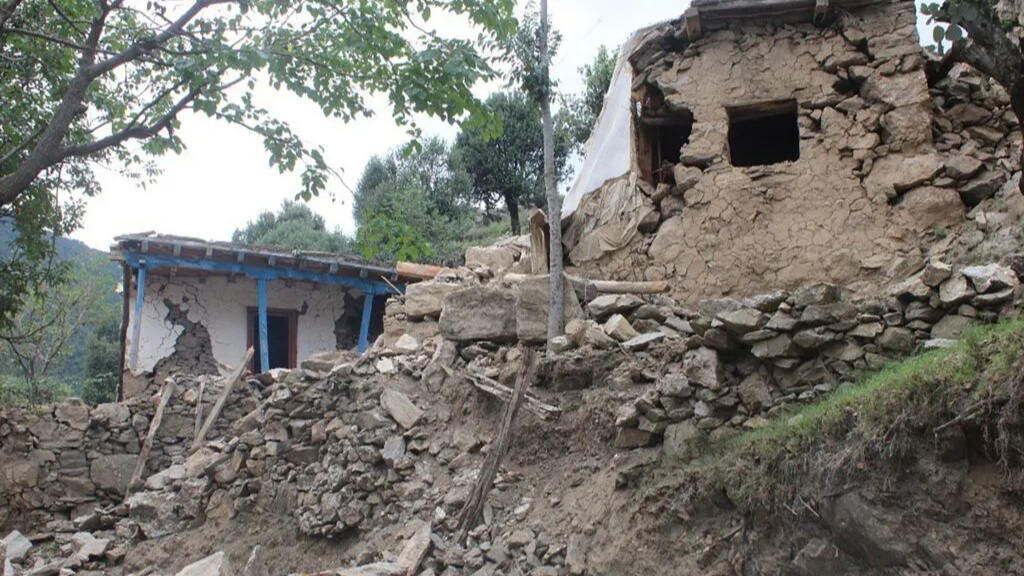
The Kabul Tribune (KT) — One year after a magnitude 6.0 earthquake struck eastern Afghanistan, thousands of survivors are still struggling to rebuild their lives, with many families continuing to live in tents and rely on humanitarian assistance, Islamic Relief said in a report.
The earthquake struck in the early hours of Aug. 31, 2025,
in a remote and mountainous area of eastern Afghanistan. It devastated
communities in Kunar and neighboring provinces, killing more than 2,100 people
and injuring thousands, according to Islamic Relief.
The aid organization said about 500,000 people were affected
by the disaster in some way.
Families awoke to homes collapsing around them, while entire
villages were buried under rubble and livelihoods were destroyed. In the days
that followed, survivors slept outdoors, exposed to harsh weather and uncertain
about access to food and other basic necessities, Islamic Relief said.
Although Afghanistan has experienced stronger earthquakes,
the remote location and mountainous terrain of the 2025 earthquake’s epicenter
made the impact particularly severe in Kunar and surrounding areas.
The disaster also compounded an already severe humanitarian
crisis. Islamic Relief said millions of Afghans were already facing shortages
of food and cash, leaving affected communities with limited resources to
recover from the earthquake.
Islamic Relief said it deployed an emergency health team
within hours of the disaster, providing medical care, treatment for injuries,
maternal and child health services, nutritional assistance and trauma
counseling.
The organization also distributed emergency shelter
materials, including winter clothing, fire blankets, tents, solar lamps and
tarpaulins. During its initial emergency response, it said it reached nearly
1,000 families with lifesaving assistance.
Health care
In cooperation with Qatar Charity, Islamic Relief
established health clinics in Badenzoy village in Chawkay district and Nangosai
village in Sarkano district.
The two clinics have since provided outpatient and maternal
health services to about 4,000 households, according to the organization.
Naqibullah, a resident of an earthquake-affected village,
said the clinics have become an important source of medical care for people
from several surrounding communities.
“This clinic is a real need for our area, and we are all
satisfied with the services and the medicines provided by the team,” Naqibullah
said in the report.
Shelter remains a major need
In Chapa Dara district, one of the areas hardest hit by the
earthquake, more than 2,000 people benefited from the construction of traditional
shelters and repairs to damaged homes, Islamic Relief said.
In Kunar and Nangarhar provinces, about 200 severely
affected households received emergency shelter kits containing family tents,
solar lamps, fire blankets, winter clothing for children, cookers and gas
cylinders.
Islamic Relief said it delivered more than 250 lifesaving
shelter kits and 200 tents across Chapa Dara and Sawkai districts.
Sultan, a resident of Poh-Sera village in Sawkai district,
said he lost both his home and his job in the earthquake.
“We are very thankful to Islamic Relief Worldwide for
providing us with tents,” he said. “At a time when we had nothing and were
living in the open, this support gave us a safe place to live.”
Cash assistance
Islamic Relief also provided cash assistance to affected
families, allowing survivors to decide how to use the money based on their most
urgent needs.
Masom, a daily laborer whose home and land were destroyed,
said the assistance helped him buy food for his family and avoid borrowing
money or skipping meals.
“When Islamic Relief provided cash assistance, it brought
immediate relief,” Masom said. “I could buy food for my family without borrowing
or skipping meals.”
The organization said the assistance reduced immediate
pressure on families and helped some survivors face the winter with greater
dignity.
Islamic Relief said that, a year after the earthquake, many
survivors still need humanitarian assistance as they work to rebuild their
homes, livelihoods and communities.
The organization urged continued support for
earthquake-affected families, saying recovery in some of the hardest-hit areas
remains a long-term challenge.