The Kabul Tribune (KT) — About one million children in Afghanistan are facing severe malnutrition, the United Nations children’s agency said Tuesday, warning that worsening food insecurity, extreme weather and reduced humanitarian funding are putting growing numbers of children at risk.
UNICEF said children under 2 account for 83% of cases of
severe acute malnutrition, leaving them particularly vulnerable to infections
because malnutrition weakens the immune system.
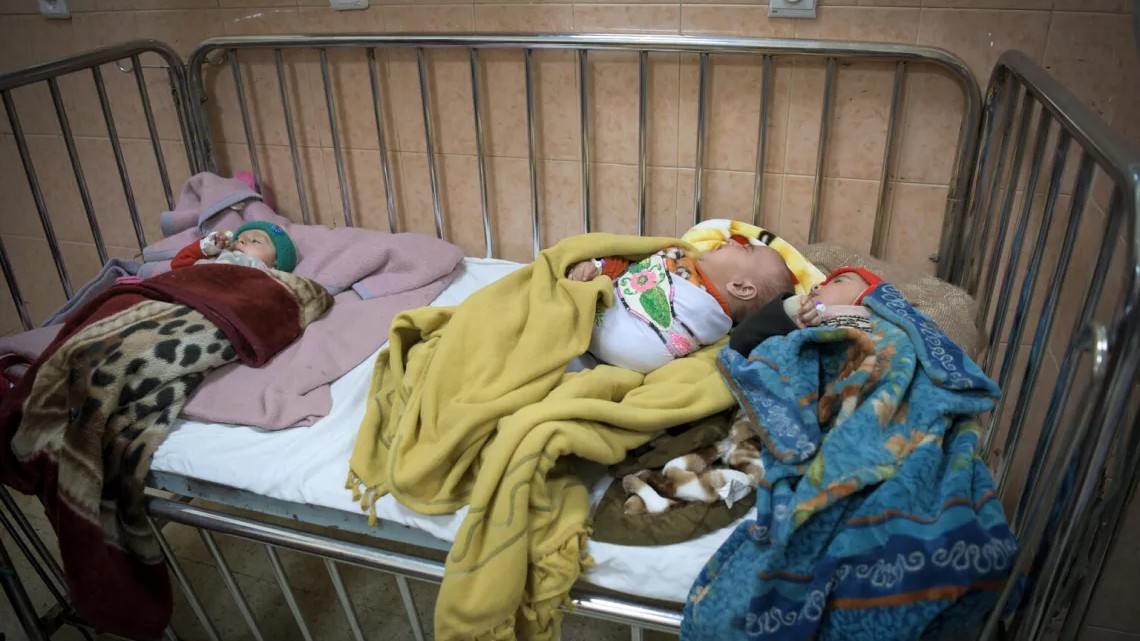
Hospitals in parts of southern Afghanistan are struggling to
cope with the demand, with some facilities treating three or four severely
malnourished children for every available bed, UNICEF said.
The number of severely malnourished children admitted to
hospitals with medical complications rose by about one-third from the same
period last year, increasing from 6,000 in July 2025 to 8,000 by July 2026,
according to the agency.
UNICEF attributed the worsening situation to overlapping
environmental, economic and humanitarian pressures. Afghanistan has faced
successive years of drought followed by destructive rainfall and flash floods.
The agency also warned that this year’s strong El Niño climate pattern could
intensify extreme weather conditions.
Regional instability has disrupted cross-border trade, while
the return of more than 6 million Afghans since 2023 has placed additional
pressure on an already strained labor market and public services, including
housing and health care.
UNICEF said these pressures are making it increasingly
difficult for families to provide adequate food for their children. Meals have
become smaller, less frequent and less diverse, with some young children
receiving little more than bread and tea or diluted yogurt as their first food
after reaching 6 months of age.
Despite the worsening crisis, UNICEF said malnutrition can
be treated when children receive timely care.
Tajudeen Oyewale, UNICEF’s representative in Afghanistan,
described the case of Sagida, a 9-month-old girl he met at a hospital in
eastern Afghanistan. The girl had been referred to the hospital by a
UNICEF-trained health worker after being found severely malnourished in a
remote village in a neighboring province that had recently experienced severe
flooding.
Sagida weighed just 4 kilograms when she was admitted, and
doctors initially had little hope that she would survive. After receiving
therapeutic milk, however, her condition stabilized, Oyewale said.
But cuts to humanitarian funding are limiting access to
treatment. UNICEF said more than 100 sites providing treatment for children
with severe wasting have closed this year compared with 2025, increasing
pressure on the facilities that remain open.
UNICEF’s nutrition program has received only 22% of the $180
million it needs for this year, leaving a substantial funding gap.
Oyewale urged donors to support early intervention rather
than waiting until children require emergency treatment.
“We should not wait until a child is dangerously thin and
lying in a hospital bed before we intervene,” he said. “Acting early does not
only save lives. It is also far more cost-effective than waiting until a child
is severely malnourished and needs life-saving treatment.”
UNICEF said sustained funding for nutrition services, along
with early identification and treatment, will be critical to preventing more
children from developing life-threatening malnutrition.