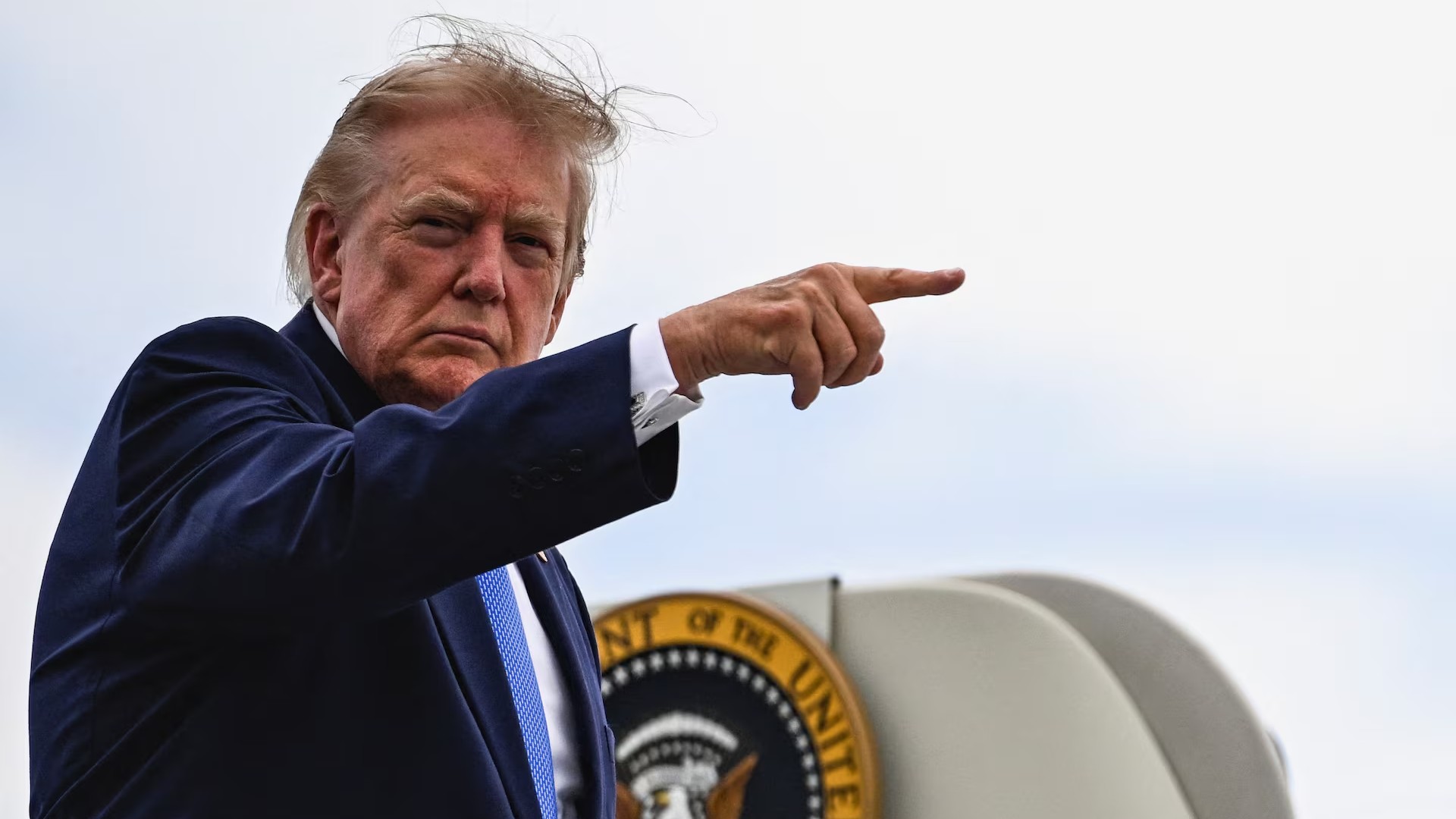
The Kabul Tribune (KT) — Reuters reported that U.S. President Donald Trump said talks with Iran will take place Monday but declined to set a deadline for reaching an agreement, after saying he had called off an imminent attack in hopes of quickly reaching a deal to reopen the Strait of Hormuz and resolve disputes over Tehran’s nuclear program.
Trump said late Saturday on his Truth Social platform that
Iran and other Middle Eastern countries had asked for additional time to reach
an agreement that would lead to the “Immediate, Complete and Total” reopening
of the Strait of Hormuz and an end to what he described as Iran’s nuclear
threat. He said Tehran must “rapidly make a DEAL.”
Speaking to reporters Sunday as he returned to Washington
from New Jersey, Trump said negotiations would begin Monday afternoon but did
not provide details about where the talks would take place or who would
participate.
Asked whether he had set a deadline for Iran to reach an
agreement, Trump declined to answer. He said he preferred reaching a deal
rather than escalating the conflict, arguing that further fighting would result
in more deaths.
Trump has repeatedly threatened to escalate the war with
Iran, which he launched alongside Israel in late February, while subsequently
allowing additional time for diplomatic efforts. Previous rounds of talks have
failed to produce a comprehensive agreement, according to Reuters.
The latest apparent de-escalation followed days of threats
of further attacks by both sides. The conflict has spread across the Gulf and
into the Red Sea, with attacks also reaching a Mediterranean facility in Egypt.
Iran has largely closed the Strait of Hormuz, a key global
energy route that carried about 20% of the world’s oil and liquefied natural
gas before the conflict began. The disruption has pushed energy prices higher
and contributed to broader inflationary pressures.
Trump has argued that preventing Iran from obtaining nuclear
weapons justifies higher fuel costs in the short term, but the economic impact
has increased pressure on his administration to find a way to end the conflict.
Oil prices fell more than 4% in early trading Monday.
Iranian state media reported that Foreign Minister Abbas
Araqchi held separate phone calls with Saudi Foreign Minister Prince Faisal bin
Farhan and Pakistan’s army chief, Gen. Asim Munir, to discuss diplomatic
efforts.
Iran’s official IRNA news agency earlier reported that
negotiations between Tehran and Oman over the Strait of Hormuz were in their
final stages, citing Araqchi.
Iranian Foreign Ministry spokesman Esmaeil Baghaei said the
negotiations were focused on agreeing on a new route through the strait and
that the discussions were separate from the issue of whether the Strait of
Hormuz would be opened or closed.
Last month, Iran publicly rejected an Omani proposal backed
by Gulf states to manage the strait. People familiar with the matter told
Reuters that the proposal included the collection of voluntary fees from
vessels using the waterway.
Meanwhile, Israeli Energy Minister Eli Cohen, a member of
Prime Minister Benjamin Netanyahu’s security cabinet, said Israel and the
United States were maintaining close security and intelligence coordination
over developments in the region.
Cohen said Israel would act regardless of whether an
agreement was reached, warning that if Iran attempted to revive its nuclear
program or expand its ballistic missile capabilities, Israel would respond
militarily.
Trump and Netanyahu met Tuesday in Washington, where an
Israeli official said they had examined possible options for restricting Iran’s
nuclear program, including diplomacy, economic pressure and military force.
Tehran denies seeking to develop a nuclear weapon.





