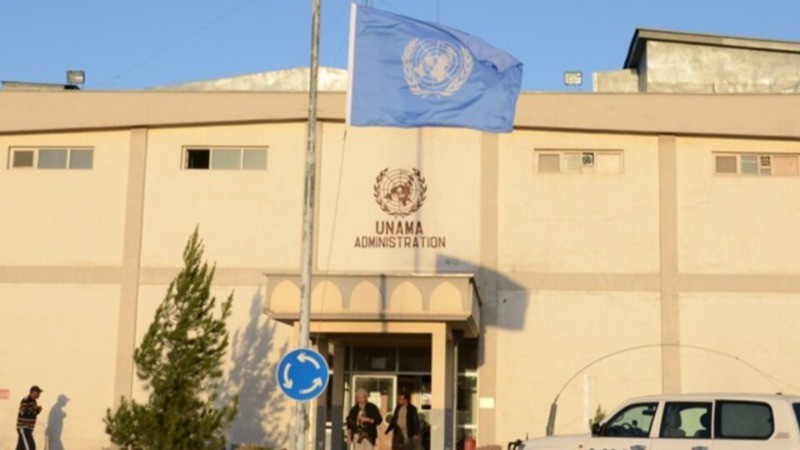
UNAMA report reveals expanding restrictions, arrests, corporal punishment, and attacks on freedoms across Afghanistan
Afghanistan’s human rights situation continues to
deteriorate under the de facto authorities, with women and girls facing some of
the harshest restrictions recorded since the Taliban returned to power in 2021,
according to a new report released by the United Nations Assistance Mission in
Afghanistan (UNAMA).
The report, covering the period from January to March 2026,
paints a grim picture of a country where women are systematically excluded from
education, employment, and public life, while journalists, former government
officials, and ordinary citizens face growing repression, arbitrary arrests,
and public punishments.
Afghan Women Shut Out of Public Life
Since September 2025, Afghan women — including female UN
staff, contractors, and visitors — have been banned from entering United
Nations premises across the country. By March 31, women had been denied access
to UN facilities for 205 consecutive days.
At the same time, the Taliban authorities reportedly removed
women from civil service payrolls in January 2026, ending the reduced salaries
previously paid to women who had already been barred from attending government
offices since August 2021.
For many women, the dismissal came without warning.
In several provinces, female employees discovered they had
lost their jobs only after their salaries failed to arrive. Others were
formally informed that they were no longer considered government employees.
Meanwhile, Afghanistan’s education ban on girls beyond sixth
grade has now entered its fifth consecutive year.
According to UNESCO, approximately 2.2 million Afghan girls
and women have been denied access to secondary and higher education since 2021
— one of the largest education exclusion crises in the world today.
Strict Controls on Women’s Movement
The report also documents escalating restrictions on women’s
freedom of movement and appearance.
In Herat province, officials from the Ministry for the
Propagation of Virtue and Prevention of Vice continue enforcing mandatory
chador requirements for women in public spaces.
UNAMA documented multiple incidents in which women were
removed from public transportation or temporarily detained for not wearing the
prescribed dress.
In one incident on January 11, a woman was forced out of a
taxi in Herat city because she was not wearing a chador. In February, two women
were removed from a bus and detained roadside until family members brought them
proper coverings.
Women’s access to healthcare has also been restricted.
In several provinces, including Uruzgan, Paktya, and
Kandahar, health centers were instructed not to treat women unless accompanied
by a male guardian, or “mahram.” Female healthcare workers were also reportedly
required to travel with a mahram to and from work.
Shopkeepers in some provinces were warned not to sell goods
to women who appeared without male guardians, and in Kandahar, real estate
agents were reportedly told not to rent property to women lacking male
accompaniment.
Public Lashings and Corporal Punishment Continue
UNAMA documented at least 312 cases of judicial corporal
punishment during the first three months of 2026, including punishments against
women and children.
One of the most alarming incidents occurred in Parwan
province, where eight individuals — including three women — were publicly
lashed 39 times each after being convicted of “illicit relationships.”
The punishment took place on school grounds in front of
local residents and senior Taliban officials.
Several of those punished also received prison sentences
ranging from one to four years.
Human rights organizations have repeatedly condemned public
floggings as cruel, degrading, and incompatible with international law.
Former Security Personnel Face Killings and Abuse
Former members of Afghanistan’s previous government and
security forces remain under threat despite repeated Taliban claims of amnesty.
Between January and March 2026, UNAMA recorded at least:
23 cases of arbitrary arrest and detention,
9 incidents of torture or ill-treatment,
and 5 killings of former Afghan National Defense and Security
Forces (ANDSF) personnel.
The report warns that Afghans forcibly returned from
neighboring countries remain especially vulnerable.
In one case, a former militia commander who had recently
been deported from Iran was shot dead in Jawzjan province after armed men
entered his home.
Media Crackdown Expands
Afghanistan’s shrinking media space also came under further
pressure.
In January, Taliban authorities revoked the licenses of
nearly all media support organizations, accusing them of operating “unprofessionally.”
Television and radio stations were suspended for allegedly
violating cultural or political boundaries.
Rah-e-Farda TV was shut down after comments by its network
head regarding Pakistan-related military operations, while a local radio
station in Ghazni was suspended because female students participated in a live
broadcast with a male host.
Journalists continue to face arrests and imprisonment.
UNAMA noted the release of journalist Mahdi Ansari in March
after months in detention on charges of “propaganda” against the authorities.
Three media workers arrested in 2025 remain imprisoned, accused of promoting
women’s education and spreading “immorality.”
Religious and Cultural Restrictions Tighten
The report highlights increasing pressure on Afghanistan’s
Shia communities.
In several provinces, religious leaders and worshippers were
instructed to observe Eid-ul-Fitr according to the Taliban-declared date rather
than the Shia calendar.
Some clerics who refused reportedly faced detention.
Authorities also discouraged observance of cultural
traditions such as Nowruz, the Persian New Year, labeling it inconsistent with
official religious policy.
Women were additionally barred from entering certain shrines
during Nowruz celebrations while male visitors were permitted access.
New Decree Raises Alarm Over Justice System
One of the report’s most concerning developments is a new
judicial decree issued by the Taliban leadership in January 2026.
The decree significantly expands criminal offenses and
broadens the use of discretionary punishments, including imprisonment,
flogging, and potentially the death penalty.
The document criminalizes criticism of Taliban authorities,
dissenting religious views, and even failure to report individuals considered
opponents of the government.
It also includes controversial provisions regulating women’s
behavior within marriage, including penalties for women who leave their
husbands’ homes without permission.
Human rights observers warn the decree institutionalizes
discrimination and further dismantles protections for freedom of expression,
religious diversity, and women’s rights.
A Country Facing Growing Isolation
The UNAMA report underscores how Afghanistan’s human rights
environment continues to move further away from international norms.
For Afghan women and girls, the consequences are especially
severe: exclusion from education, employment, healthcare, and public
participation has become deeply entrenched.
At the same time, journalists, religious minorities, former
security personnel, and ordinary civilians increasingly face surveillance,
intimidation, detention, and punishment.
As international concern grows, millions of Afghans remain
trapped in a system where basic freedoms continue to shrink with each passing
month.





