The Kabul Tribune (KT) — UN News reported that Afghanistan remains one of the countries most severely affected by acute food insecurity, according to a new global report on food crises.
The report, released by a coalition of United Nations
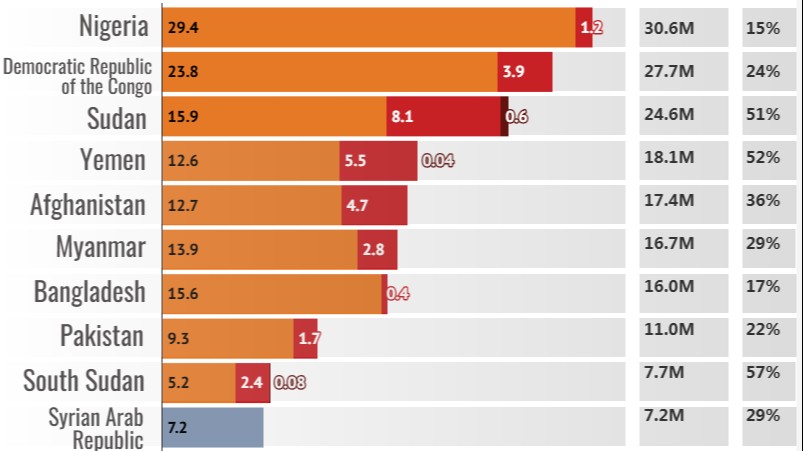
agencies and international partners, shows that Afghanistan is among 10
conflict-affected countries that account for nearly two-thirds of all people
facing high levels of acute hunger worldwide.
According to the findings, about 17.4 million people in
Afghanistan are experiencing high levels of acute food insecurity, representing
roughly 36% of the country’s population analysed.
The report said that globally, 266 million people across 47
countries faced acute food insecurity in 2025, with conflict identified as the
main driver in more than half of all cases.
Alongside Afghanistan, countries such as Sudan, Yemen,
Syria, Nigeria, the Democratic Republic of the Congo, Pakistan, Myanmar,
Bangladesh, and South Sudan were identified as the most affected.
The report warned that food insecurity is becoming
increasingly persistent rather than temporary, with millions of people trapped
in repeated cycles of crisis.
UN Secretary-General António Guterres said the findings are
a “call to action” to increase humanitarian support and address the conflicts
driving hunger.
The United Nations Food and Agriculture Organization
Director-General Qu Dongyu warned that acute food insecurity has become
structural in many countries, rather than a short-term emergency.
The report also highlighted that millions of children are
severely affected, with tens of millions suffering from acute malnutrition
globally. In conflict zones such as Afghanistan, overlapping crises including
insecurity, displacement, and limited access to services are worsening the
situation.
Aid agencies further warned that declining humanitarian
funding and worsening data gaps could make the crisis more severe in the coming
years, including in 2026, if urgent action is not taken.