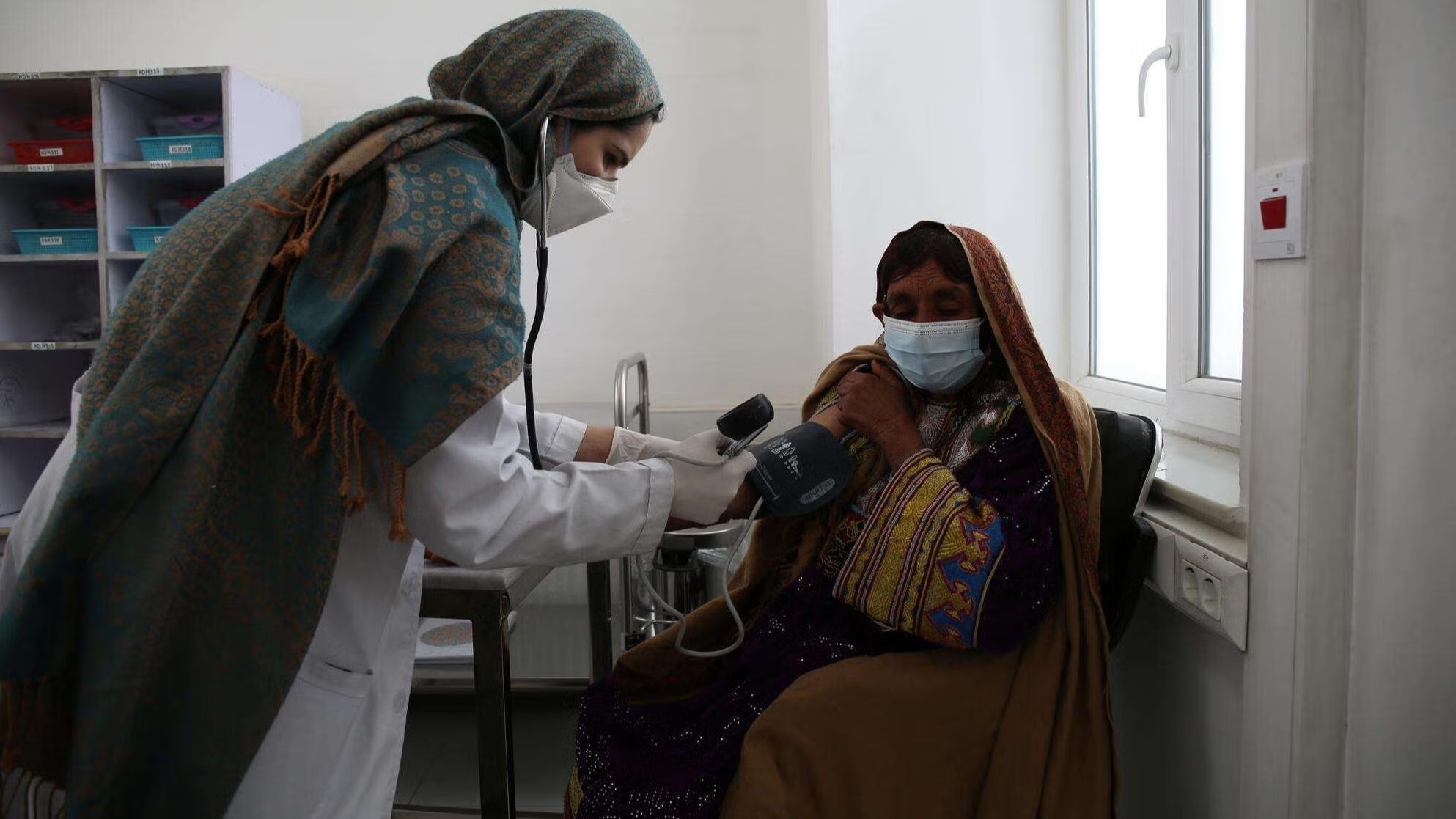
The Kabul Tribune (KT) — Afghan women and girls continue to face severe barriers to accessing healthcare due to restrictions imposed by the Taliban, a United Nations human rights expert said on World Health Day.
Richard Bennett, the UN Special Rapporteur on the situation
of human rights in Afghanistan, said restrictions on movement, education and
women health workers are undermining the country’s health system and
contributing to preventable suffering and loss of life.
His remarks come alongside a new report presented to the
United Nations Human Rights Council, which examines the state of women’s and
girls’ right to health in Afghanistan.
The report states that Taliban policies have created
systemic barriers that limit women’s access to healthcare, including
restrictions on freedom of movement, education and employment. These measures
have significantly weakened the health system and reduced women’s ability to
seek timely and adequate medical care.
According to the report, women and girls are increasingly
unable to access essential health services due to requirements such as being
accompanied by a male guardian, as well as limitations on female education and
employment in the health sector. These restrictions have disrupted service
delivery and reduced the availability of female health professionals.
The report also highlights that the ban on medical education
for women has effectively halted the training of future female health workers,
raising concerns about long-term shortages in the sector and worsening access
to care, particularly for women in conservative or rural areas.
It further warns that these policies are contributing to a
broader health crisis, with rising risks of maternal mortality, untreated
illnesses and mental health challenges among women and girls.
Bennett stressed that without urgent action, the situation
could deteriorate further, with long-term consequences for the country’s health
system and population.
The report calls for the removal of restrictions on women’s
rights, including access to education, work and healthcare, and urges the
international community to continue supporting Afghanistan’s fragile health sector.