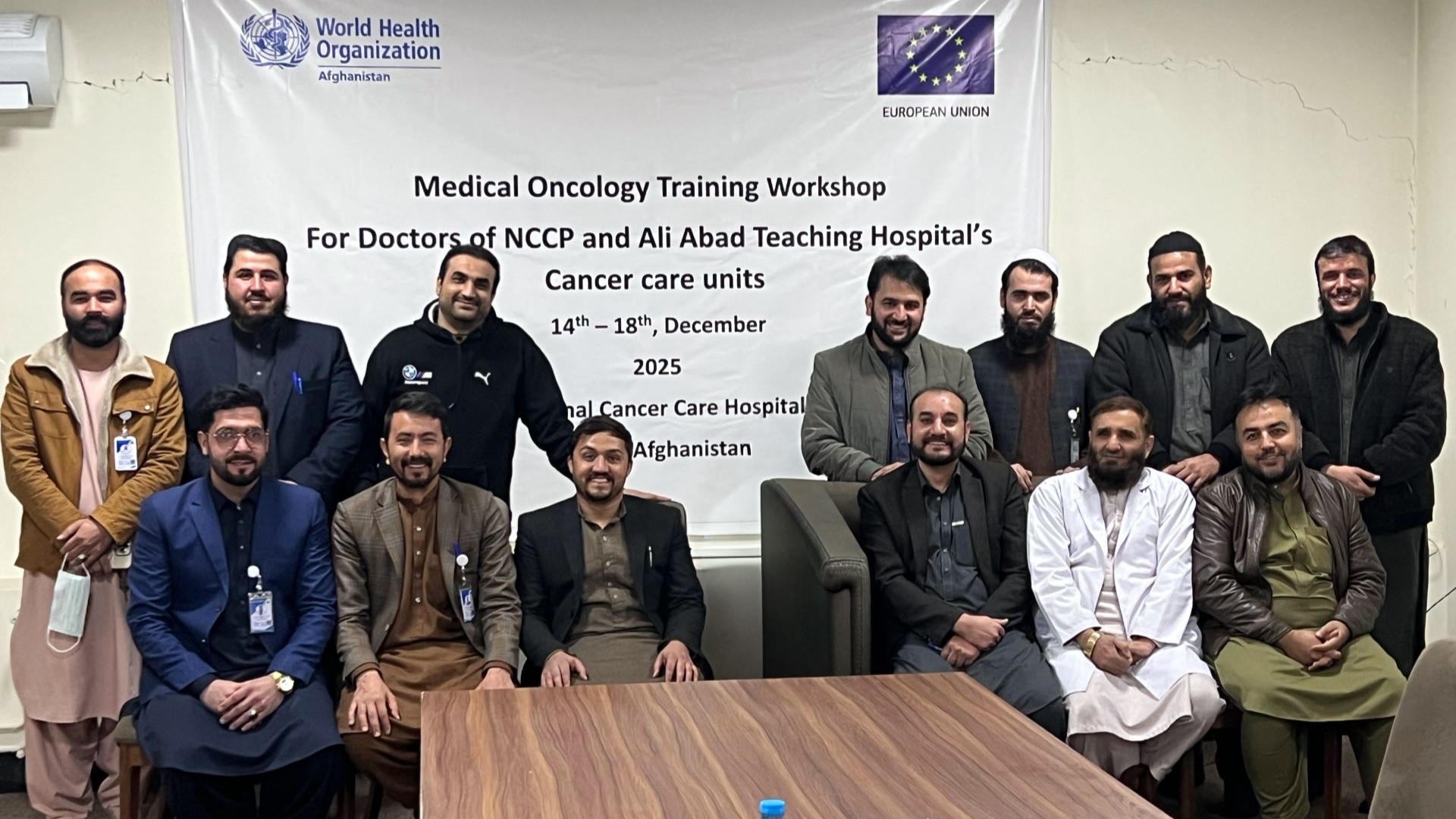
The Kabul Tribune (KT) — The World Health Organization (WHO) says a multidisciplinary training program aimed at strengthening cancer and palliative care in Afghanistan concluded on Dec. 22, 2025.
According to WHO, the program, which began in November,
combined online learning with in-person practical sessions and examinations.
Over 60 Afghan health professionals—including doctors, nurses, and
pharmacists—from four major public oncology centers and key private health
facilities participated. The initiative aimed to help health workers deliver
more consistent, patient-centered cancer and palliative care across the country.
The training was tailored for each profession. Nurses and
pharmacists focused on cancer treatments, managing side effects, chemotherapy
safety, and emergency care. Doctors studied different types of cancer,
diagnosis, treatment planning, and applying international guidance within
Afghanistan’s health system.
A central focus of the program was palliative care, teaching
health workers to address patients’ physical, emotional, social, and spiritual
needs, and how to communicate sensitively with patients and families,
especially when delivering difficult news.
To support ongoing learning, WHO provided all training
materials on a dedicated Moodle platform in English and Pashto, with
assignments in English and Dari, and created a WhatsApp group for participants
to stay connected, share experiences, and receive guidance.
“Cancer care is about people, not just treatment,” said Dr.
Edwin Ceniza Salvador, WHO Representative to Afghanistan. “By combining online
learning with hands-on training, we are giving Afghan health workers the skills
and confidence they need to care for patients with safety, dignity and
compassion. This is a real step forward for families facing cancer across the
country.”
The initiative is part of WHO’s broader efforts to
strengthen services for noncommunicable diseases and improve access to quality
cancer and palliative care nationwide. WHO thanked partners and donors,
particularly the European Union, for their continued support.





