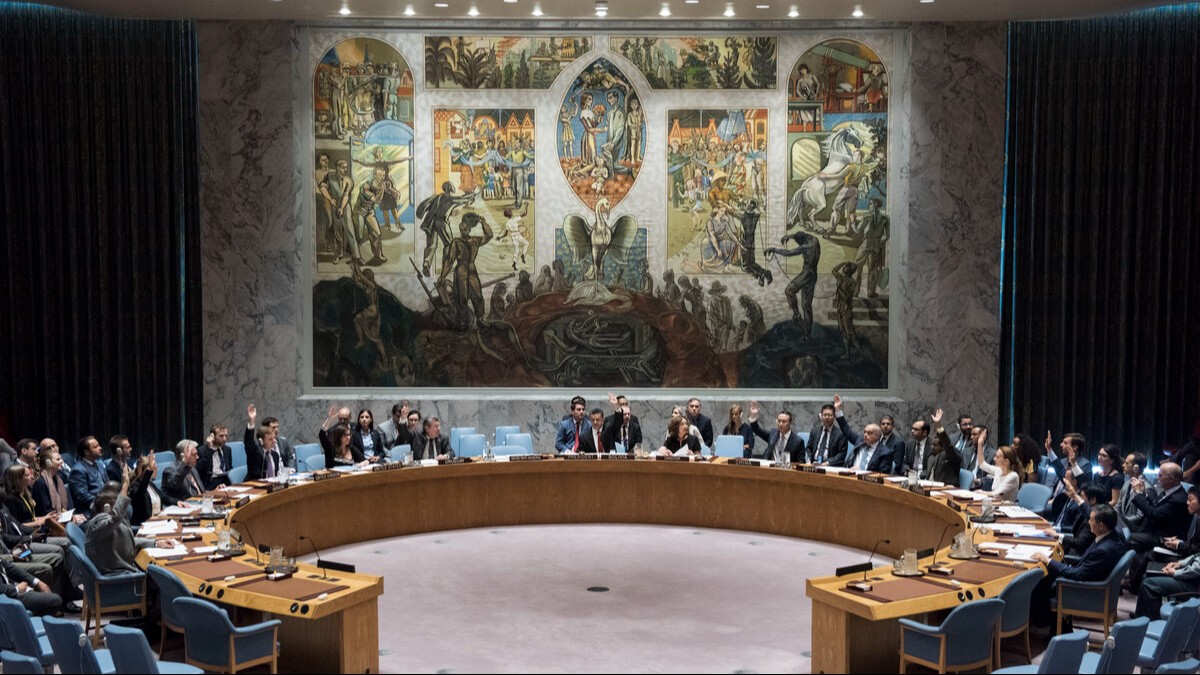
The Kabul Tribune (KT) — The United Nations Security Council held a high-level session on Wednesday, marking the anniversary of the Universal Declaration of Human Rights, to address Afghanistan’s political crisis, the deteriorating situation for women, and the broader human rights challenges.
The United States representative emphasized that
Washington’s top priority regarding Afghanistan remains the security of
American citizens and mitigating terrorism threats originating from the
country. He also stressed that ensuring the release of all individuals
“unjustly detained” is a key objective of U.S. policy toward Afghanistan.
“Any international engagement with the Taliban must consider
terrorist threats and the safety of U.S. citizens. The global community must
not allow these threats to be overlooked,” he said, adding that the Taliban are
not only responsible for worsening humanitarian conditions and widespread human
rights violations but also cannot be considered reliable partners for dialogue.
The representative noted that Taliban policies have directly led to severe
restrictions on women, rising poverty, unemployment, and reduced access to
essential services.
The Indian representative cautioned that purely punitive
international policies over the past four and a half years have yielded no
tangible results for the Afghan people and have only prolonged the status quo.
He urged the global community to adopt a pragmatic, realistic approach in
engaging the Taliban, grounded in a nuanced understanding of on-the-ground
realities and aimed at improving the lives of Afghan citizens. He further noted
that India’s recent decision to elevate its technical office in Kabul to
embassy level reflects Delhi’s commitment to responsible engagement and support
for Afghanistan’s developmental needs.
The United Kingdom representative warned that Afghanistan is
facing a severe crisis and outlined three urgent actions. He stressed that the
Taliban must immediately lift restrictions on women’s education and work,
noting that the past four years have seen intensified suppression of women’s
rights. He also highlighted the urgent need for humanitarian support, with
nearly 21.9 million people requiring critical aid as winter approaches. Britain
has pledged over $201 million for the 2025–26 fiscal year to support vulnerable
populations, particularly women and girls. He called for the swift appointment
of a new UN special representative to advance UN processes in Afghanistan and
emphasized that meaningful international support depends on concrete Taliban
actions respecting human rights and international obligations, particularly in
counterterrorism efforts.
China’s representative highlighted the important role of the
UN Assistance Mission in Afghanistan (UNAMA) in facilitating international
cooperation with the Taliban and urged the UN Secretary-General to appoint a
new head for the mission. He condemned an attack along the
Tajikistan-Afghanistan border that resulted in Chinese casualties and called
for full investigations, accountability, and strengthened border security.
China expressed readiness to collaborate with regional countries and
coordination mechanisms to ensure regional stability.
UN Deputy Secretary-General Tom Fletcher warned of a severe
humanitarian crisis, with 1.1 million children at risk of acute malnutrition.
He reported that 422 health centers have closed this year, depriving three
million children of basic health services. Fletcher added that the UN is
working to digitalize aid payments to prevent manipulation and ensure
transparent delivery to those in need.
Slovenia reiterated its concern over the worsening situation
for Afghan women and girls, calling on the Taliban to immediately lift all
policies and practices violating women’s rights, including bans on work and
access to UN premises.