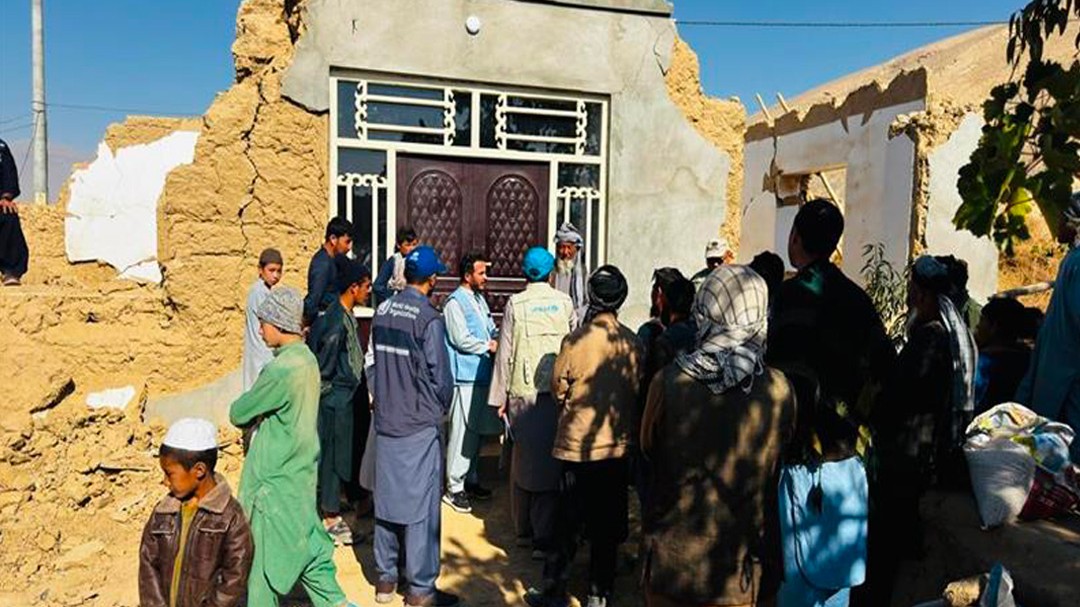
The Kabul Tribune (KT) — The World Health Organization (WHO) says the recent earthquake in northern Afghanistan has caused extensive human losses, widespread destruction, and serious damage to health facilities, according to its fourth Situation Report released on Wednesday, November 19, 2025.
WHO Afghanistan said the 6.3-magnitude earthquake, which
struck near Mazar-e-Sharif just after midnight on November 3, 2025, killed 26
people and injured 1,172 others across six provinces. Balkh and Samangan were
the hardest hit, where most of the casualties and structural damage were
recorded. More than 3,500 homes were destroyed, leaving thousands of families
in urgent need of assistance.
The agency noted that 22 health facilities sustained partial
damage, including a WHO-supported primary clinic and major hospitals in
Samangan. Despite the destruction, emergency response teams, health workers,
and humanitarian partners remain active on the ground.
According to the report, WHO immediately deployed trauma and
emergency surgery kits, enough to treat hundreds of injured people, and sent an
emergency health kit designed to cover essential medical needs for up to 10,000
people for three months. Additional medical supplies, including several tonnes
of trauma kits and pneumonia kits, were dispatched from Kabul to Mazar-e-Sharif
to support ongoing treatment and to prepare for potential aftershocks.
Health authorities in the region are working with WHO and
partners to keep hospitals operational, transfer critical patients, and prevent
disease outbreaks. Surveillance teams stationed in northern provinces prior to
the quake have been mobilized to monitor potential health threats, while
ambulances have been deployed to transport severely injured survivors to larger
hospitals.
The report also highlights the growing need for mental
health and psychosocial services. A specialized WHO team has been deployed to
Balkh Regional Hospital, and dozens of trained health workers have been
mobilized to support survivors dealing with trauma, grief, and stress. WHO has
also delivered a mental health kit containing medicines for roughly 10,000
people.
In its update, WHO warned that gaps remain significant. Many
health workers have not been trained on essential safeguarding measures, and a
notable portion of the population reports feeling unsafe when accessing
services during emergencies. The organization called for continued support to
ensure medical care, mental health services, and emergency supplies reach the
hardest-hit areas.
WHO reaffirmed its solidarity with affected families and
said it remains committed to assisting national and provincial health
authorities as emergency operations continue.





