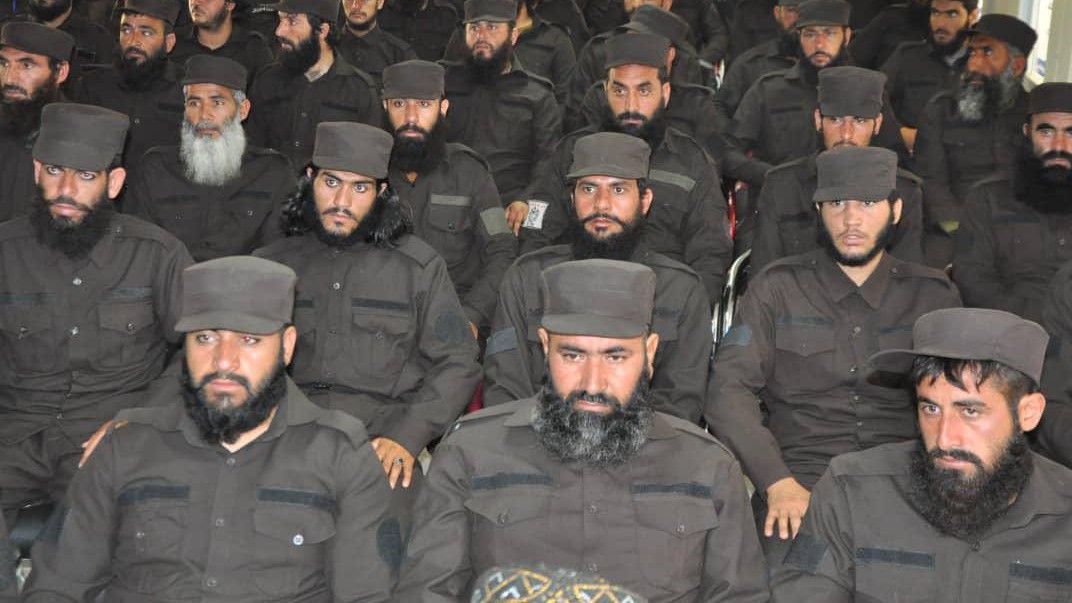
The Kabul Tribune (KT) — The Taliban has approved a new police law that bans public demonstrations across Afghanistan and expands the powers of police over suspects and detainees, according to a document published by the Taliban’s Ministry of Justice.
The law, known as the “Police Law,” was approved by Taliban
supreme leader Hibatullah Akhundzada and governs the activities and
responsibilities of the police force, known as the “Shurta.”
The new law gives police broader authority over arrests, security
operations and the treatment of suspects, while also imposing restrictions on
police conduct and public activities.
Public Demonstrations Banned
Article 50 of the law prohibits “any demonstration within
the territory of Afghanistan.”
The law also restricts the recording of punishments. Article
14 prohibits people from photographing or recording video of the implementation
of punishments.
The restrictions come as the Taliban continues to tightly
control public activities and freedom of expression since returning to power in
August 2021.
Longer Detention Periods
The new law increases the maximum period of detention to 10
days, according to Article 27. Previous regulations had limited detention to
three days.
Article 41 also gives police additional powers when dealing
with suspects.
Under the article, security officials can warn suspects
about religious obligations and violations of the rights of others. They are
also authorized to use disciplinary measures and what the law describes as
harsh or angry language.
The law allows police to force suspects to repent and, in
cases involving serious crimes, to threaten suspects with death.
It also states that people who repeatedly commit serious
crimes may be punished by police.
Rules on Arrests and Treatment of Suspects
The law requires police to follow what it describes as “Islamic
rules” when arresting suspects, particularly women and children.
Police are prohibited from physically harming suspects
during arrests. The law also says that, without a religious court ruling,
police cannot beat or otherwise mistreat suspects or prisoners with sticks,
whips or cables.
The law prohibits the torture of ordinary and political
prisoners.
It also bans photographing or recording punishments while
they are being carried out.
Police Given Broad Security Responsibilities
The law assigns the police responsibility for maintaining
security and public order, protecting civilian airports and their facilities,
preventing unauthorized weapons and protecting public property.
The police force includes units responsible for
firefighting, accident prevention, traffic control and public order.
Traffic police are tasked with regulating vehicle movement,
issuing driving licenses and vehicle registration documents, issuing license
plates and investigating traffic accidents and violations.
Police are also responsible for monitoring people, vehicles
and goods entering and leaving Afghanistan at the country’s borders.
Drug Enforcement and Kidnapping
The new law gives police responsibility for preventing the
cultivation, production, trafficking, sale and use of narcotics.
Police are instructed to prevent the cultivation of opium,
cannabis and other narcotic plants.
They are also required to arrest drug traffickers, sellers
and distributors and destroy confiscated narcotics and related materials.
The law assigns police responsibility for preventing
kidnapping and human trafficking and for pursuing and arresting kidnappers.
People addicted to drugs are to be taken to treatment
centers under the law.
Police Given Authority to Issue Visas
The law gives the police responsibility for issuing visas to
foreign nationals seeking to enter Afghanistan.
Police are also responsible for distributing passports to
Afghan citizens, according to the document.
The law further instructs police to cooperate with the
Taliban’s Ministry for the Promotion of Virtue and Prevention of Vice to
prevent photographs and images from being displayed at intersections and along
roads.
Rules on Use of Weapons
Article 37 allows police to use weapons, explosives and
other explosive materials in certain security situations.
The law says police may use weapons during what it describes
as “rebellion,” armed crimes against security and armed warfare.
The provision gives police authority to use force in
situations the Taliban considers threats to national security.
Restrictions on Police Conduct
The new law also sets rules for police officers themselves.
Police are prohibited from accepting gifts and attending
what the law describes as “unusual parties.”
The law also restricts police officers from making negative
or critical remarks in the media.
It further prohibits officers from keeping “long hair
contrary to the Sunnah.”
The new law comes as the Taliban continues to consolidate
its control over Afghanistan’s security and public institutions. Its provisions
give police wider authority while imposing strict rules on public gatherings,
suspects and the conduct of police officers.